55 Outdoor Activities for Kids to Build Movement, Curiosity, and Confidence
The early years are when children make sense of the world through movement, senses, and real, hands-on experiences. Well-chosen outdoor activities for kids give preschoolers a practical way to build these skills while they play. For preschoolers, time spent outdoors isn’t just “free play” — it’s where they observe, test, fail, try again, and slowly build a picture of how things work.
Outdoor activities for kids do far more than burn off energy. Done with a little intention, they nurture physical movement, communication skills, problem-solving, and a genuine love of learning. Below you’ll find 55 outdoor activities for kids, including movement games, nature play, educational preschool ideas, and low-equipment outdoor fun, plus practical guidance on planning them safely — updated for 2026 with age-friendly tips and the latest thinking on why outdoor play matters so much in early childhood.
Key Takeaways
- Outdoor activities for kids support physical development, emotional regulation, and social skills — all at once, and in a way that feels like play rather than a lesson.
- Reduced screen time and natural sunlight exposure are two often-overlooked benefits of regular outdoor play for preschoolers.
- The best outdoor sessions are flexible: short, safe, and adapted to each child’s confidence level and energy on the day.
- Adults don’t need to direct every moment — gentle presence and encouragement are usually enough to help children feel secure and want to keep exploring.
Why Outdoor Activities for Kids Matter in the Preschool Years
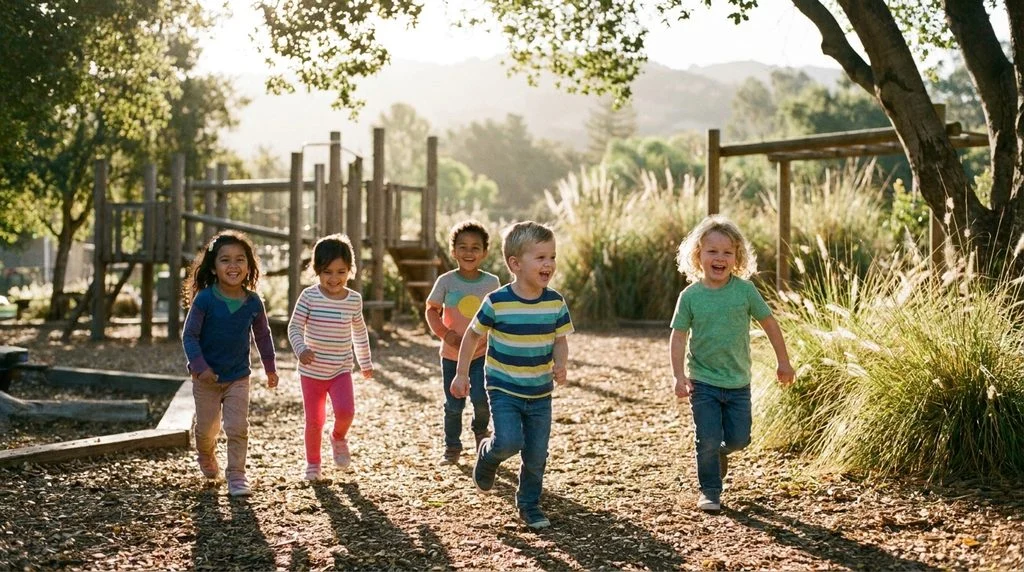
Outdoor play plays an outsized role in early childhood development, right at the stage when children’s bodies, emotions, and social awareness are developing fastest. That is why simple outdoor activities for kids can support several areas of development at the same time.
- Supporting natural physical development
Running, jumping, crawling, and balancing help children build strength, coordination, and a clearer sense of what their bodies can do. Regular movement outdoors also supports better concentration, mood, and sleep — benefits that carry over into the classroom.
- Encouraging curiosity and hands-on observation
Outdoor spaces are full of small discoveries — textures, sounds, light, and colour that shift by the hour. Through outdoor activities for kids, preschoolers get to ask questions, test ideas, and build understanding through direct experience rather than being told the answer.
- Nurturing communication and social connection
Group play teaches children to take turns, listen, cooperate, and express their feelings. These small, repeated interactions build a real sense of belonging within a group.
- Supporting emotional balance
Open space and movement give children a healthy outlet to release tension and regulate their emotions, helping them return to a calmer, more focused state for whatever comes next.
- Two extra benefits worth knowing
Time outdoors naturally reduces screen time, and safe sun exposure supports healthy vitamin D levels and bone growth — small, cumulative wins that add up over a school year.
55 Outdoor Activities for Kids to Build Movement, Curiosity, and Confidence
Outdoor games for preschool children
1. Hopscotch — Draw a grid with chalk or tape on a flat surface. Children hop through on one or both feet, building balance, coordination, and flexibility. Adjust square spacing to keep it fresh.
2. Hide and Seek — One child counts with eyes closed while others hide in a safe, bounded area; the seeker then looks for friends. Builds observation, spatial awareness, and social excitement.
3. Simple Relay Race — Small groups pass a soft ball or fabric pouch as each child runs to a marked point and back. Builds agility, turn-taking, and teamwork.
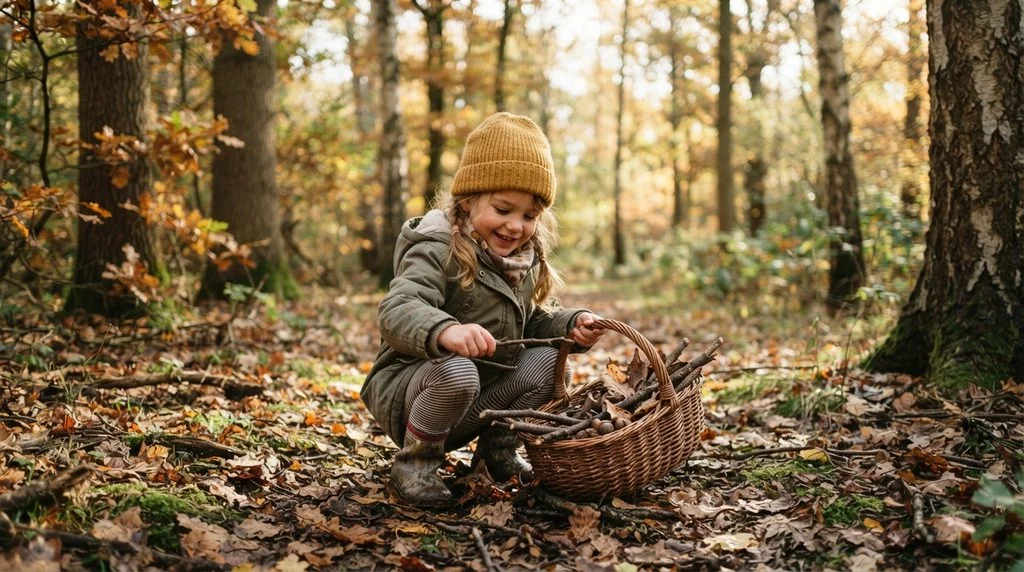
4. Leaf Rubbing Art — Place a leaf under paper and rub gently with a crayon to reveal its pattern. A calm way to explore natural texture and detail while making something to compare and discuss.
5. Throwing Balls into a Basket — Children take turns tossing soft balls into a fixed basket, adjusting distance by age. Builds hand-eye coordination and focus.
6. Playing with Soap Bubbles — An adult blows bubbles; children chase, watch, and gently pop them. A joyful, low-pressure way to build observation and movement response.
7. Following a Drawn Path — Chalk straight, curved, or zigzag lines for children to walk carefully along. Supports concentration and body control, with easy difficulty adjustments.
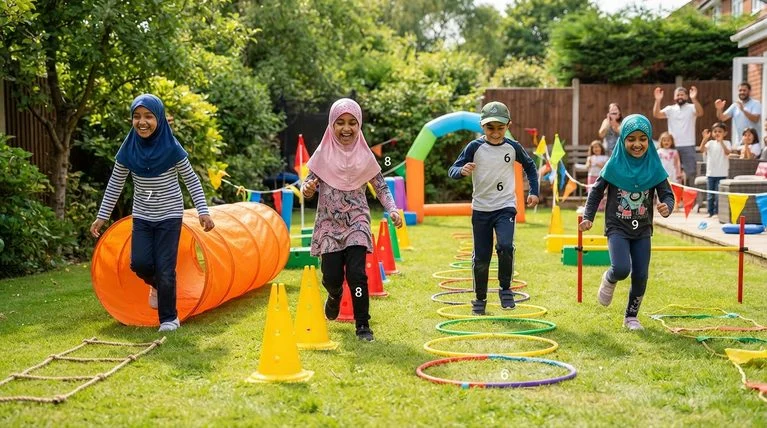
8. Obstacle Course — Arrange soft cushions, hoops, or boxes into a simple path to crawl through, step over, or walk around. Builds flexibility and safe risk-taking.
9. Animal Movement Imitation — Children copy how a chosen animal walks, jumps, or crawls. Sparks imagination and usually a lot of laughter.
10. Color Scavenger Hunt in Nature — Call out a colour; children search the outdoor space for matching objects. Builds observation and colour recognition.
11. Treasure Hunt — Hide small safe objects around a familiar space for children to find and talk about. Builds patience, movement, and a sense of achievement.
12. Rhythm Ball Passing Game — Children sit in a circle and pass a soft ball to a beat; when the rhythm stops, whoever holds it does a fun movement. Builds coordination, focus, and turn-taking.
13. Find Your Color Friend — Give each child a coloured card or wristband; on a signal, they find classmates with the same colour and form a group. Builds recognition and social connection.
14. Sound and Action Guessing Game — Play or make a familiar sound (rain, birds, traffic); children guess it and act it out. Builds listening skills and imagination.
15. Rock Painting — Children paint simple patterns or faces on smooth pebbles using safe paint. Builds fine motor skills and open-ended creativity.
16. Body Shape Creation Game — Small groups form a shape (a tree, a house, an animal) using only their bodies, then “present” it. Builds teamwork and imagination.
17. Carry Items Back to the Nest — Teams race, one at a time, to collect objects and bring them to their group’s “nest” (a basket or hoop). Builds whole-body coordination and task memory.
18. Stand–Sit on Command — The teacher calls “stand up” or “sit down” at varying speed. A gentle, inclusive way to build listening and reaction speed.
19. Spoon Passing Game — Children line up and pass a small ball or pom-pom from spoon to spoon down the line. Builds fine motor control and patience.
20. Build a Nature Tower — Children collect stones, pinecones, or small sticks and stack them into a tower, trying again if it falls. Builds balance, patience, and early problem-solving.
21. Bird Watching — Children sit quietly and describe any birds they notice — colour, size, sound. A slow, pressure-free way to build patience and attention.
22. Water Play — With a basin, cups, and safe containers, children scoop and pour, exploring full/empty and floating/sinking. Always closely supervised.
23. Bug Hunt — Children search the garden for insects, using toy magnifying glasses to look closely before gently releasing them. Builds observation and respect for living things.
24. Nature Sensory Walk — A slow walk along grass, stones, or leaves, noticing textures underfoot and sounds around them. Calming and grounding.
25. Guess and Find Objects Game — Give a clue (“something blue,” “something you draw with”); children find and explain a matching object. Builds listening and early logic.
26. Mud Pies — With damp soil or clean mud, moulds, and spoons, children shape “pies” and decorate with leaves or stones. Builds creativity and sensory exploration (hands cleaned thoroughly after).
27. Line Up by Instruction — Children line up by height, clothing colour, or another simple rule, discussing among themselves. Builds cooperation and organisation.
28. Kite Flying — In an open, obstacle-free area, children take turns holding the string and watch how wind lifts the kite. Always adult-supervised.
29. Painting with Water Guns — Children spray lightly coloured water at a board or large paper, watching colours spread and blend. An energetic, joyful art activity.
30. Stick Maze — Arrange sticks or small branches into a simple maze on the ground for children to trace with a finger or by walking. Builds spatial thinking and patience.
31. Slow Walk – Fast Walk Game — The teacher calls “slow,” “fast,” or “stop”; children adjust their pace accordingly. Builds tempo awareness and focused listening.
32. Pair Up on Command — Children move freely; on “pair up” they find a partner (or a group of three or four on a new instruction). Builds quick social reactions.
33. Match the Colors Game — Children sort coloured objects into matching containers. Builds colour recognition and independent task completion.
34. Balance Walk — Children walk along a taped or chalked line, sometimes on tiptoe or with arms out. Builds body control and confidence.
35. Yoga and Stretching Outside — Roll out a mat outdoors and lead a few simple, child-friendly poses (tree, cat-cow, butterfly). Builds body awareness, calm focus, and an early habit of mindful movement.
Educational Outdoor Activities for Preschoolers
The ideas below come from our former preschool learning guide and add a stronger early-learning angle to this broader collection of outdoor activities for kids. They focus on literacy, numeracy, memory, observation, and simple hands-on discovery while children are outside.
20 Educational Outdoor Activities for Preschoolers
1. Nature Color Hunt
Give children a list of colors to find on a nature walk. Have them identify each item’s color and draw a quick picture of it. For an extra sensory layer, collect a few items and talk about their texture, smell, and sound back at circle time. Learning objective: Color identification and sensory vocabulary.
2. Nature Memory Game
Print large matching nature images (with labels) and glue them to paper plates, then lay them face-down on the ground. Kids take turns flipping two plates at a time, keeping any matches they find. Learning objective: Memory, concentration, and nature vocabulary.
3. Nature Collage
Children gather leaves, petals, and twigs on a short walk, then arrange and glue them onto paper. A quieter option that blends art, observation, and fine motor practice. Learning objective: Observation, creative composition, and fine motor skills.
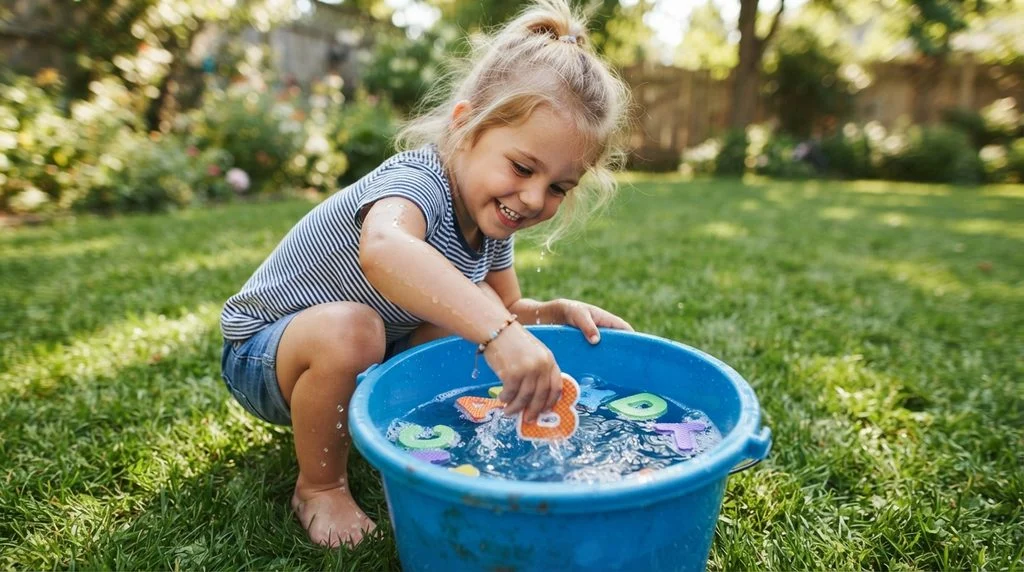
4. The Letter and Number Race
Set up two buckets — filled with water, sand, or water beads — with foam or laminated letters and numbers mixed in. Kids race to a bucket, grab an item, and sort it into a “letters” pile or a “numbers” pile. Learning objective: Letter and number recognition, and sorting.
5. Sight Word Soccer
Write sight words on index cards and tape them to small cones spread across the yard. Call out a word, and have kids kick a soccer ball toward the matching cone. Learning objective: Sight word recognition and eye-foot coordination.
6. Nature Patterns
Collect leaves, rocks, and twigs on a walk, then have kids sort them by color or size and arrange them into a pattern on the ground. Learning objective: Pattern recognition and fine motor skills.
7. Spray the Flower Letters
Draw flowers with sidewalk chalk and write a letter inside each one. Give kids a spray bottle of water, call out a letter or letter sound, and have them “water” the correct flower. Learning objective: Letter identification and fine motor skills.
8. Journey Stick
As kids collect leaves, flowers, and feathers on a nature walk, have them attach each item to a stick or piece of cardboard using string or rubber bands — building a physical timeline of their walk. Learning objective: Nature discovery and shape identification.
9. Outdoor Dramatic Play
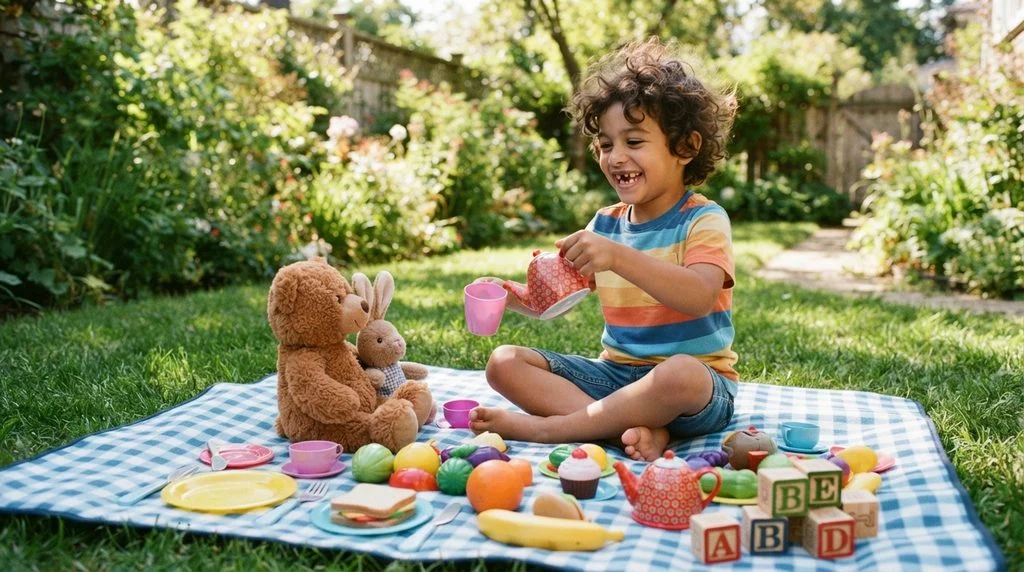
Bring costumes and outdoor-appropriate props, then let kids act out scenarios like camping, a picnic, or exploring a nature preserve. Learning objective: Storytelling, problem-solving, and language skills.
10. Leaf Printing
Collect leaves with prominent veins, apply paint to the veined side with a sponge, then press them onto paper to create a print. Learning objective: Learning leaf structure and fine motor skills.
11. Nature Letters
Have kids form letters using sticks, rocks, and leaves — or search for natural objects that already resemble letters, like a round stone for “O.” Learning objective: Identifying and constructing letter shapes.
12. Tree Bark Imprints
Tape paper around a tree trunk and have kids color over it with unwrapped crayons to reveal the bark’s texture underneath. Talk through the patterns that show up. Learning objective: Fine motor skills and texture/color recognition.
13. Color Hop
Draw large colored circles on the ground with chalk, call out a color, and have kids hop into the matching circle. Learning objective: Listening skills, color recognition, and gross motor skills.
14. Alphabet Obstacle Course
Write letters on pool noodle pieces or cards staked into the ground, arranged in alphabetical order to form a course. Kids run through, calling out each letter as they pass. Learning objective: Alphabetical order and motor skills.
15. Chalk Counting Garden
Draw circles with numbers inside on the pavement, then have kids draw the matching number of flower petals around each one. Learning objective: Number recognition and counting.
16. Hopscotch
The playground classic. Draw a hopscotch grid, have kids toss a rock into a square, then hop through the numbers in order, saying each number aloud as they land. Learning objective: Balance and number recognition.
17. Chalk Painting
Mix up a paintable mixture using cornstarch, baking soda, food coloring, water, and vinegar, then fill squirt bottles. Let kids squirt the paint onto the ground and watch what happens as colors mix. Learning objective: Color mixing and hand strength.
18. Maple Seed Dragonflies
Collect maple seed “helicopters” and twigs. Paint the seeds and glue them onto a twig to form dragonfly wings (use leaves as a substitute if maple seeds aren’t available). Learning objective: Learning about insects and fine motor skills.
19. Acorn Shapes
Draw simple shapes in the dirt or on pavement, then have kids place acorns or small stones along the outlines to trace them. Learning objective: Shape identification and creation.
20. Nature Faces
Draw a large circle on the ground to represent a head, then let kids use grass, stones, and leaves to build facial features — eyes, a nose, a mouth. Learning objective: Identifying facial features and fine motor skills.
Things to Consider When Organising Outdoor Activities for Kids
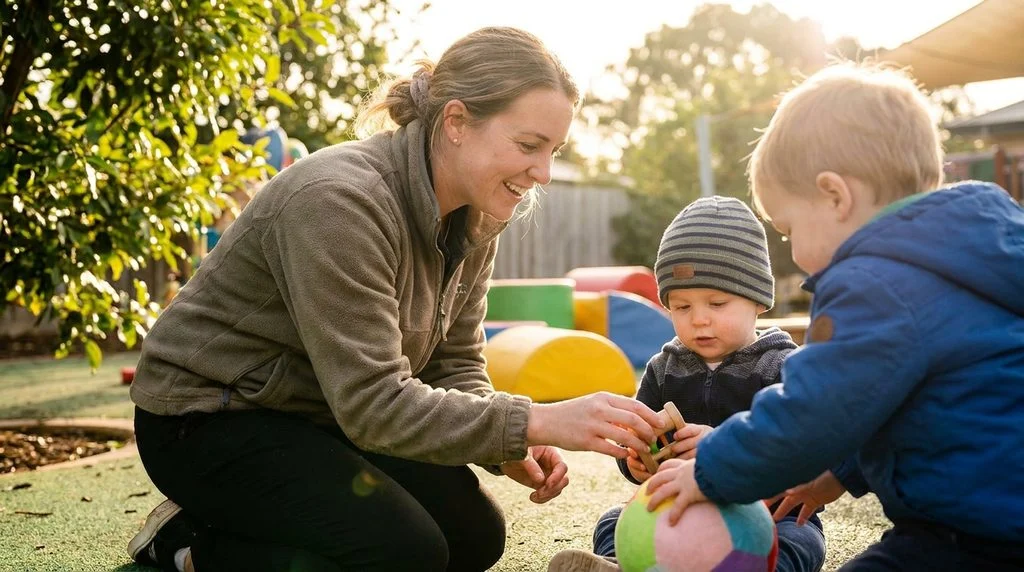
Outdoor Activities For Kids work best when adults observe first and adapt as they go, rather than sticking rigidly to a plan.
- Prioritising safety and comfort
Play areas should be clean, level, and free of sharp or slippery surfaces, with equipment sized and weighted for preschool-aged children.
- Respecting each child’s pace and abilities
Confidence and energy vary widely at this age. Some children dive straight into movement; others prefer to watch first. Letting children choose how they join in helps them feel respected and safe.
- Keeping activities flexible and weather-aware
Session length should flex with weather and energy levels. If children show signs of tiredness or overheating, shift to a calmer activity or move indoors.
- Encouraging exploration rather than pressure
The goal is enjoyment and discovery, not “getting it right.” Gentle encouragement helps children try new things without fear of failing.
Nurturing a Love of Learning Through Outdoor Experiences
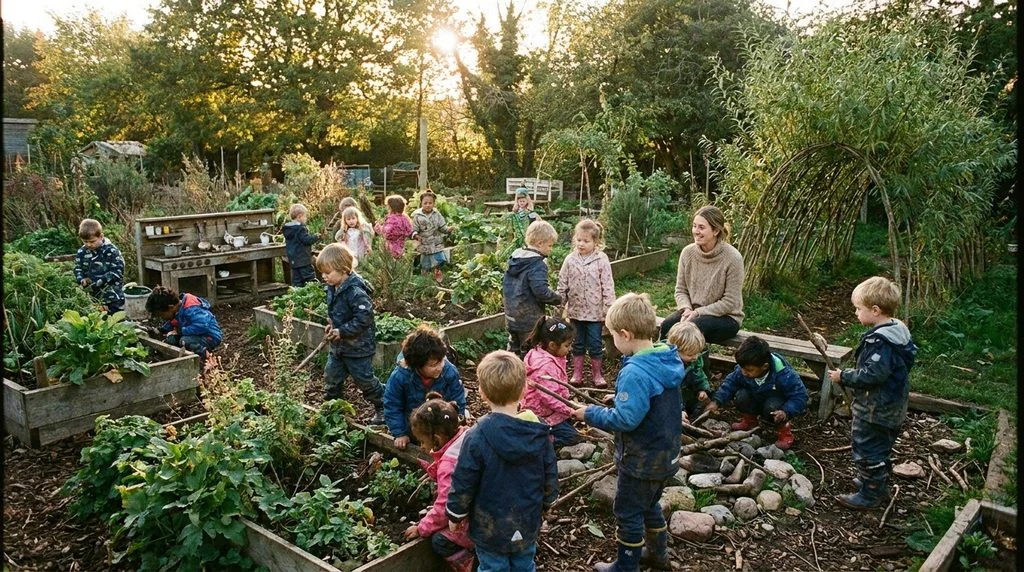
Thoughtful outdoor activities for kids give preschoolers far more than a chance to move — they help children observe the world, connect with peers, and tune into their own feelings through simple, natural experiences. With thoughtful encouragement, each outdoor moment becomes part of a child’s broader growth.
Whether at home or in a classroom setting, weaving outdoor activities for kids into daily routines — rather than treating them as an occasional break — helps children explore and develop at their own pace within a safe, engaging environment that values their individuality. Parents and educators working together on this can nurture curiosity and a lasting love of learning that carries well beyond the preschool years.
FAQs About Outdoor Activities for Kids
How long should preschool children spend on outdoor activities each day?
There is no single duration that suits every child. Many preschoolers do well with shorter, regular outdoor sessions that match their age, energy, physical abilities, and the weather. A positive 15-minute session is more useful than forcing a long period when a child is tired or uncomfortable.
Can outdoor activities replace classroom learning?
Outdoor activities can reinforce classroom learning, but they do not need to replace every structured lesson. Math, science, language, and problem-solving often become easier to understand when children can practise them through movement, nature, and hands-on play.
What if we have limited outdoor space?
A large backyard is not required. A small patio, driveway, local park, neighborhood walk, container garden, chalk area, or supervised water-play station can provide plenty of room for simple outdoor learning.
Should shy or less active children take part in outdoor activities?
Yes, but at their own pace. Letting a child watch first, choose a quieter role, or join alongside a trusted adult or friend can help them feel secure and participate without pressure.
Do outdoor activities for kids require complex equipment?
Rarely. Everyday items—or no equipment at all—are usually enough. What matters more is using a safe space, choosing an age-appropriate activity, and allowing children to adapt the game as they play.
What can we do when the weather is not suitable for outdoor play?
Move a few light movement, sorting, or imaginative games indoors when there is extreme heat, poor air quality, heavy rain, or another unsafe condition. Choose a clear indoor space and adjust activities so children are not running near furniture or slippery surfaces.
How involved should adults be in outdoor activities?
Adults should prepare a safe space, explain essential boundaries, and stay close enough to supervise. After that, gentle observation and occasional guidance usually give children more room to explore, solve problems, and build confidence.
At what age can children start these outdoor activities?
Many ideas can be adapted from around age two with close adult supervision, simple materials, and short instructions. Older preschoolers can gradually try more structured games such as relay races, scavenger hunts, and obstacle courses. Always adjust small objects, water activities, tools, and physical challenges to the individual child.