Indoor Recess Ideas That Keep Kids Learning and Moving
Indoor recess ideas need to do two things at once: give kids a real break from lessons and keep a classroom manageable when weather cancels outdoor play. The best options mix movement, creativity, teamwork, and quieter choices so students can reset without turning the room into chaos.
This guide is written for teachers and classrooms, with indoor recess ideas organized by age group plus flexible favorites that work across elementary grades. For general at-home boredom busters, see our indoor activities for kids guide instead.
Top 10 Indoor Recess Ideas for the Classroom
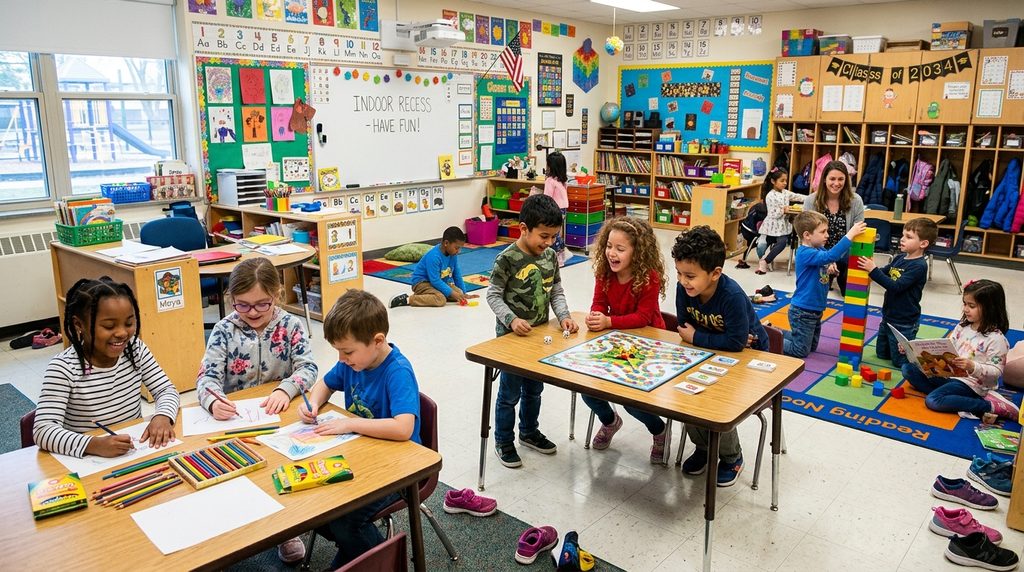
These indoor recess ideas are easy to rotate through the week, so students get variety without teachers needing a completely new setup every day.
- Musical chairs
- Arts and crafts
- Balloon volleyball
- Puzzles
- Board games
- Dress-up
- Movement games
- Cooking and baking
- Paper airplane competitions
- Action-packed songs
Activities for Any Age Group
Arts & Crafts Projects
Art projects take a bit more setup than other indoor recess activities, but kids love channeling their energy into something creative.
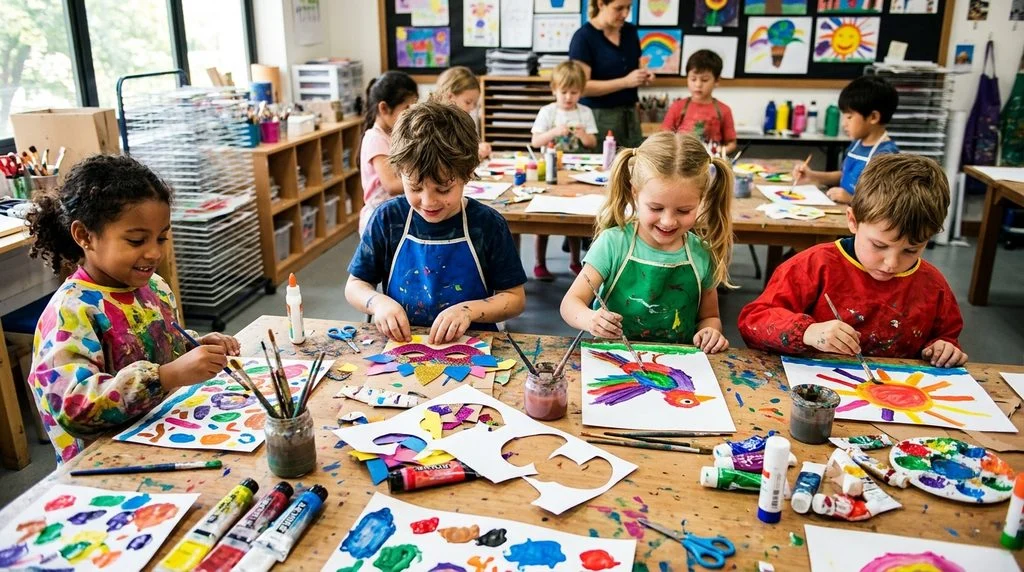
- Painting: Finger paints or watercolors give kids a genuine outlet to de-stress. Keep a stash of old aprons and lay down newspaper to manage the mess.
- Coloring: One of the simplest options — keep a stock of donated coloring books, or have students bring their own to store in their desks.
- Drawing: Let kids free-draw, or guide the whole class through a step-by-step directed drawing using online tutorials. Watching a few ovals turn into a confident sketch builds real pride.
- Playdough: A sure hit with younger kids, and often popular with older ones too. Use mats to keep the mess contained.
- Mixed-media crafts: A table stocked with string, pasta, stickers, and googly eyes can turn into anything from macaroni necklaces to pipe-cleaner animals. A quick demo helps spark ideas.
- Origami: Great for older kids with the patience and fine motor skills for folding. Point them to books or videos with designs that interest them.
- Collages: Old magazines, paper, glue, and scissors let kids build personalized collages — favorite foods, animals, or words that describe them.
- Journaling: Have students draw or write a few sentences reflecting on their day, and decorate the page like a mini scrapbook.
Physical Activities and Games
Sometimes kids need to move, not sit. These games get bodies active — and most need no equipment at all.
Directed Dancing: Put on a dance video and let kids shake off their energy, or try the Wax Museum Challenge — one “guard” stands with their back turned while the rest of the class dances silently, freezing the moment the guard turns around.
Hopscotch: Use masking tape to lay out a hopscotch grid on the floor, swapping a rock for a beanbag.
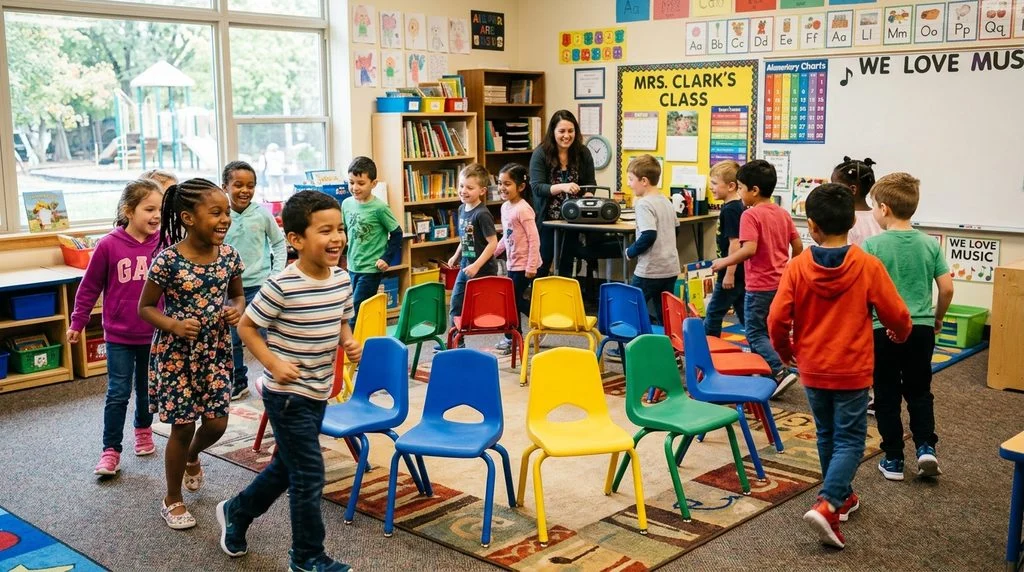
Musical Chairs: A classroom classic. For a calmer version, use hula hoops on the floor instead of chairs, removing one each round.
Tissue Box Skating: Borrowed from occupational therapy, this works especially well on snowy days. Kids decorate old tissue boxes as “skates” and glide around the room — pair it with Red Light, Green Light for a listening and motor-planning boost.
Balloon Volleyball: Blow up balloons and let the game begin, either free-for-all or split into two teams. For a twist, whoever hits the balloon calls out the name of the next student to hit it.
Human Knot: Kids form a tight circle, grab two different classmates’ hands, and work together to untangle themselves into a smooth circle without letting go. Split larger classes into two or three smaller circles to make it more manageable.
Yoga: Combines movement with mindfulness, helping kids refocus their attention. Guide the class through simple poses using an open floor area — plenty of kid-friendly yoga videos online make this easy to lead.
Classic Movement Games: Simon Says and Duck, Duck, Goose work well for younger kids, while Four Corners suits older ones.
Board, Card & Seated Games
For a calmer classroom, these games keep kids engaged without the higher energy of movement-based play.
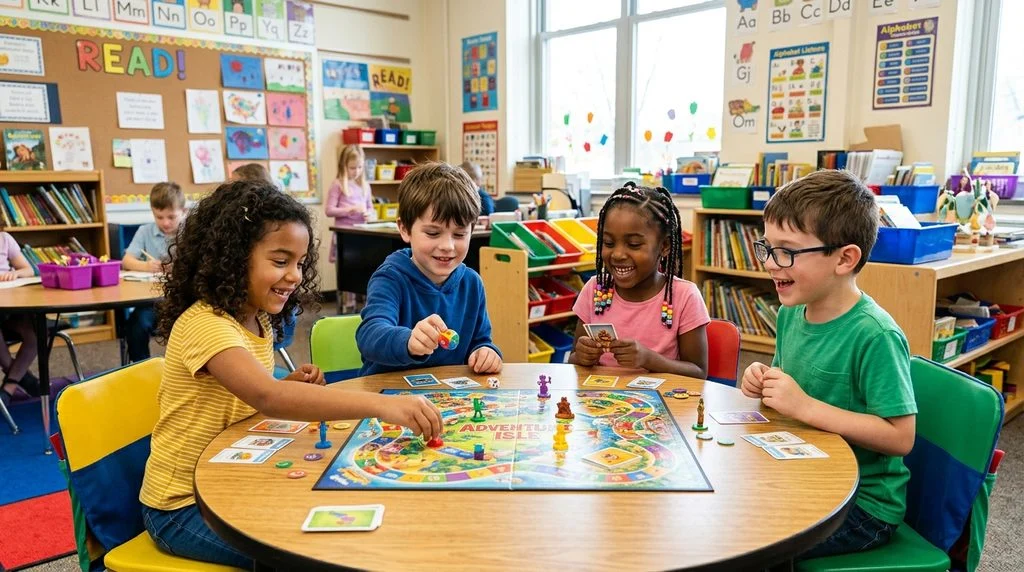
- Board games, checkers, and chess: Beyond the fun, these build critical thinking, strategy, and social skills through paired play.
- Card games: Go Fish and Old Maid offer cooperative, low-stakes fun.
- Hand-clapping games: Chants like “Miss Mary Mack” build coordination, rhythm, memory, and wordplay — though they’re not the quietest option.
- Guessing games: Heads Up Seven Up, Who Has the Bean, and Pictionary keep kids engaged through a bit of mystery.
Educational Recess Activities
There’s always room to sneak in some learning during playtime.
- Trivia cards: A stash of age-appropriate trivia keeps kids guessing and learning throughout the year.
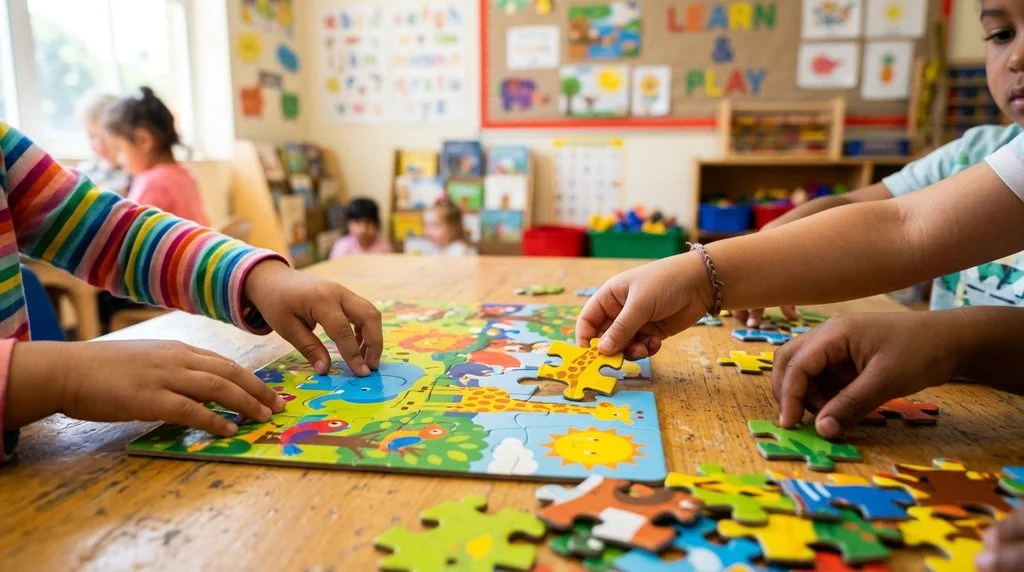
- Puzzles: Colorful, simple puzzles build spatial reasoning and manual dexterity — animal or character designs are always popular.
- Word or number games: Word searches, crosswords, Sudoku, or a game of hangman on the whiteboard all work well.
- Pass the Chicken: A circle game where a squeaky toy gets passed around while one student answers a review question — if they can’t answer in time, they do a “chicken dance.”
- Cooking: A simple no-bake recipe lets kids measure, mix, and practice real math and science skills — try a dry trail mix for a lower-mess option.
- Building blocks: Blocks build decision-making, coordination, and social skills at any age. Younger kids explore shape and size; older kids tackle more complex structures and teamwork challenges. Lighter cardboard or foam blocks reduce injury risk for younger children, while older students can handle heavier wooden or interlocking sets.
Indoor Recess by Grade Level
Pre-K to Kindergarten
- Building toys: Free play with blocks builds creativity, fine motor skills, and coordination.
- Action-packed songs: “Ring Around the Rosie” or “The Hokey Pokey” get kids moving, or try a color-recognition song for a more controlled activity.
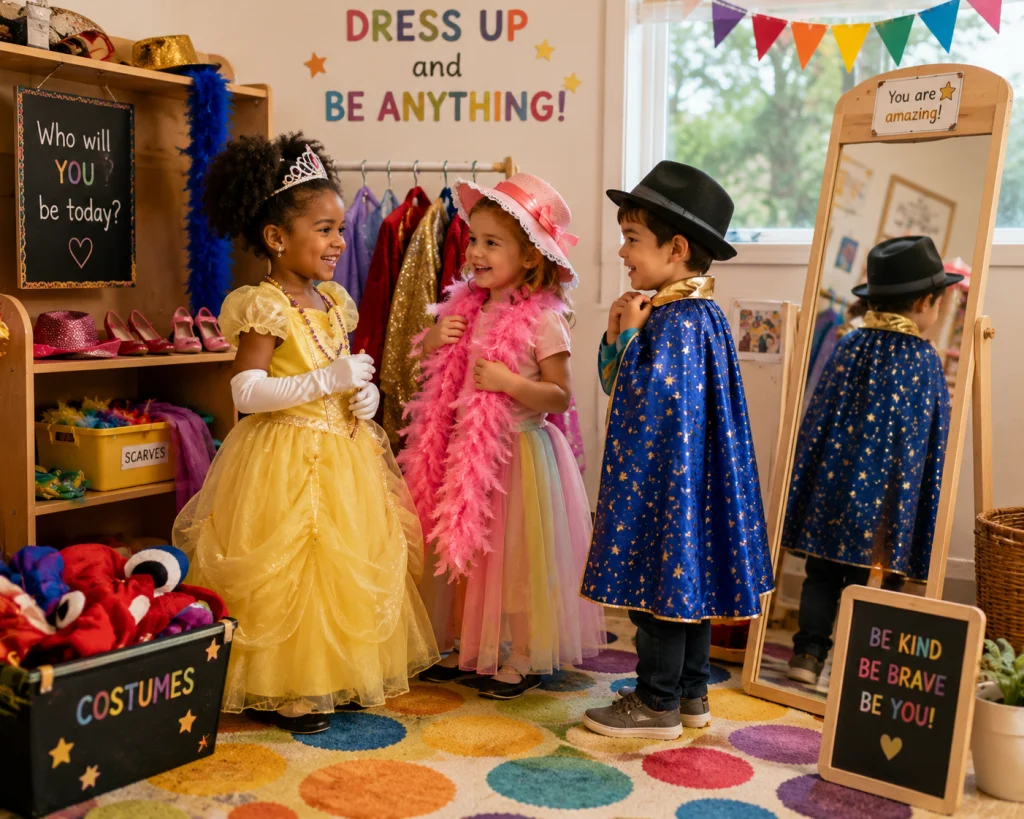
- Dress-up: A box of donated costumes and a full-length mirror make for endless imaginative play.
- Drawing and coloring: Add soft background music to spark young imaginations during free coloring time.
- Movement games: Red Light, Green Light builds motor-planning and listening skills — give specific movement instructions like tiptoeing or hopping like a bunny.
- Parachute play: A multicolored parachute lets kids build cooperation and motor skills through group movement, or by bouncing small stuffed animals in the fabric.
Grades 1–2
- Memory games: Matching card games are a hit with this age group.
- Musical games: Musical chairs or Hot Potato — pass an eraser or ball around until the music stops.
- Four Corners: Number each corner of the room, choose one student to be “it,” and watch kids quietly creep between corners to avoid elimination.
- Kid-created games: Have students decorate paper plates into rings for a homemade ring toss, aiming at bottles or cardboard targets — assign point values for a math twist.
- Personal toys: Letting kids bring a favorite toy from home for indoor recess adds a novel, comforting dose of fun.
For grades 3–4, choose indoor recess ideas that add teamwork, light competition, and problem-solving without needing much setup. The most useful indoor recess ideas at this age can also be stopped quickly when recess ends.
Grades 3–4
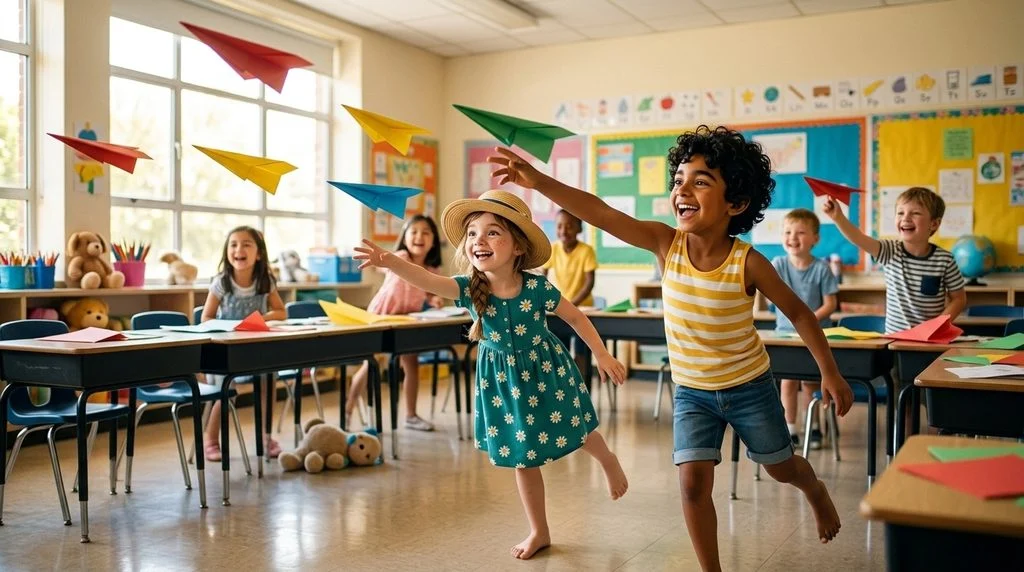
- Paper airplane competitions: Online tutorials offer everything from simple folds to more advanced designs.
- Hot and Cold: One student searches for a hidden object while classmates guide them with “hot” and “cold” clues — great for building descriptive vocabulary.
- Silent Ball: Students throw a ball around a circle in complete silence — talking, laughing, or dropping the ball means you’re out. A variation called Silence has kids arrange themselves in a line (alphabetically, by birthday, or another rule) without speaking a word.
- Strategy games: Peg-guessing games where kids deduce an opponent’s hidden setup appeal to this age group’s growing love of strategy.
Older elementary students usually respond best to indoor recess ideas that feel social, creative, and a little less childlike. Give students a choice between two or three indoor recess ideas so the break still feels like free time.
Grades 5–6
- Quiet writing or drawing time: Older kids often enjoy journaling or sketching more than traditional coloring books.
- Heads Up, Seven Up: A classroom favorite — seven students quietly choose classmates to guess who picked them.
- Guessing games and Charades: Add an educational twist by having kids act out historical figures, book characters, or science concepts.
- Movies or shows: Older students are often happy to settle in and watch — a nature or science documentary works well if you want to sneak in some learning.
- Exquisite Corpse: A folded-paper storytelling (or drawing) game where each student adds a line without seeing what came before, ending in a wonderfully absurd collaborative story.
If the class needs something calmer, pull ideas from our independent activities for kids list and adapt them for table stations. For a broader mix of home-friendly options, use the indoor activities for kids pillar.
How to Make Indoor Recess Ideas Work in the Classroom
Good indoor recess ideas are easier to manage when materials are stored together and students already know the basic rules for each option.
The right indoor recess ideas can make a weather-canceled break feel purposeful instead of stressful. With the right mix of movement, quiet games, and creative projects, it can be just as valuable as outdoor play — building teamwork, fine motor skills, and problem-solving while giving kids a genuine break from the lesson plan. And when the weather finally clears up, that same energy is ready to head right back outside.
Indoor recess ideas do not need to be elaborate; a small rotation of reliable games, movement activities, and quiet choices is usually enough to keep classroom breaks fresh.