12 Toddler Breakfast Ideas with Simple Real-Food Plates
These toddler breakfast ideas are built around simple plates rather than complicated recipes. Each day combines a few familiar foods into an easy breakfast that can be adjusted for your toddler’s appetite, preferences, and eating skills.
Use the 12 toddler breakfast ideas below as inspiration, not a rigid meal plan. The goal is to make mornings easier with repeatable combinations, while keeping textures and pieces appropriate for your child and following any allergy guidance you already use.

The Simple 1-2-3 Formula for Toddler Breakfast Ideas
This simple formula makes toddler breakfast ideas easier to build without needing a new recipe every morning.
Before diving into the 12 plates, it helps to know the basic formula behind almost all of them:
- Pick a protein or iron source — eggs, cottage cheese, yogurt, beans, or meat
- Add flavour with fruit or vegetables
- Add extra energy — a starchy carb like toast, oats, or a waffle
Once this becomes second nature, building a balanced toddler breakfast on the fly gets a lot easier — even on the days you’re improvising with whatever’s left in the fridge.
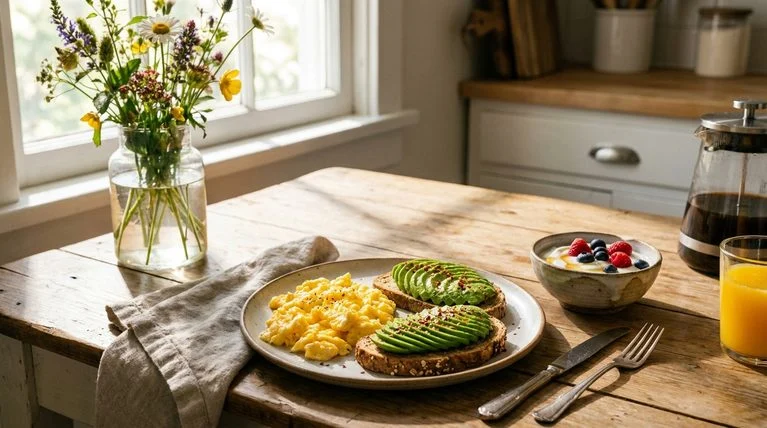
Day 1: Avocado Toast, Strawberries, and a Hard-Boiled Egg
Avocado toast, strawberries, and egg bring creamy, juicy, and firm textures to one simple plate. Spread the avocado thinly, cut the toast into easy-to-hold strips, and prepare the egg and berries in shapes your toddler can manage safely.
A simple, balanced plate that follows the 1-2-3 formula perfectly: egg for protein, strawberries for flavour, and toast for energy.

Day 2: Oatmeal Squares with Whole Milk, Semi-Frozen Blueberries, and Chopped Pecans
Cereal in a bowl is still a completely valid breakfast — it’s often a toddler favourite and good practice for fine motor skills. Choose options with less added sugar and fewer artificial colours, then think of the cereal as a base layer: fruits, nuts, and seeds add colour, flavour, and real nutrition on top. Semi-frozen fruit is a nice trick, since it keeps the milk cold and can turn it a fun, natural colour.

Day 3: Fried Egg, Roasted Sweet Potato with Butter and Cinnamon, Half a Frozen Waffle
This warm plate is easy to vary: swap the sweet potato for soft roasted squash, serve the egg in strips or small pieces, and choose a plain whole-grain waffle when available. Cinnamon adds flavour without needing extra sweetness.
Toddlers often eat differently depending on who’s cooking, and that’s a completely normal part of development — learning flexibility around food appearance and prep style. Try serving the same staple foods in slightly different ways to keep mealtimes interesting for everyone.
Day 4: Homemade Sweet Rolls, Chopped Pecans, and Raspberries
Every family needs an occasional treat morning. Feeding culture can lean heavily toward “all or nothing” thinking about nutrition, but perfection isn’t sustainable or necessary. Teaching kids how to approach food is just as important as teaching what to eat — some foods are for everyday growth, and some are simply for enjoyment.

Day 5: Black Beans, Fried Egg, and Sliced Avocado
Beans, egg, and avocado make a savoury breakfast with three soft textures. Lightly mash the beans and avocado for newer eaters, or serve each food separately if your toddler prefers foods not to touch.
Breakfast foods don’t have to be sweet or starchy. Leftover veggies — beans, sweet potatoes, tomatoes, zucchini — pair well with almost any breakfast protein, and breakfasts built around vegetables are a smart move on days when lunch or dinner might come from a packet instead. There’s no official rulebook for what counts as “breakfast food,” so feel free to expand beyond the usual toaster pastries and granola bars.
Day 6: Diced Kiwi, Whole-Fat Cottage Cheese, and Buttered Toast
Some mornings call for genuine simplicity. If toddler-feeding content online starts to feel overwhelming or like everyone else has it more figured out, remember the real goal is simple: helping your child enjoy real, whole foods. That’s it.

Day 7: Scrambled Egg, Banana Bread, and Cherry Tomatoes with Basil and Olive Oil
Banana bread makes this plate familiar, while egg and tomato add a savoury contrast. Quarter cherry tomatoes lengthwise for toddlers, and serve the basil finely chopped rather than as large leaves.
A great excuse to eat something you grew yourself. A small home garden — even a single pot on a balcony — is a wonderful way to get toddlers engaged in mealtimes. Lettuce, tomatoes, and fresh herbs all grow easily in small spaces, and letting toddlers help plant, water, and eventually harvest builds real excitement around food.
Day 8: Thinly Sliced Apples, Natural Peanut Butter, Raisins, and Crumbled Granola
For the mornings you’re already running behind schedule. Keeping a few nutrient-packed, zero-prep meals in your back pocket is a genuinely useful strategy for days with no time to plan or cook — just remember the same 1-2-3 formula from Day 1 while assembling it.

Day 9: White Cheddar Asparagus Quiche, Medjool Dates, and Roasted Acorn Squash
Quiche works especially well as a make-ahead option. Reheat a toddler-size portion until hot, let it cool before serving, offer the squash soft, and remove the date pit before cutting the sticky fruit into small, manageable pieces.
Trying something new. It’s easy for adults to fall into a rut of eating the same rotating handful of foods, often for valid reasons — time, energy, or motivation. But one of the most powerful things parents can do to raise adventurous eaters is model adventurous eating themselves.
Day 10: Blueberry Muffin (Boxed Mix + Extra Fresh Berries), Cheese Slices, More Blueberries
Adding fresh to convenience. A from-scratch breakfast every single day of a busy work week isn’t realistic for most families, and that’s okay. Using a pre-made base — a boxed muffin mix, a frozen burrito, a can of soup — and adding fresh ingredients on top is a practical way to boost nutrition without starting from zero.

Day 11: Whole Wheat Baguette with Nutella, Mandarin Oranges, and Tart Cherries
This plate pairs a sweet spread with fruit and bread, so a thin layer of spread is plenty. Remove every cherry pit, then cut the fruit and baguette into shapes your toddler can chew comfortably.
A morning to think about food a little differently. Children are born with a natural ability to regulate their own appetite and stop eating when full — even when it looks like “not enough” to a watching parent. Following their cues, rather than pushing extra bites, respects that instinct.
Day 12: Egg Sandwich (White Cheddar and Fried Egg on Brioche), Chunky Avocado Dip, Sliced Mango
The final day, and the most important theme of all: eating as a family. Establishing regular family mealtime routines builds a genuine bond and gives everyone a chance to share the day’s stories, struggles, and plans. It’s also a parent’s best chance to model healthy eating habits. If there’s one thing to take away from this whole series, it’s this: prepare one balanced, tasty meal for the whole family, and let everyone decide for themselves what and how much they’ll eat — without needing to prepare alternatives.
More No-Fuss Toddler Breakfast Ideas
These extra toddler breakfast ideas are useful when you want a quick backup plate using foods already in the fridge or pantry.
A few extra simple combinations gathered from other pediatric dietitians, easy to slot into your own rotation:
- Soft cheese cubes and soft fruit pieces — A genuinely balanced, zero-cook fallback for mornings with no time to prepare anything. It also gives toddlers good practice with their pincer grasp.
- Burrito bowl from leftovers — Turn last night’s taco filling into a protein-, fibre-, and antioxidant-rich breakfast bowl, topped with a side of berries.
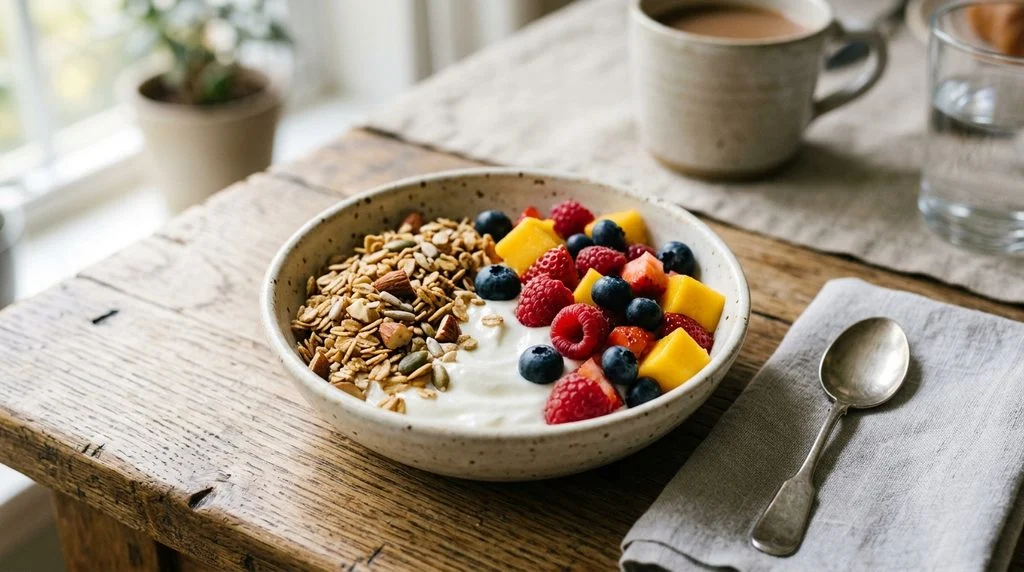
- Plain yogurt with fresh fruit and toasted oats — Skip the sugary flavoured yogurts (many pack more added sugar than a toddler should have all day) and flavour plain yogurt yourself with fresh fruit and a sprinkle of crunchy oats.
More Breakfast Guides for Kids
- For a broader collection sorted by prep time, see our quick breakfast ideas for kids.
- For weekend batch prep, browse our meal prep breakfast recipes for kids.
- For protein-focused mornings, see our high-protein breakfast ideas for kids.
- For feeding questions by age, read our breakfast guide for babies, toddlers, and kids.
Final Thoughts on Toddler Breakfast Ideas
Start with two or three toddler breakfast ideas your child already enjoys, then rotate small variations instead of trying to create a brand-new breakfast every day.
None of these 12 breakfasts require a special recipe, a trip to a specialty grocery store, or advanced cooking skills — just a bit of intention in combining a protein, a fruit or vegetable, and a source of energy. Rotate through a few of these ideas, adjust based on what your toddler is into that week, and remember: some mornings will be beautifully balanced, and others will be cereal in a bowl. Both count.