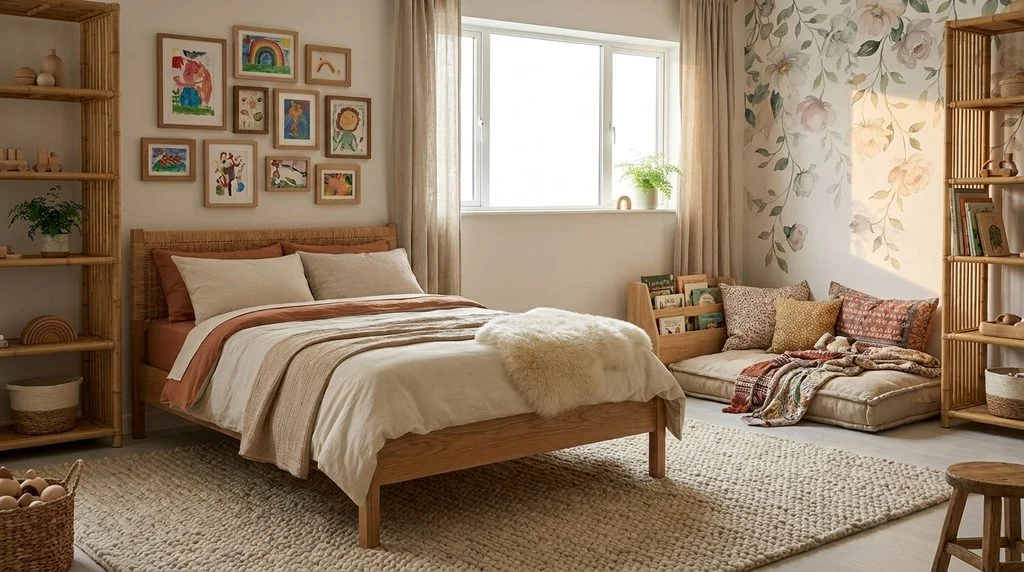
55 Kids’ Bedroom Ideas That Grow With Your Child
Designing a kid’s bedroom means balancing two things that don’t always agree: what your child loves right now, and a room you won’t want to redo in two years. The good news is you don’t have to choose. With the right foundation — a flexible colour palette, furniture that adapts, and personal touches that are easy to swap — you can build a room that feels exciting today and still works as your child grows into a tween or teen.
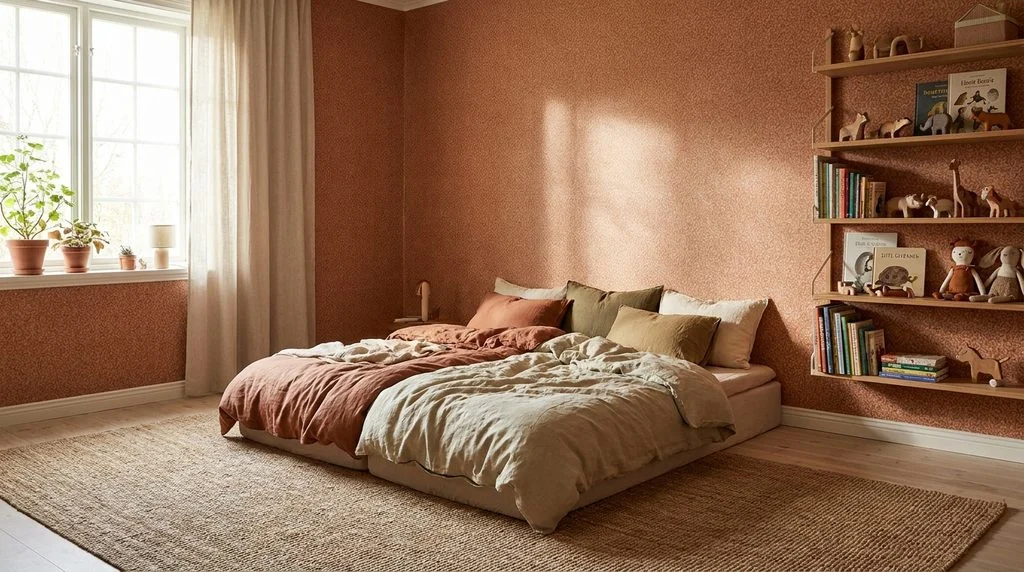
Below are 55 kids’ bedroom ideas covering colour, furniture, storage, play spaces and personal touches, refreshed for 2026. This year’s biggest shift: fewer themed, “toy chest” rooms tied to a passing phase, and more warm, collected spaces built to last — plus a resurgence of nature-inspired palettes replacing the cooler greys and washed-out pastels that dominated a few years ago.
Colour & Wallpaper
1. Warm, Earthy Tones Over Cool Pastels
2026’s palettes are trading icy grey and washed-out pastel for warmer, more grounded colours — soft terracotta, apricot, moss green and caramel. These read as cosy rather than clinical and photograph beautifully in natural light.
2. Matching Bed Frames for Shared Rooms
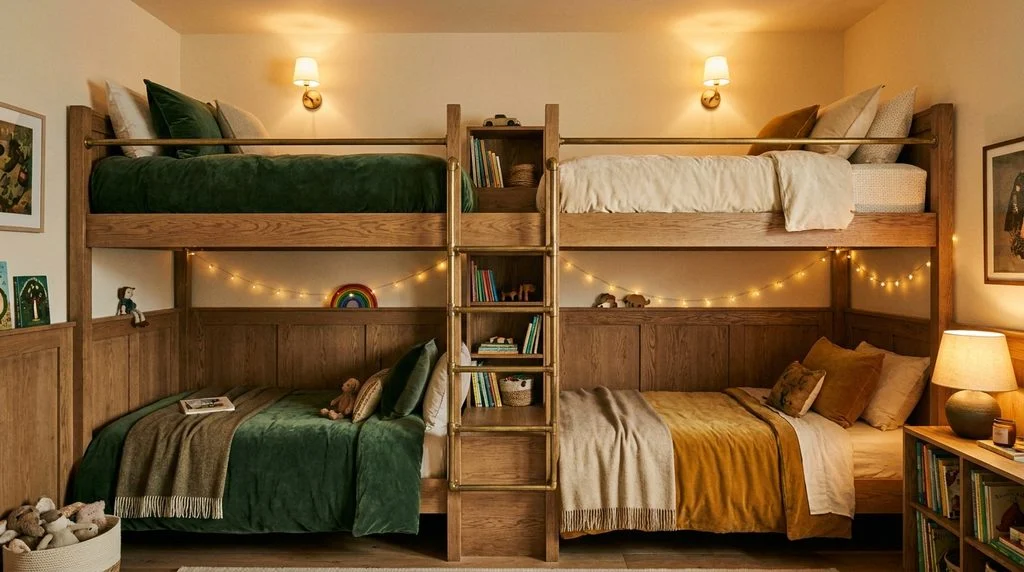
In a shared bedroom, identical bed frames and matching linens create instant visual harmony. Let each child express their own taste through bedside lamps, favourite stuffed animals or individual wall art instead.
3. A Restrained, Neutral Base
A soft neutral palette is a safe long-term bet, since a child’s favourite colour tends to change every year or two. Layer in personality through pillows, art and small accessories that are cheap and easy to update.
4. Statement Wallpaper as the Foundation
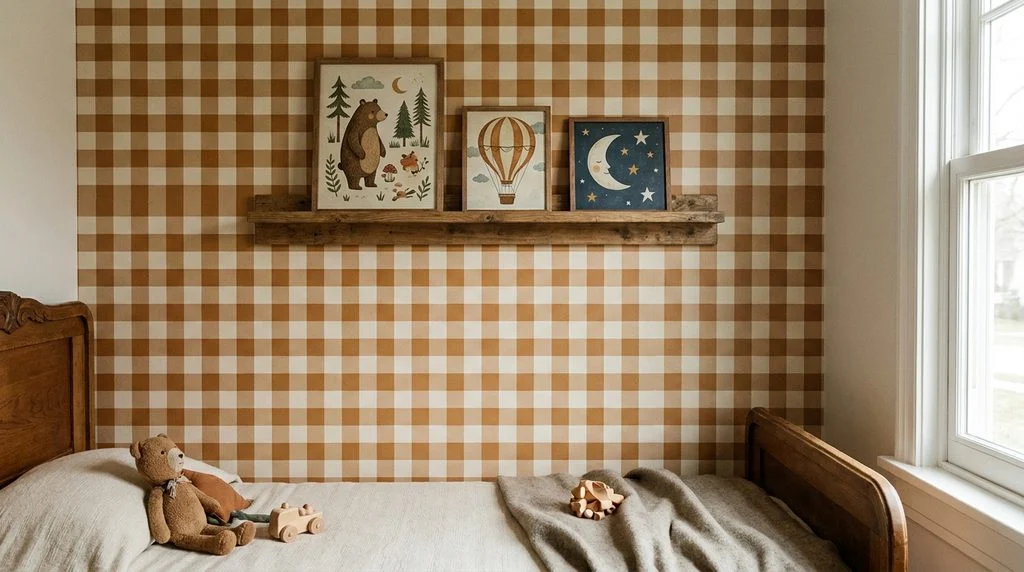
Rather than a themed mural that a child will outgrow, 2026’s approach treats wallpaper as a timeless backdrop — think classic plaid, gingham or stripe — with furniture and decor layered on top and swapped out as tastes change.
5. A Wallpapered Ceiling
Wallpapering the ceiling instead of (or in addition to) the walls is an easy way to make a room feel special without overwhelming it. A pendant light finishes the look. If it feels like too much commitment, a painted contrasting colour or removable decals work just as well.
6. Color-Drenching
Coating walls, trim and ceiling in one or two tones of the same colour — a technique known as colour-drenching — creates a bold, cocooning effect that photographs like a design magazine spread while staying simple to execute.
7. A Single Accent Wall
One statement wall — in paint, wallpaper or even a mural — gives a room a clear focal point and an easy backdrop for a bed or desk, without the cost of doing the whole room.
8. Nature-Inspired, Gender-Neutral Palettes
Soft greens, warm browns and botanical motifs are trending for 2026 partly because they work for any child, at any age, regardless of gender-specific themes — useful if the room needs to serve more than one kid over time.
Furniture That Grows With Them
9. Adjustable and Extendable Beds
Furniture that physically grows with a child — extendable bed frames, modular bunk systems, cots that convert to toddler beds — is one of the strongest 2026 trends, driven by parents wanting fewer big furniture replacements.
10. Bunk Beds With Flexible Configurations
Bunk beds remain a space-saving staple, but 2026’s versions favour separable frames or removable ladders so the same set can split into two standalone beds later, or work for a sleepover crowd in the meantime.
11. A Statement Furniture Piece
Basic white or natural wood furniture is a safe choice, but one standout piece — a sculptural chair, a boldly shaped nightstand — adds visual interest without redoing the whole room.
12. Furniture That Can Be Refinished or Repainted
Solid wood pieces in classic shapes are favoured in 2026 over particleboard basics, partly because they can be sanded and repainted as tastes change, rather than replaced outright.
13. A Cozy Daybed by the Window
A daybed tucked under a window works double duty as a place to sleep, read or lounge, and adds a slightly more grown-up feel than a standard bed frame.
14. Multi-Purpose Furniture for Small Rooms
With space at a premium, furniture that serves more than one function — a bed with built-in drawers, a desk that folds away — is a defining feature of 2026 kids’ room design.
Storage & Organization
15. Storage Beds as a Room-Planning Strategy
Built-in storage under the bed is increasingly treated as a core part of the room’s layout rather than an add-on, especially in smaller bedrooms where floor space for a separate dresser is tight.
16. Baskets in Playful Shapes
Fabric or woven baskets in fun shapes keep toys contained while adding texture and colour, and they’re easy to swap out as a child’s taste evolves.
17. Floating Shelves and Toy Storage Benches
Open shelving at a child’s height, paired with a low bench for toy bins, keeps everyday items within reach and encourages kids to help with tidying up.
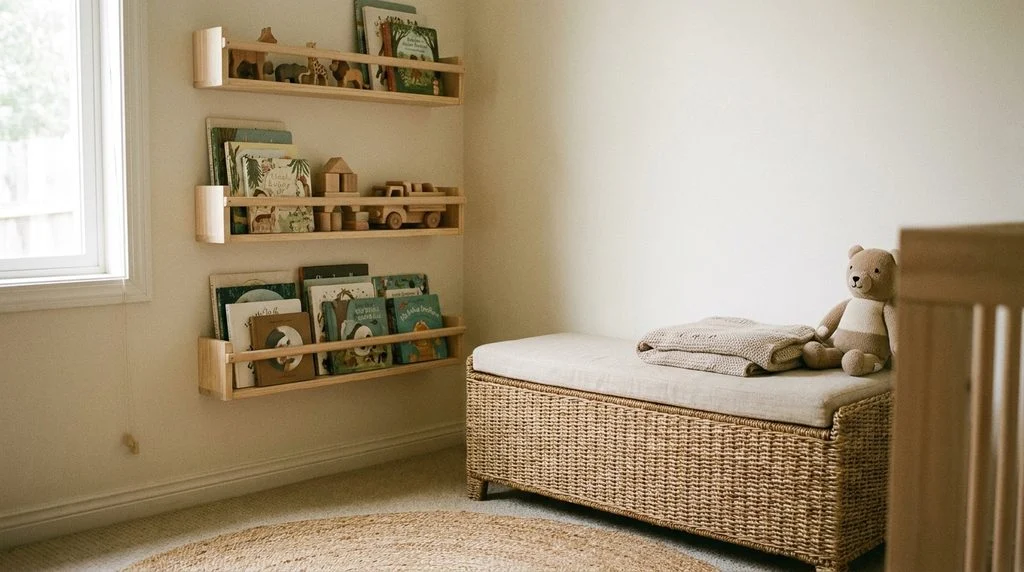
18. Low, Reachable Toy and Book Storage
Since kids spend so much time playing on the floor, keeping books and toys stored low and within reach makes the room easier for them to use — and easier for everyone to keep tidy.
19. Modular Shelving That Reconfigures
Shelving units that can be rearranged or expanded save families from buying all-new storage every time a room’s needs change, from nursery to grade-schooler to teen.
Play Areas & Reading Nooks
20. A Dedicated Reading Nook
A small chair or floor cushion tucked into a quiet corner, away from the bed and play area, gives a child their own spot to settle into a book and builds a reading habit.
21. Turning Awkward Corners Into Play Spots
Leftover corners and narrow nooks can become a mini play area with a shelf of favourite books, a basket of toys and a small chair — a good way to use space that would otherwise sit empty.
22. A Bright, Inviting Homework Corner
As kids get older, a well-lit desk area with colourful supplies close at hand can make the difference between dreading homework and actually sitting down to do it.
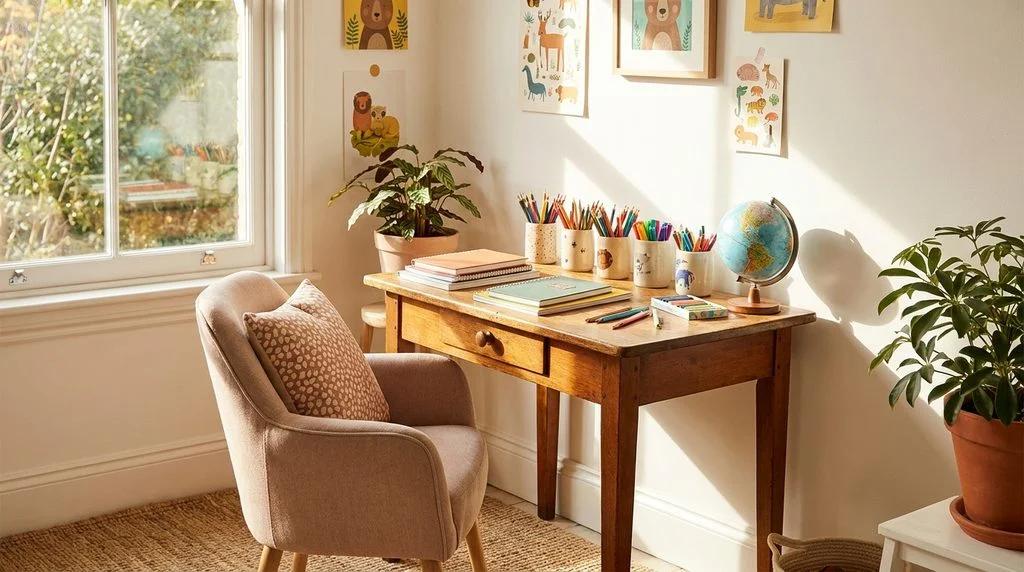
23. A Sophisticated Study Space for Older Kids
As children age into their tween and teen years, a proper desk-and-cabinet setup along an empty wall gives them a real workspace, rather than a small kids’ desk they’ve outgrown.
Personal Touches & Art
24. Displaying Kids’ Own Artwork
A gallery wall filled with a child’s own drawings and paintings, hung in simple matching frames, is easy to refresh as new artwork comes home from school.
25. A Kid-Height Gallery Wall
Hanging a few framed pieces lower on the wall, at a child’s eye level, makes art feel like it belongs to them rather than being decor chosen entirely by a parent.
26. Personalized Name Displays
A child’s name spelled out — hung from a painted branch, in wooden letters, or as a small sign — adds a personal touch that’s easy to remove or change later.
27. Soft, Minimal Character Touches
If a child is attached to a specific show or character, keeping that interest to small, swappable items like stuffed animals or a lamp (rather than wallpaper or bedding) makes it easy to update the room as their tastes change.
28. Framed Vintage-Style Posters
For kids with an eye for fashion or style, a few vintage-inspired posters paired with mixed materials strike a stylish note without feeling too grown-up.
Themes Done Tastefully
29. A Subtle Woodland or Forest Theme
A forest-print wallpaper accent wall, paired with real photos of favourite outdoor spots, brings a calming, nature-connected feel without being overly literal.
30. Layered Botanical Wallpaper
2026’s take on nature themes leans toward painterly, oversized florals or trailing vines rather than cartoonish prints — a look that reads as artistic rather than juvenile.
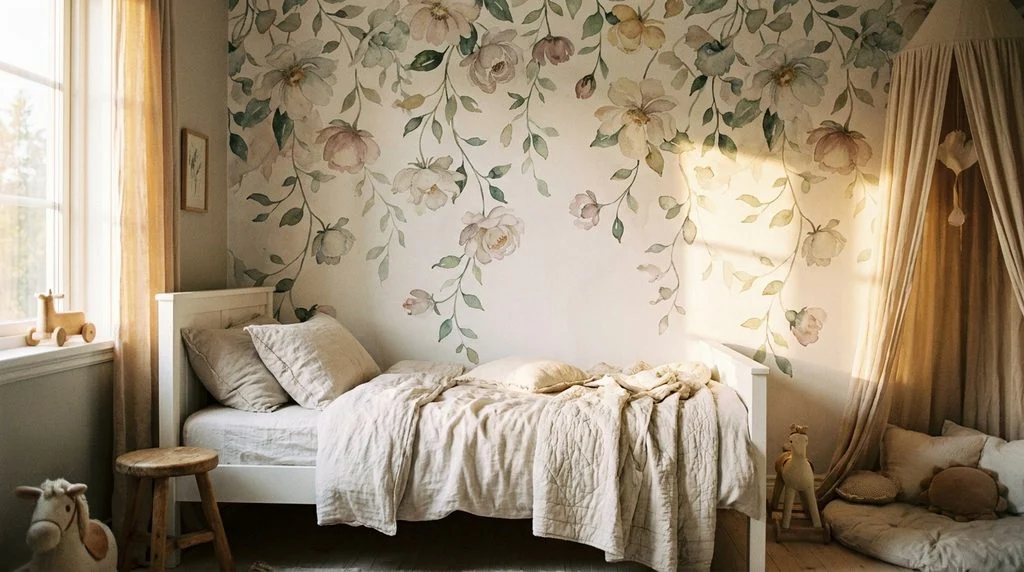
31. A Coastal or Beach-Inspired Palette
Deep navy and teal mixed with white, cream and natural wood tones create a sophisticated coastal feel that still looks playful once stuffed animals and toys are added.
32. A Cloud or Sky Motif
Soft, wispy cloud-textured wallpaper paired with puffy pillows and a rounded chair suits kids who love to daydream, without tipping into overly babyish territory.
33. A Global, Well-Traveled Feel
A world map, realistic (not cartoonish) stuffed animals, and travel-inspired objects like a hanging hot air balloon bring a sense of curiosity and adventure into the room.
34. An Animal or Nature-Lover’s Room
For kids fascinated by animals or science, a few well-chosen details — an animal-motif clock, patterned chairs, a couple of stuffed animals — go a long way without covering every surface.
35. A Fairy or Storybook Feel
Oversized toadstool decor, soft glowing lights and simple white walls let a child’s imagination lead, while peel-and-stick decals mean the look can change easily as they grow.
Ceilings & Overhead Details
36. A Statement Ceiling
Painting or wallpapering the ceiling — with stars, colour, or a mural — makes use of a surface that’s usually ignored, and stays out of the way of everyday mess and play.
37. A Painted Star-Sprinkled Ceiling
A hand-painted star ceiling has more staying power (and looks better) than glow-in-the-dark stick-on stars, and creates a magical effect at bedtime.
38. Hanging Decor From the Ceiling
Suspended items like paper hot air balloons, mobiles or fabric decorations add whimsy and visual interest above eye level, where they won’t get knocked over during play.
Cozy, Calming Details
39. Plush, Layered Textures
Soft chairs, plush stuffed animals and cushiony throw pillows make a room feel warm and inviting for both kids and parents settling in for storytime.
40. Wool Rugs and Warm Lighting
A wool area rug and a soft daybed near a window add both comfort and function — a cozy place to sit that doubles as extra seating for guests.
41. Quiet Neutrals With Pastel Accents
For a calming atmosphere, pale neutrals paired sparingly with soft pastels (rather than covering every surface) create a peaceful room that avoids feeling cold.
Flexible, Adaptable Spaces
42. Rooms Designed to “Grow Into”
A useful test: remove the toys, mobiles and baby gear from a nursery, and see if the room still feels appealing to an older child. If the bones of the room work without the baby items, it’s built to last.
43. A Foundation That Works From Nursery to Big-Kid Room
Simple white walls, classic lamps and understated furniture make it easy to swap decor and accessories as a baby grows into a toddler and beyond, without redoing the whole space.
44. Movable, Rearrangeable Furniture
Furniture on casters or otherwise easy to shift lets kids rearrange their own space, which builds a sense of ownership and spatial awareness as they get older.
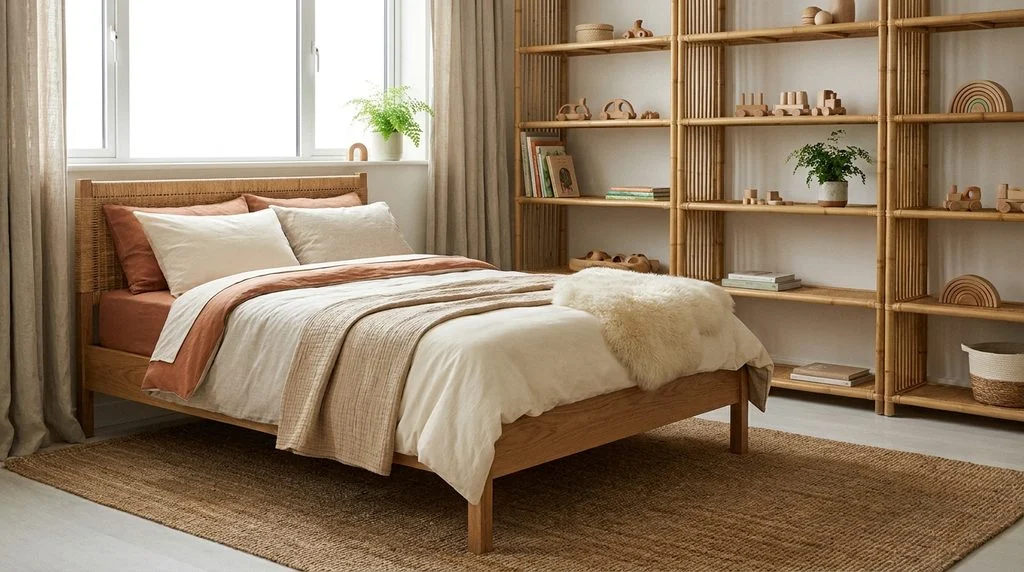
45. Sustainable, Natural Materials
Wood, bamboo and organic fabrics are increasingly favoured for 2026 kids’ rooms, both for durability and for better air quality in a space where kids spend so much time.
Color-Blocking & Bold Moments
46. Vibrant Color-Blocking
Color-blocking — a bold accent wall or ceiling in a saturated hue — adds energy without relying on a specific theme or character, and can extend to furniture or built-ins for an even bolder look.
47. Neon Brights, Used Sparingly
A single accent wall or ceiling in an energizing neon shade keeps a room feeling fun without overwhelming it, and gives a natural backdrop for matching a child’s favourite toys.
48. Full-On Maximalism
For families who want to lean in fully, mixing bold colours, patterns and textures can create a whimsical, memorable room without needing licensed characters or an overt theme to tie it together.
49. Patterns and Prints Mixed Freely
A room that mixes several prints and hangs slightly abstract or graphic artwork can feel sophisticated and playful at once, and tends to age well as a child’s taste matures.
Practical, Grown-With-Care Details
50. A Room Built Around How It’s Actually Used
Before choosing a design direction, consider whether the room is mainly for sleep, or a mix of sleep, play, homework and hobbies — that answer should shape everything from furniture layout to storage needs.
51. Subtle References Instead of Literal Themes
Designers increasingly favour subtle nods to a child’s interests — a lamp shaped like a fire truck, drawer pulls in a fun motif — over committing an entire room to one theme that a child may outgrow within a year.
52. Skipping Licensed Characters
Choosing classic motifs over specific licensed characters means the room won’t feel like an outdated advertisement once a child’s favourite show changes — often faster than the room itself needs updating.
53. A Scandinavian-Inspired Play Area
Layered natural materials, soft textures and a slightly more mature colour palette let a play area feel serene rather than chaotic, while remaining easy to update piece by piece.
54. A Vibrant, Colour-Forward Gallery Wall
A gallery wall doesn’t need paint or wallpaper to bring colour into a room — a mix of bright, eye-catching prints in matching frames does the job and is simple to refresh.
55. Building the Room Gradually, Not All at Once
Rather than finishing a kids’ room in one shopping trip, the most lasting 2026 rooms are built layer by layer — wallpaper first, then a rug, a lamp, some art — added over months as the room (and the budget) allows.
Getting Started
There’s no single “right” way to decorate a kid’s bedroom — the best rooms balance a child’s current interests with choices that won’t need to be redone every year. Start with a flexible, neutral foundation, choose furniture built to adapt, and let personality come through in the details that are easiest to change: art, bedding, lamps and accessories.