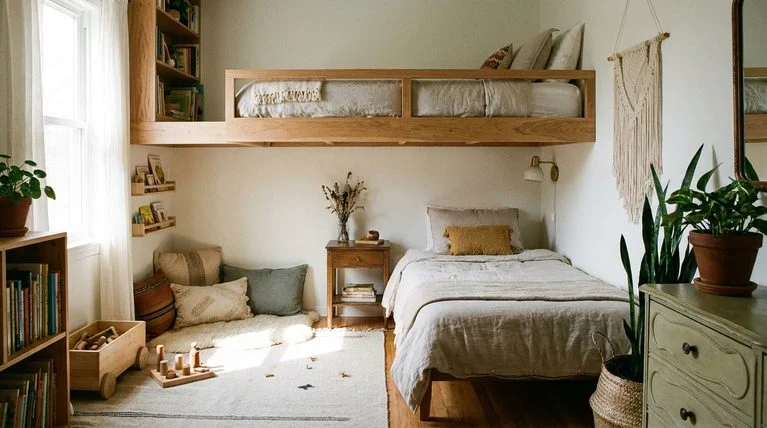
How to Divide a Shared Kids’ Bedroom: 16 Smart Ideas for Space and Privacy
Sharing a bedroom can work surprisingly well when both children feel that part of the room genuinely belongs to them. The challenge isn’t simply fitting two beds into one space. It’s creating enough separation for privacy, storage, sleep, play, and different personalities without making the bedroom feel cramped.
You don’t necessarily need to build a wall. If you want to divide a shared kids’ bedroom, paint, furniture, curtains, rugs, lighting, storage, and even features that already exist in the room can create clear boundaries.
Here are 16 practical ways to divide a shared kids’ bedroom while keeping it comfortable, functional, and fair for both children.
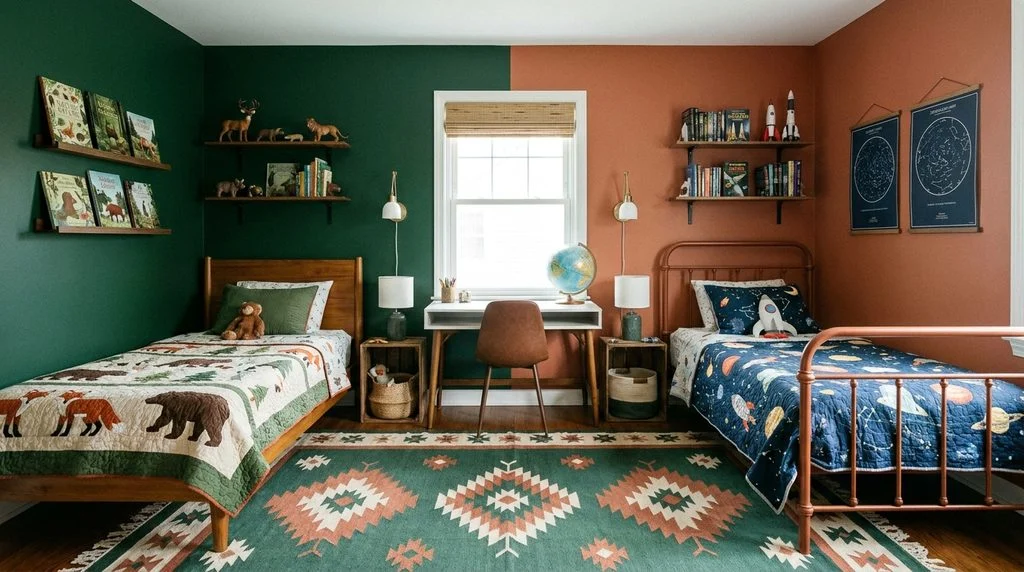
1. Create Two Clear Color Zones
Start with one of the simplest visual dividers: color. Choose a separate color palette for each child’s side while keeping one or two shades consistent across the whole room.
For example, one side might use sage green and cream while the other uses muted blue and cream. The room still looks connected, but each child can immediately recognize their own space.
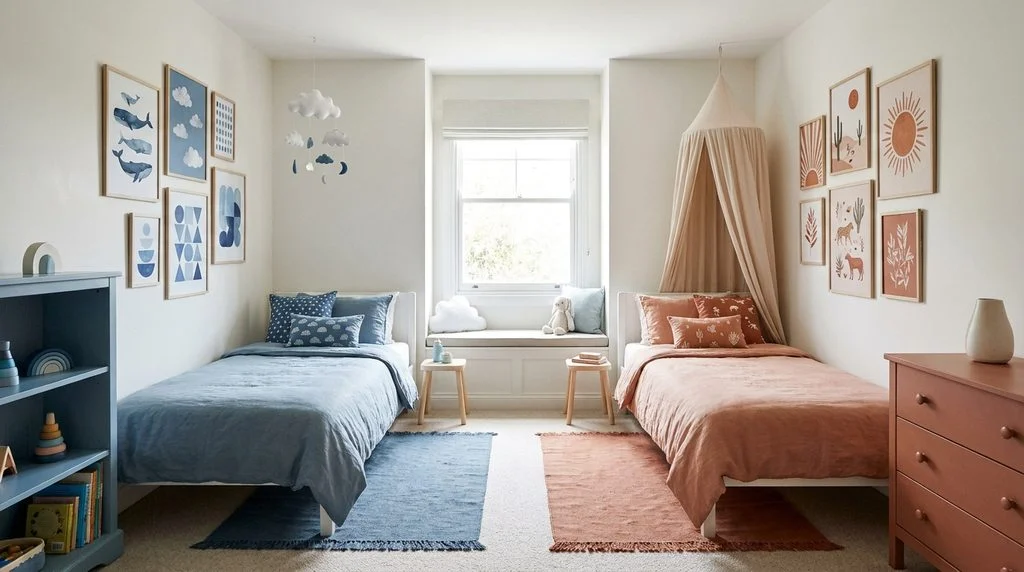
2. Use Paint to Draw the Boundary
You don’t have to split the wall with a straight vertical line. Diagonal blocks, arches, stripes, or half-painted walls can visually separate two sleeping zones without using any floor space.
Try aligning the paint transition with the space between the beds so the room has an obvious dividing point.
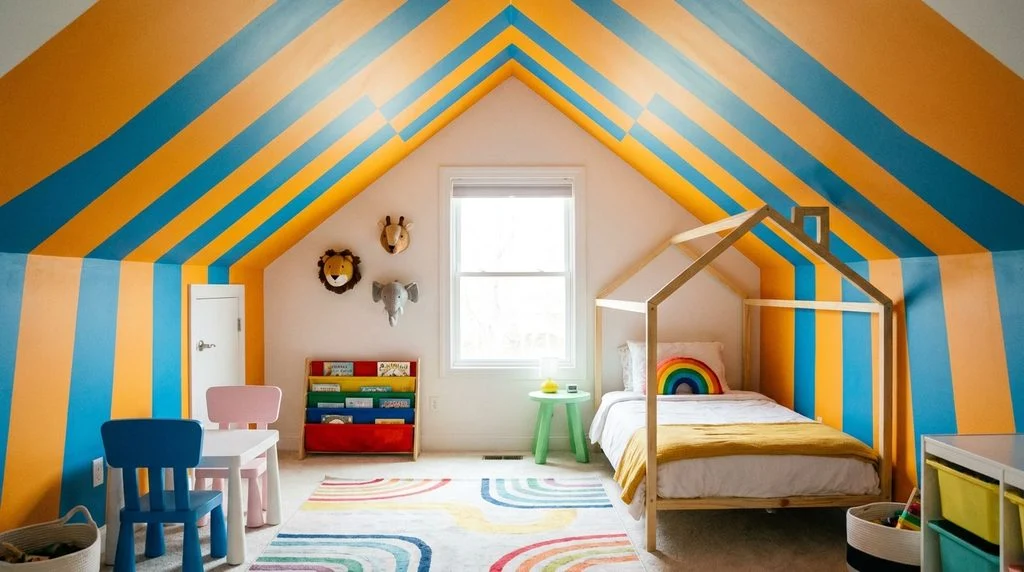
3. Use Existing Architectural Features
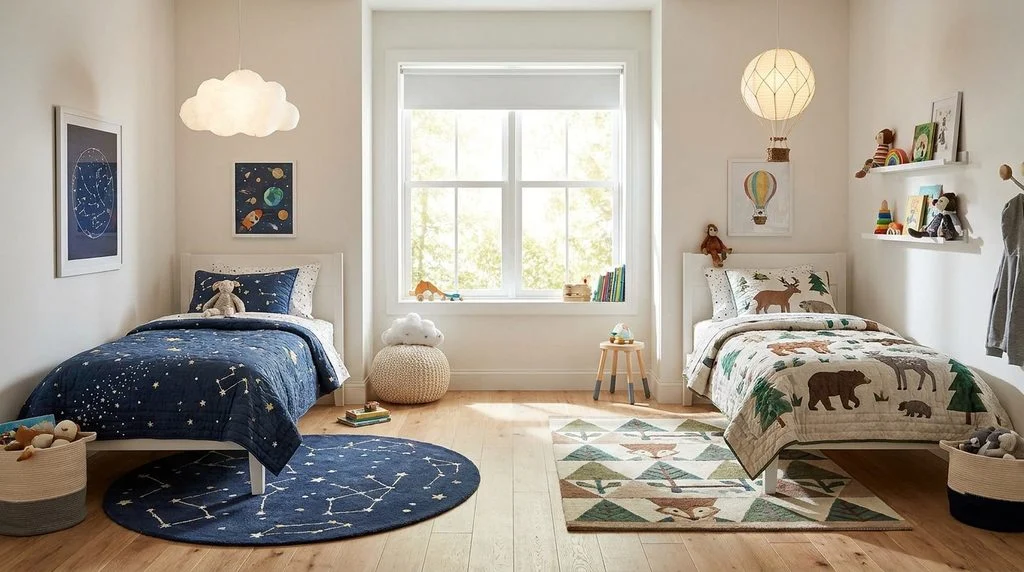
Before buying a divider, look at the room itself. An alcove, chimney breast, structural column, archway, sloped ceiling, or wall bump-out can become a natural boundary.
Instead of trying to hide an awkward feature, design each child’s zone around it. This creates separation without consuming extra floor space.
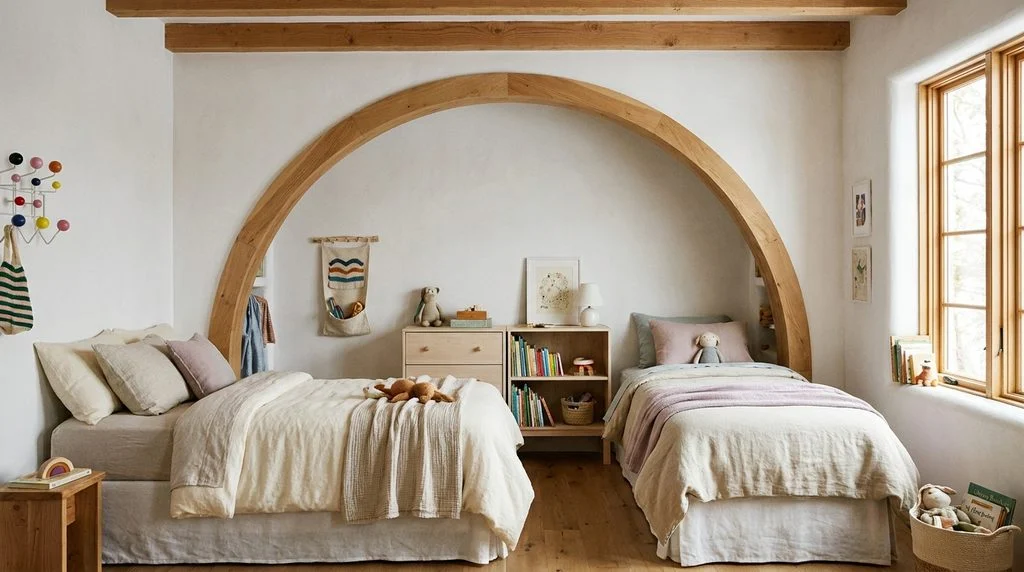
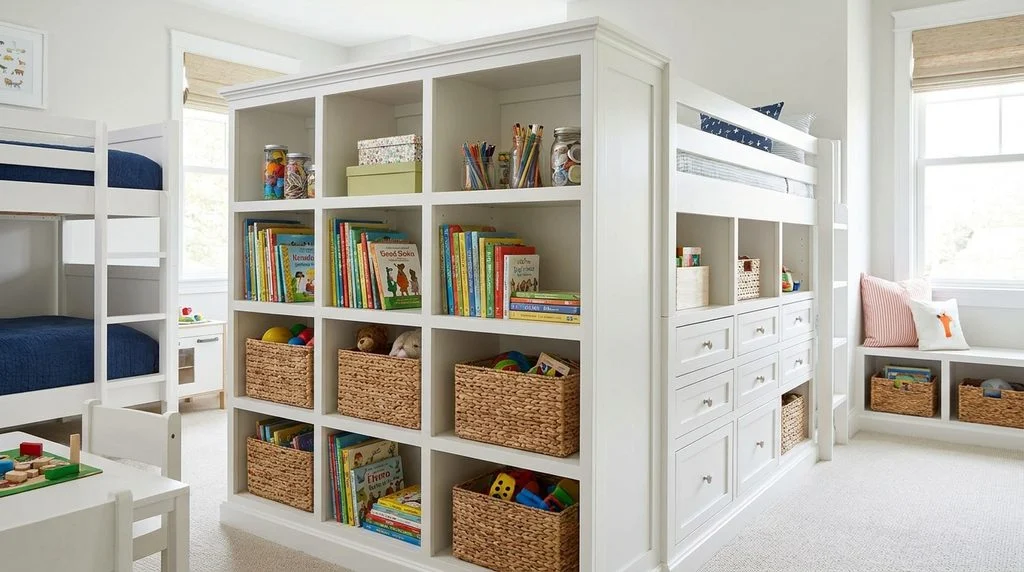
4. How to Divide a Shared Kids’ Bedroom With Storage
A bookshelf, cubby unit, dresser, toy chest, or wide nightstand can provide storage while simultaneously separating the room.
Use a lower unit when you want the room to remain visually open, or a taller shelving unit when older children need more privacy.
Secure tall or heavy furniture appropriately to reduce tip-over risk.
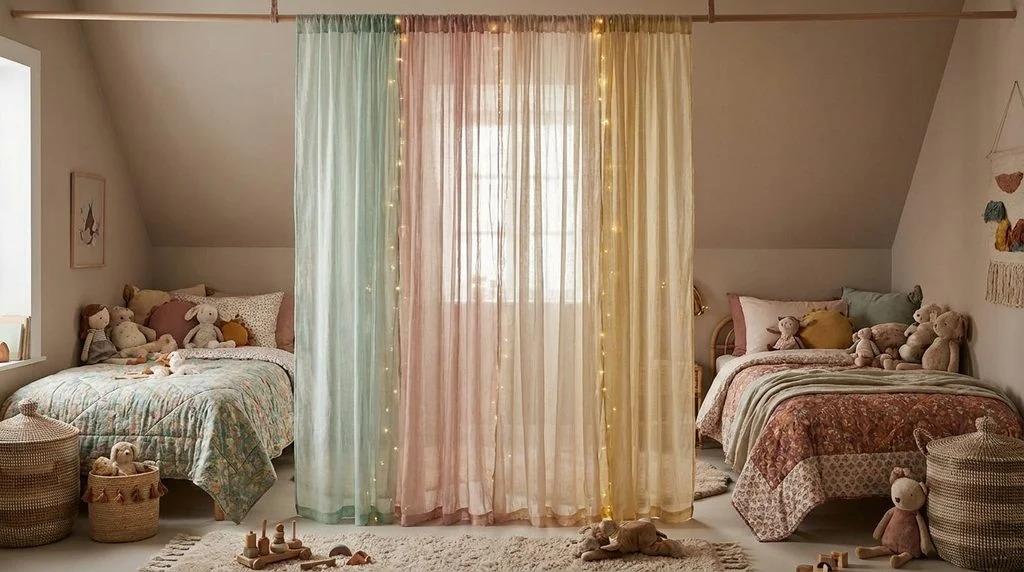
5. Hang a Curtain Between the Sleeping Areas
Curtains are one of the most flexible ways to divide a shared bedroom. They can stay open during playtime and close when one child wants more privacy or quiet.
A ceiling-mounted curtain can divide the room, while smaller canopies around individual beds can create private sleeping areas.
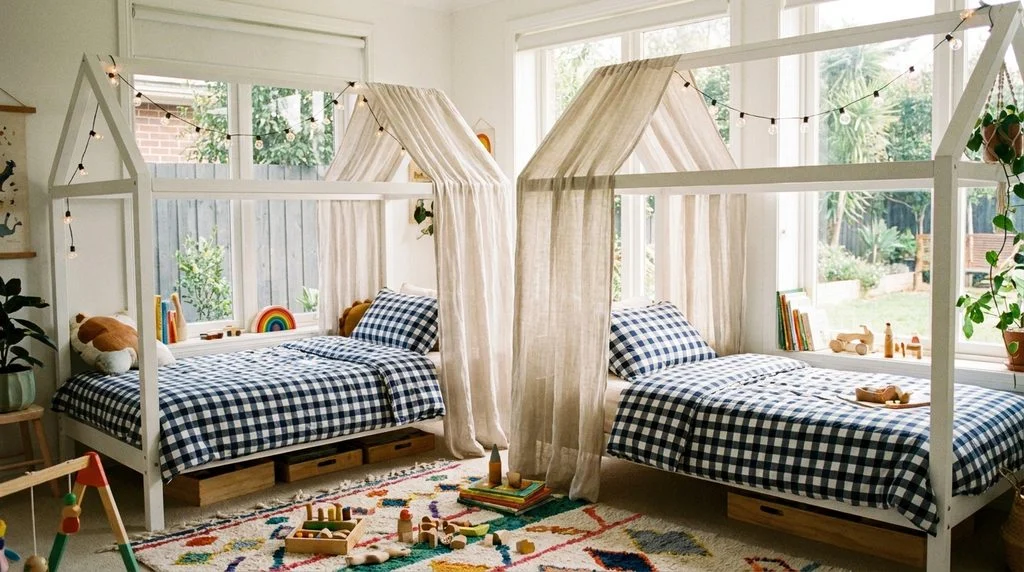
6. Create a Mini Room Around Each Bed
House-frame beds, canopies, or partially enclosed sleeping areas can make each bed feel like a tiny bedroom of its own. This approach can help divide a shared kids’ bedroom while keeping the floor plan open. It is especially useful when you want to divide a shared kids’ bedroom without making the room feel closed off.
This works particularly well when there isn’t enough floor space for a traditional freestanding divider.
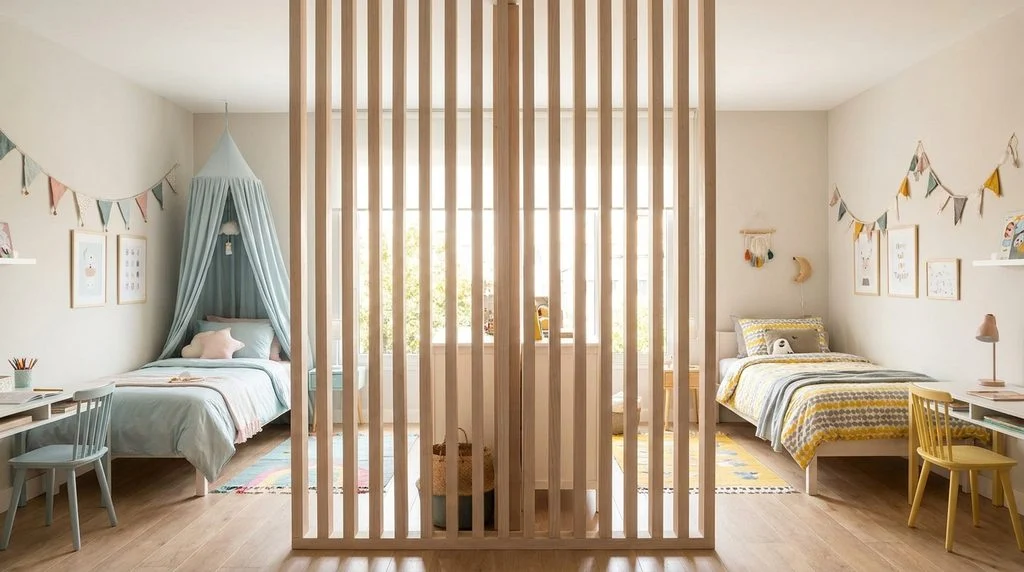
7. Use a Slatted or Built-In Divider
For a larger room, a more permanent divider can provide extra privacy.
Wooden slats are useful because they create a clear boundary while still allowing light and air through. Built-in storage accessible from both sides can make the divider even more functional.
8. Let a Window Create the Center Line
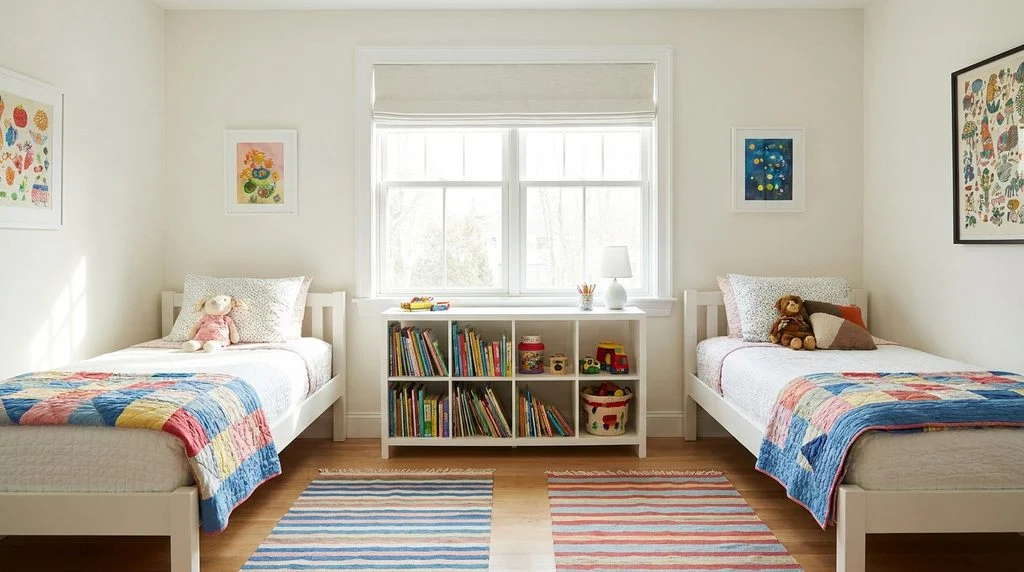
If there’s a central window, consider positioning one bed on either side. The window naturally establishes a midpoint while giving both children access to daylight.
Separate bedside lamps, artwork, or small storage units can reinforce that symmetry.
9. Position the Beds to Create Separation
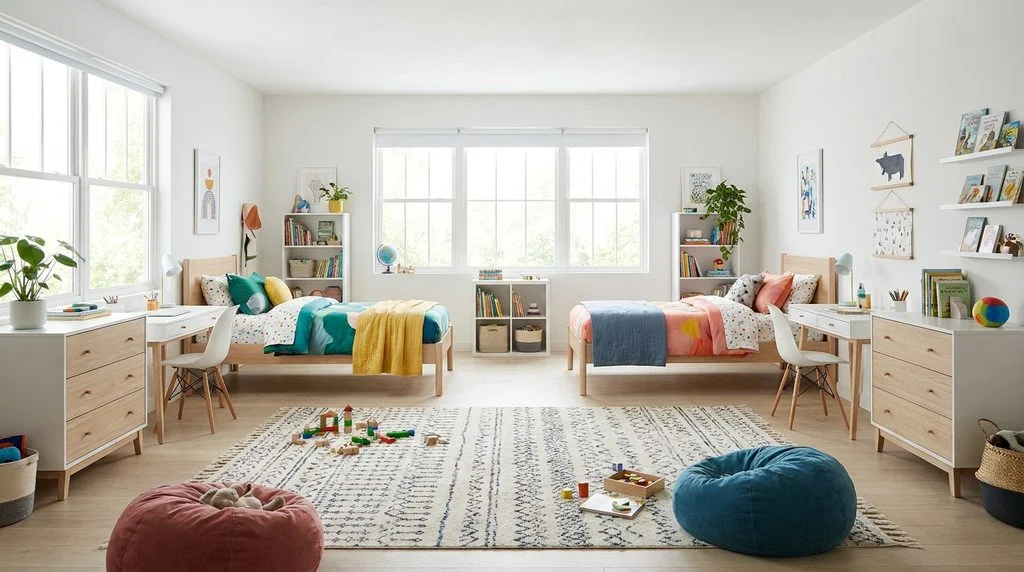
Beds placed against opposite walls naturally give each child a separate side. In tighter rooms, an L-shaped arrangement can free the center for play or storage.
Think about doors, windows, wardrobes, outlets, and walking paths before choosing the final arrangement.
10. Use Bunk or Loft Beds to Divide Vertically
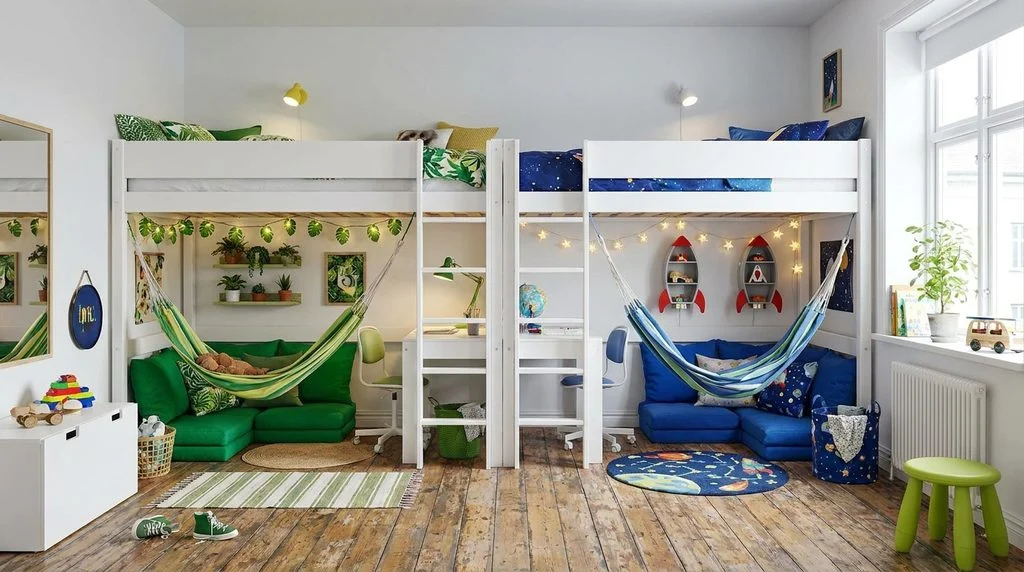
A shared bedroom doesn’t always need to be divided left and right.
Bunk beds create separate sleeping levels while using the footprint of one bed. Loft beds can also create individual areas underneath for desks, storage, reading, or quiet time.
This gives each child a clearly identifiable zone without filling the floor with partitions.
11. Define Zones With Rugs and Lighting
When there isn’t room for a physical partition, create visual boundaries instead.
Separate rugs, bedside lamps, pendant lights, or reading lights can make each child’s area feel distinct while preserving an open layout.
12. Give Each Child Personal Storage
Assign each child their own drawers, baskets, shelves, hooks, or bins. Shared storage can still be used for toys and books, but personal belongings should have an obvious home.
Clear storage boundaries can be just as important as visually dividing the beds. Personal storage is especially useful when you need to divide a shared kids’ bedroom without installing a permanent partition.
13. Personalize Each Side
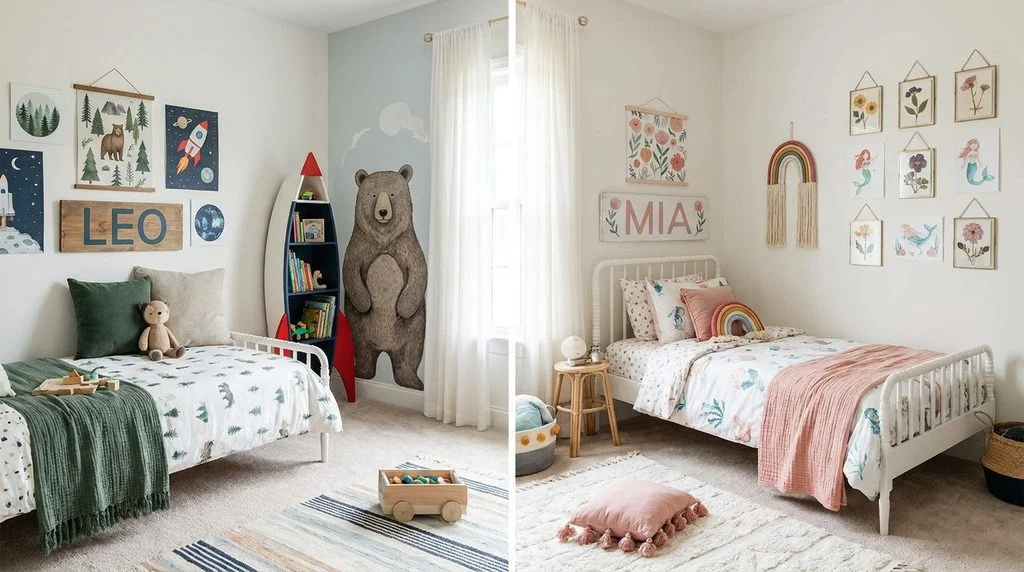
Names above the beds, individual artwork, pinboards, photographs, display shelves, different bedding, or favorite colors can establish ownership without another physical divider.
The room doesn’t have to match perfectly. Repeating one or two elements can keep the overall design connected.
14. Use Nooks and Alcoves as Private Retreats
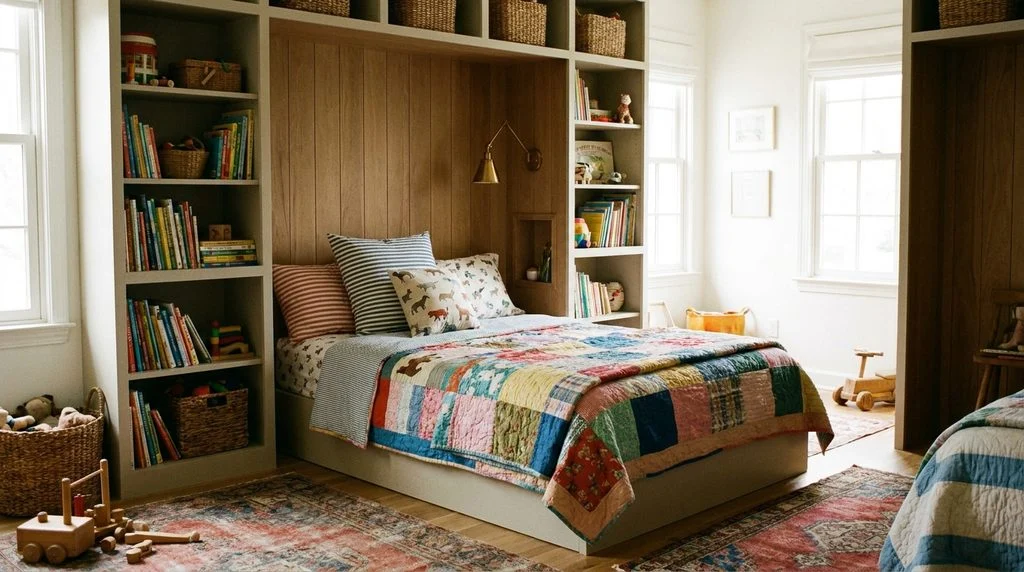
A recessed wall or awkward corner can become valuable space.
If a bed fits inside an alcove, the surrounding walls naturally make the sleeping area feel more private. Smaller nooks can instead become individual reading or quiet spaces.
15. Give Each Child a Separate Study or Quiet Zone
For school-age children, privacy isn’t only about sleeping.
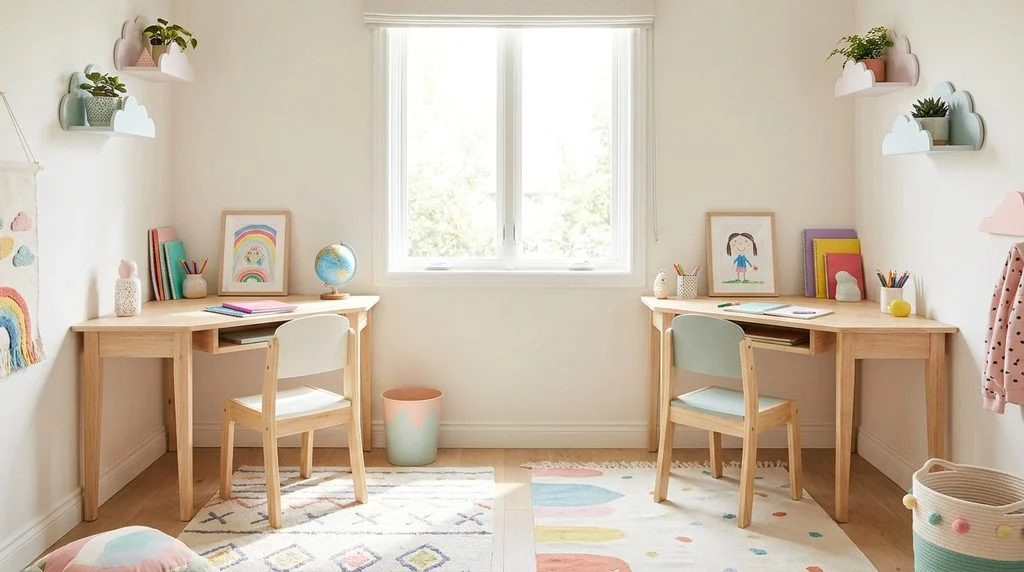
Two small desks on opposite sides can provide individual homework and creative spaces. If two desks won’t fit, use one shared desk but assign separate drawers, shelves, and seating positions.
16. Use Movable Dividers When the Room Needs to Change
A child’s bedroom may need to switch between sleep, play, homework, and quiet time.
Lightweight screens, curtains, movable storage, toy chests, or modular furniture let the room change as needed instead of permanently dividing the space.
This is particularly useful as children’s needs change with age.
How to Divide a Very Small Shared Bedroom
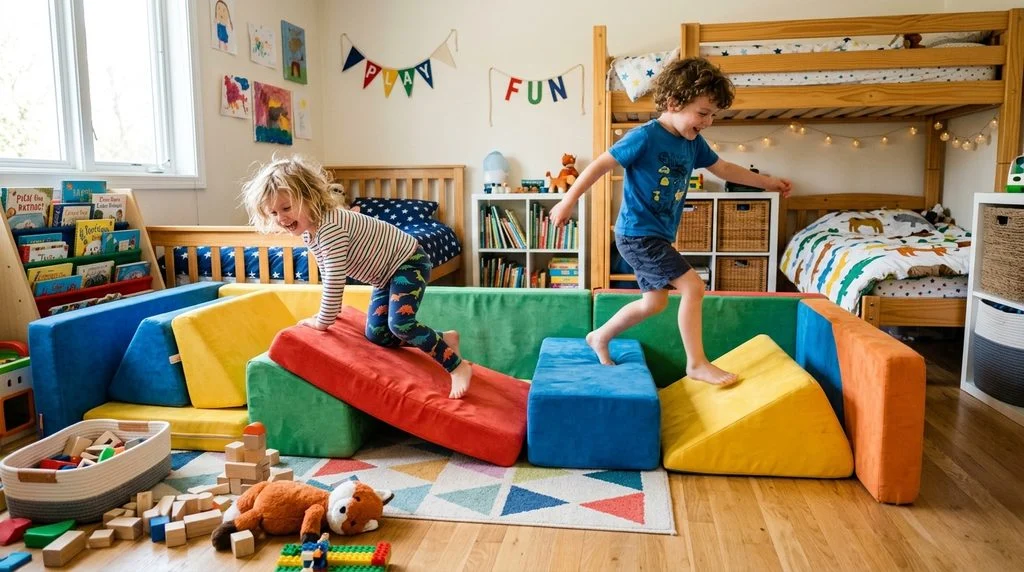
When floor space is extremely limited, don’t start by adding a bulky divider. Start by protecting usable space. For more ideas made specifically for tight spaces, see our shared bedroom ideas for small rooms.
Consider bunk or loft beds, under-bed drawers, wall-mounted storage, narrow shelving, and visual zoning with paint or lighting. Curtains generally consume less usable space than freestanding screens. If bed placement is the main problem, these shared bedroom layouts for siblings can help you compare practical arrangements.
Most importantly, preserve a clear walking path.
How to Make the Room Feel Fair
A perfectly symmetrical room isn’t always possible, but it should still feel fair. When you divide a shared kids’ bedroom, aim to balance privacy, storage, natural light, and usable floor space for both children.
Start with the things siblings are most likely to notice every day: sleeping space, storage, light, and personal choice. If one child gets a slightly larger sleeping area, the other might get better storage, a dedicated desk, or a stronger personal display zone.
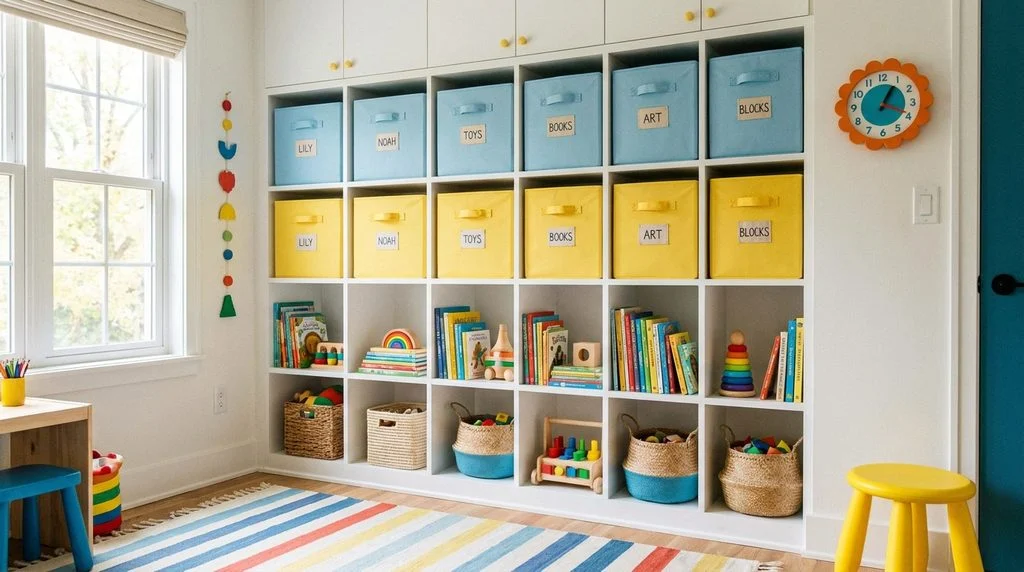
Give each child clearly assigned storage. Matching baskets, drawers, lockers, or cubbies can work well when each set is labelled or colour-coded. This removes a lot of the “that’s mine” confusion and makes tidying easier.
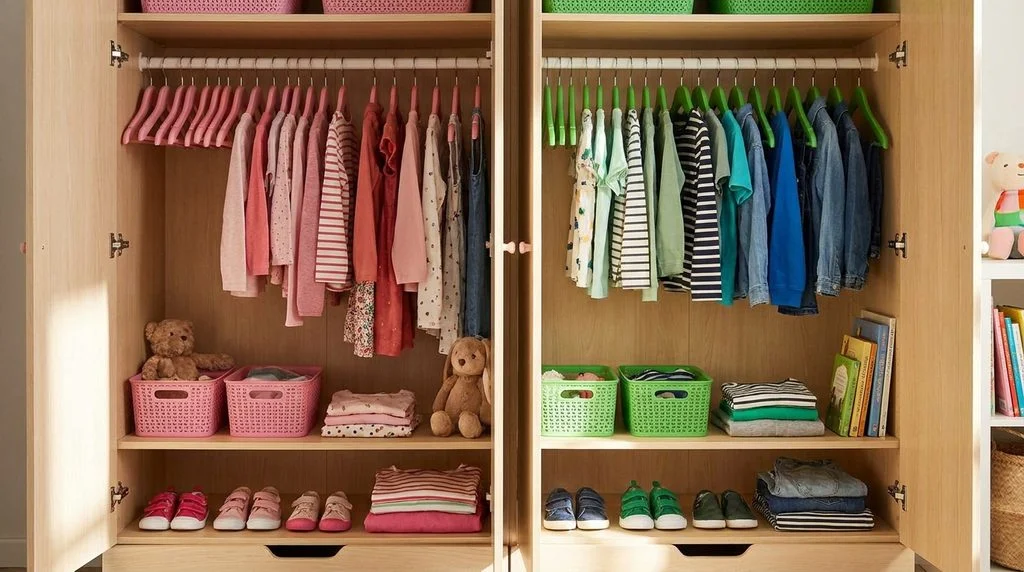
If the children share one wardrobe, divide it internally instead of treating it as one mixed space. Give each child their own rail, shelf, or drawer section. Different hanger colours are an easy visual cue. This is another practical way to divide a shared kids’ bedroom through organization rather than construction.
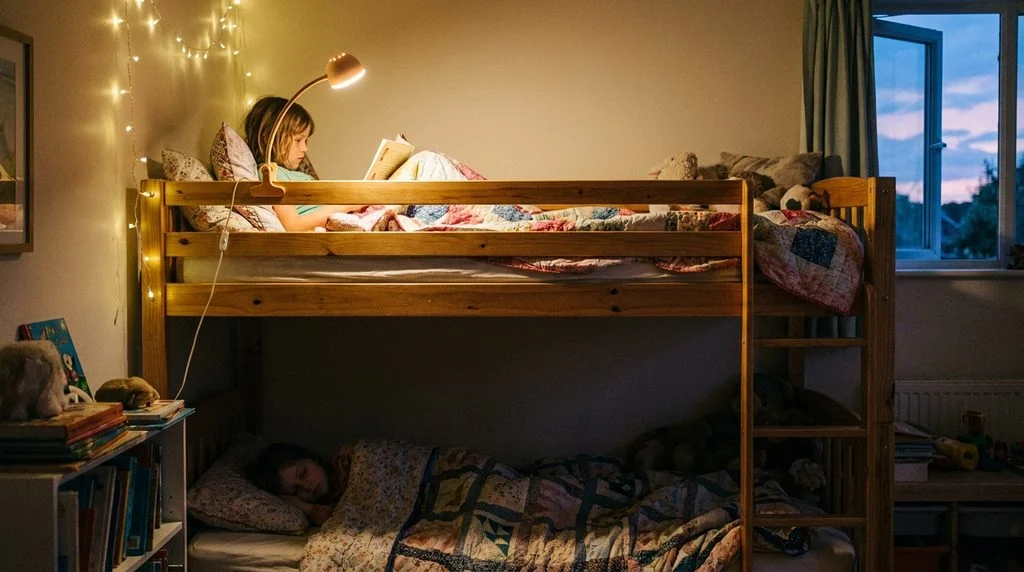
Lighting matters too. An individual reading light beside each bed helps when siblings have different bedtimes, while still giving both children the same practical feature.
Finally, give both children at least one real design decision of their own. One might choose bedding while the other chooses a lampshade, wall art, or accent colour. A shared room feels fairer when both children can see their own personality in it.
Shared Bedroom Ideas for Different Ages
Different-age siblings: Separate age-specific belongings and give the older child a study area away from younger toys.
Brother and sister sharing: Use a neutral base and allow each child to personalize their own bedding, artwork, and accessories.
Different bedtimes: Individual reading lights, curtains, and thoughtful bed placement become more useful.
Parent and child sharing temporarily: A curtain, open shelf, or low storage unit can establish a separate child’s zone without permanently altering the bedroom.
Quick FAQ About Dividing a Shared Kids’ Bedroom
How do you divide a shared bedroom fairly? Give each child a clearly defined sleeping zone, personal storage, comparable access to light, and at least one design choice of their own.
What bed setup works best in a small shared room? Bunk beds usually save the most floor space, while an L-shaped arrangement can work well when children have a bigger age gap or need more separation.
How can you add privacy without building a wall? Curtains, open shelving, bed canopies, colour zones, rugs, and personal display areas can all help divide a shared kids’ bedroom without permanent construction.
Final Thoughts
Learning how to divide a shared kids’ bedroom isn’t necessarily about building a wall down the middle. It’s about giving each child enough privacy, ownership, storage, and personal space to feel comfortable.
Start with the architecture and furniture you already have. Then use paint, rugs, lighting, decor, curtains, shelving, or other partitions where additional separation is actually needed.
A successful shared room can still feel like one cohesive bedroom while giving both children a clearly respected space of their own. For broader inspiration beyond room division, explore our shared bedroom ideas for kids.