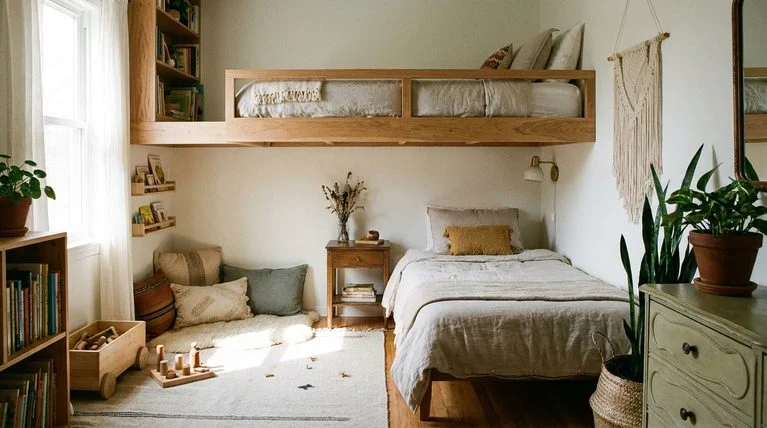
38 Genius Shared Bedroom Ideas for Kids
If you’re looking for shared bedroom ideas for kids, start with the layout, storage, and privacy needs before choosing decor. The best shared rooms give each child a clear personal zone while still keeping the space practical and cohesive.
Two kids, one bedroom. It can feel like a puzzle with no solution — especially when the room is small, the ages don’t match, or one child wants glitter and unicorns while the other is all about dinosaurs and race cars. The good news: a shared bedroom can be one of the most fun, functional, and connection-building spaces in your whole home when you plan it well.
A well-designed shared room does three things at once. It carves out a sense of personal territory for each child, squeezes real storage out of tight square footage, and still looks pulled-together instead of chaotic. Below you’ll find 38 genius, practical ideas organized by what they solve — from bed configurations and clever zoning to storage, decor, safety, and budget. Skim to the section you need, or read start to finish and steal the whole plan.
Before You Start: A 5-Minute Room Plan
Before buying a single bunk bed, spend five minutes answering these questions. They shape almost every decision that follows and save you from expensive mistakes.
- Measure the room and the ceiling height. Bunk and loft beds need roughly 33–36 inches of clearance above the top mattress so kids can sit up safely.
- Note the ages and the age gap. Close-in-age siblings can share more; a big gap (4+ years) usually means different bedtimes, storage heights, and privacy needs.
- Find the non-negotiables. Where are the window, door, radiator, and outlets? Never place a bunk under a ceiling fan, vent, or window.
- Decide what each child needs to own. A drawer, a shelf, a wall, a reading light — something that is unmistakably theirs prevents most sibling turf wars.
- Set a realistic budget and a “grows-with-them” rule. Favor modular, neutral big pieces and let cheap, swappable accessories carry the personality.
Shared Bedroom Ideas for Kids: Smart Bed Solutions That Free Up Floor Space
The bed setup is the single biggest decision in a shared room because beds eat the most floor space. Many practical shared bedroom ideas for kids begin with choosing the right bed configuration. Get this right and the rest of the room almost designs itself.
1. Bunk beds: the space-saving classic
Stacking two beds into one footprint is still the most reliable way to reclaim floor space for play. Look for a sturdy frame with guardrails on the top bunk, a genuinely climbable ladder or stairs, and, ideally, built-in drawers in the stairs. In 2026, low-profile “house-frame” bunks and solid-wood Scandinavian styles are especially popular because they feel calm rather than cluttered.
2. Loft beds for an instant zone underneath
A loft bed lifts a single bed high and hands you the whole space below for a desk, reading nook, or play fort. This is a smart pick when one child needs a homework station or when the kids’ ages differ enough that one wants a “big kid” hangout zone.

3. Trundle beds for sleepovers and small rooms
A trundle tucks a second mattress under the main bed and rolls out only when needed. It’s perfect for rooms too short for bunks, for a younger sibling who isn’t ready to climb, or for keeping the floor clear during the day and adding a bed at night.
4. Twin-over-full bunks for a big age gap
When siblings are four or more years apart, a twin-over-full configuration serves both better. The younger child takes the twin top bunk while the older child gets a roomier full mattress below, so nobody feels stuck with the “baby” bed.
5. L-shaped twin layout for square rooms
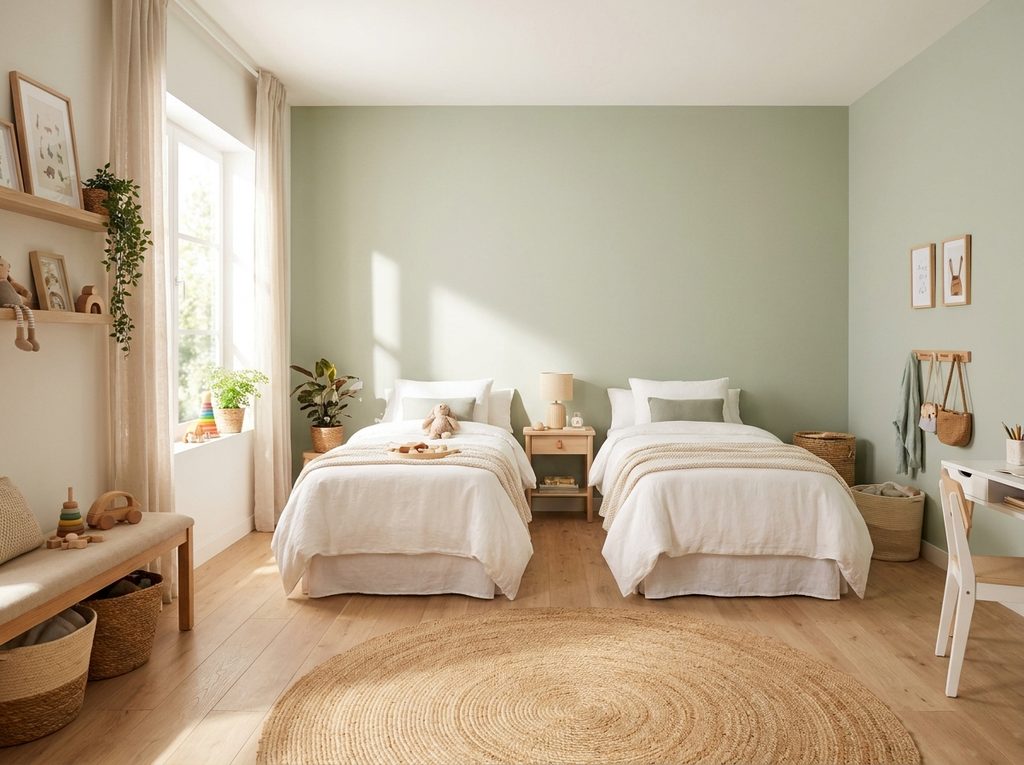
Two twin beds placed in opposite corners to form an L shape create natural, separate territories without any stacking. It works beautifully in square rooms, keeps both kids at ground level, and leaves a shared open zone in the middle for play.
6. Side-by-side twins with a shared nightstand
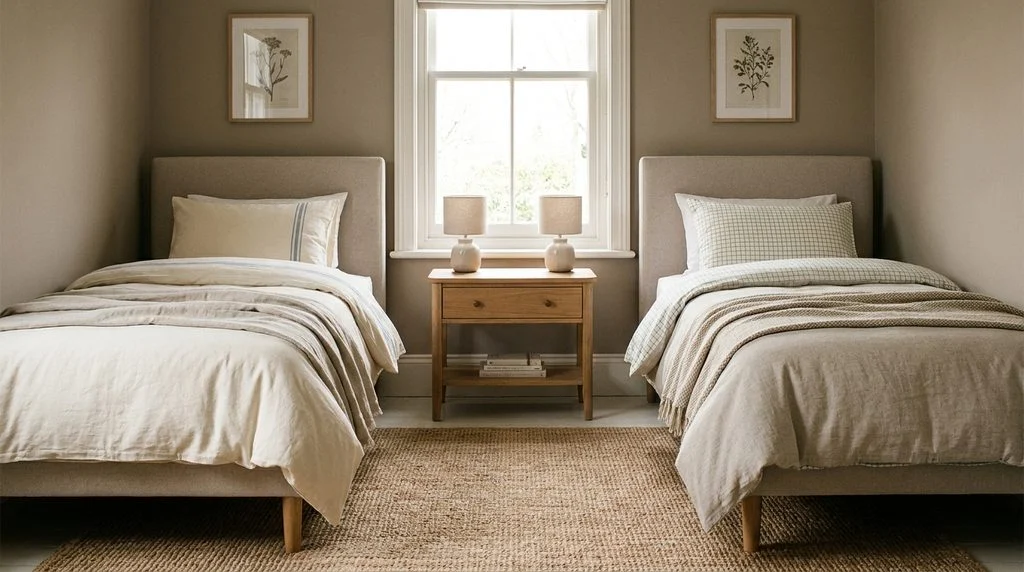
Sometimes the simplest layout is best: two matching twins with a single shared nightstand or low bookshelf between them. It reads as calm and symmetrical, gives each child a headboard wall to personalize, and is the easiest setup to rearrange as they grow.
Create Zones & Give Each Child a Little Privacy
Sharing a room doesn’t mean sharing every square inch. The most effective shared bedroom ideas for kids use simple visual boundaries to reduce squabbles and give each child a spot that feels like their own.
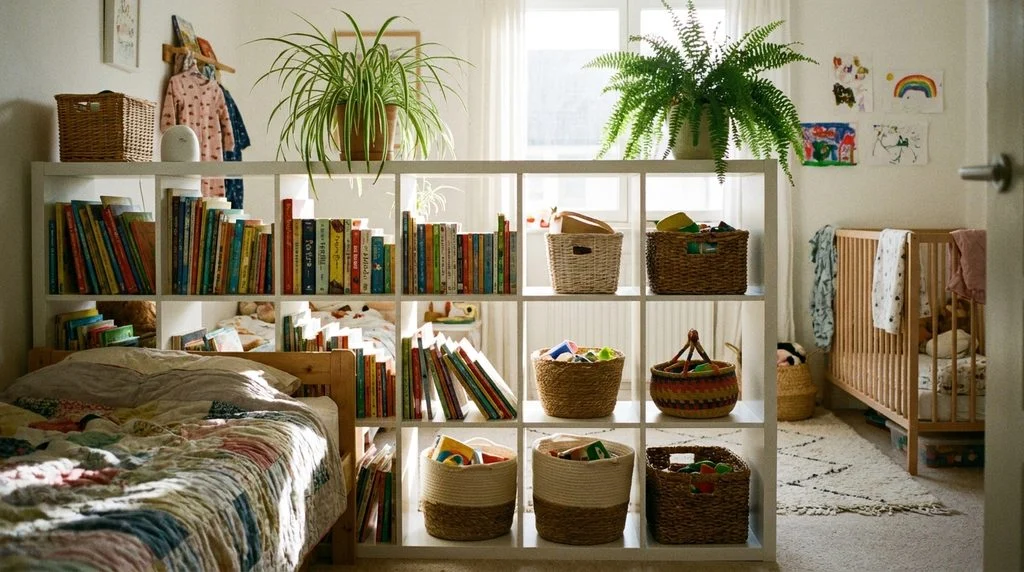
7. Split the room with an open bookshelf
A low or open-back bookcase placed perpendicular to the wall divides the space into two zones while still letting light pass through. Bonus: it doubles as storage and display, so it earns its footprint twice over.
8. Use the bunk bed itself as a divider
Position a bunk bed jutting out from the wall so it separates a sleep zone from a play or study zone. Made-to-measure divider bunks with a small privacy panel are trending for exactly this reason.
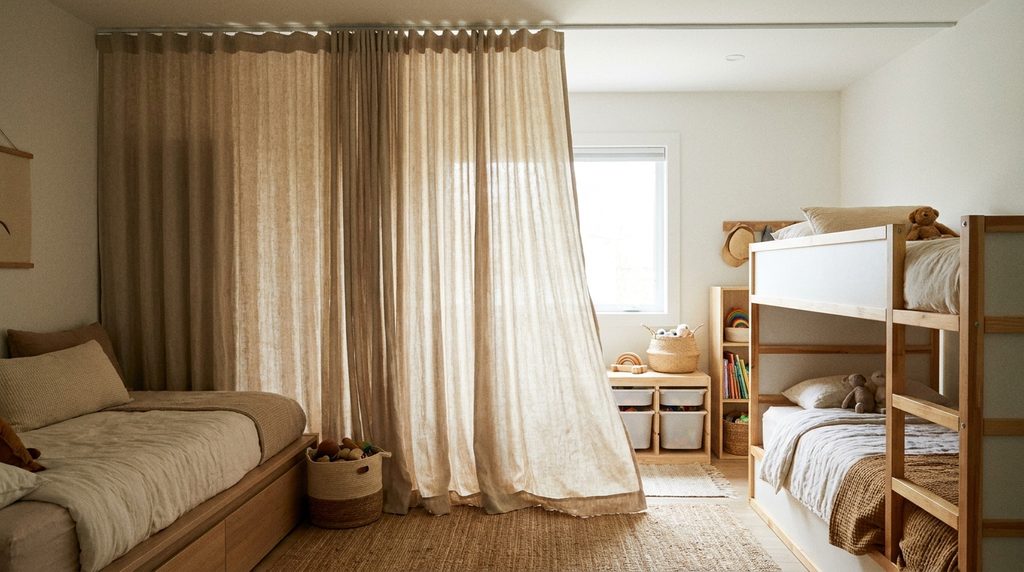
9. Hang a curtain or sliding panel
A simple ceiling-mounted curtain track lets kids “close off” their bed at bedtime and open the room right back up during the day. It’s inexpensive, renter-friendly, and surprisingly effective at defusing bedtime drama.
10. Add a canopy over each bed
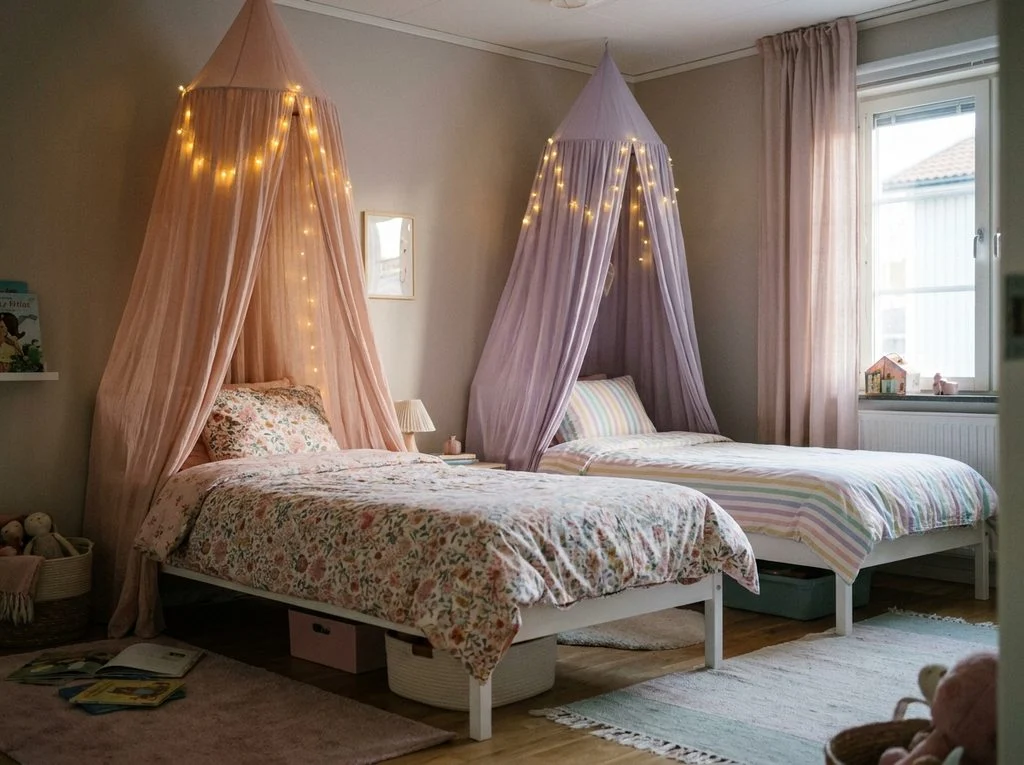
A sheer canopy above each headboard turns an ordinary bed into a personal cocoon. Choose two coordinating colors so each child gets their own “kingdom” while the overall look stays cohesive and a little magical.
11. Give everyone an individual reading light
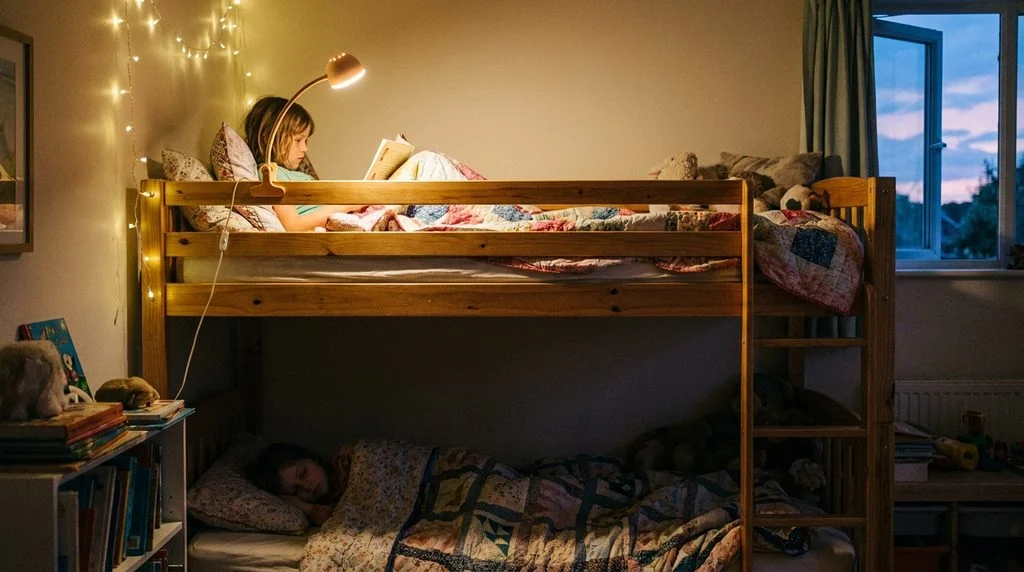
A wall-mounted or clip-on reading light at each bed, plus a small shelf for books and a nightlight, hands every child control over their own little pool of light. It’s one of the cheapest upgrades that most improves the sense of personal space — especially inside bunk niches.
12. Assign a feature wall to each child
If the beds sit on different walls, let each child own the wall behind their bed. One can go bold with a peel-and-stick mural; the other can keep it calm with a gallery of their own artwork. Different, but framed by the same neutral room.
Storage That Doesn’t Eat the Whole Room
Two kids means roughly double the clothes, toys, and books — in the same space one child would normally get. Storage is central to successful shared bedroom ideas for kids, so build it up vertically and use the space under the beds.
13. Steal the space under the beds
Under-bed drawers or rolling bins turn dead space into a built-in dresser. On bunks, integrated bottom-bunk drawers can hold an entire wardrobe and free up a wall you’d otherwise lose to a chest of drawers.
14. Go vertical with wall shelves and cubbies
Floor space is precious; wall space is usually wide open. Run shelves and cubby units up high for books, bins, and display so the floor stays clear for play. A tall cubby unit split down the middle also makes a natural “his and hers” divide.
15. Give each child their own color or label
Assign each child a color, icon, or name label for their bins, hooks, and drawers. Mismatched hand-me-down dressers instantly look like a set when you paint them one color and add matching pulls — and kids actually put things away when they know which cubby is theirs.
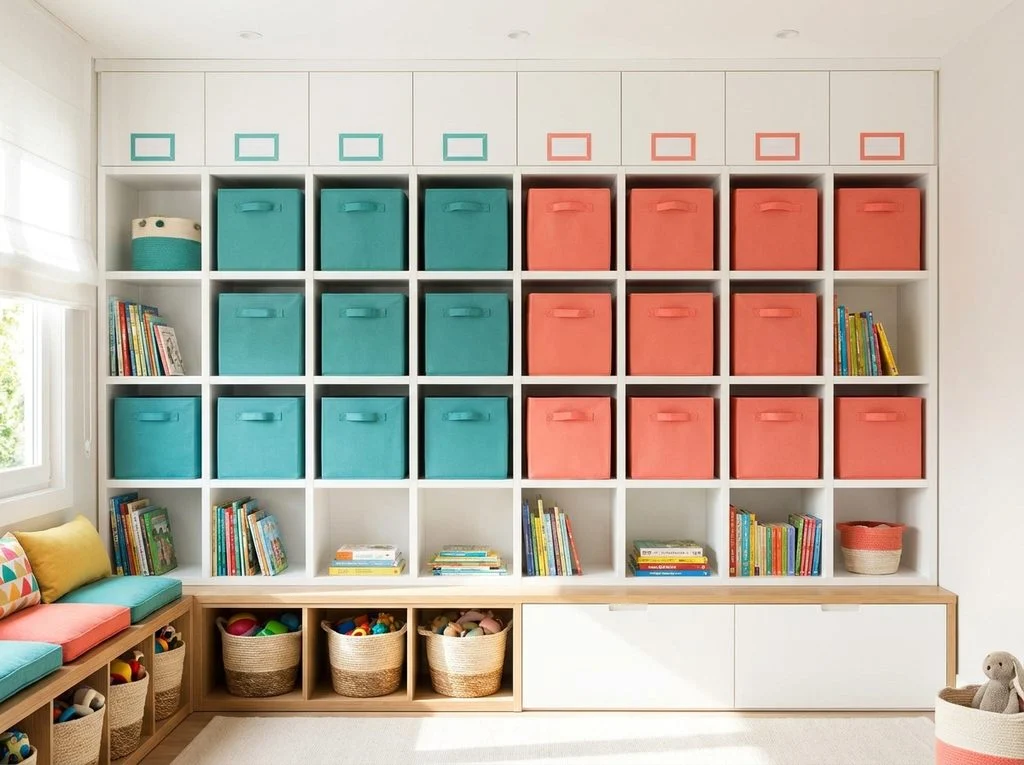
16. Choose a headboard or bench with hidden storage
Storage headboards, ottoman benches, and window seats with lids hide bulky items in plain sight. They’re ideal for stuffed animals, extra bedding, and the toys that never seem to have a home.
17. Double up the closet
Add a second hanging rail lower down so a younger child can reach their own clothes, and split shelves and shoe storage clearly between the two. A hanging fabric organizer per child keeps daily outfits grab-and-go.
Decor & Personalization That Feels Fair to Both
This is the part most parents worry about — keeping the room stylish and cohesive while making sure each child feels seen. Good shared bedroom ideas for kids use a shared framework with enough room for individual expression.
18. Coordinate, don’t clone
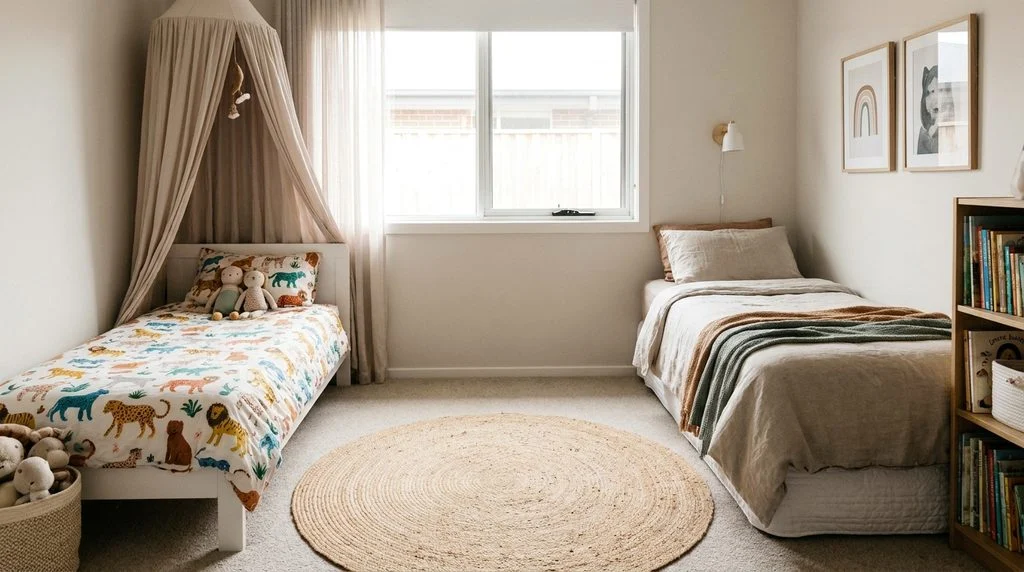
You can keep a shared bedroom cohesive without making everything identical. Buy the same bedding in different colors, or coordinating patterns in a shared palette. It looks put-together and intentional while still letting each child have “their” color.
19. Let each child choose their own accents
Give kids ownership over the swappable, low-cost layer: their pillow, their throw, the soft toys on their bed, one piece of art. When they’ve chosen it themselves, they’re far more invested in keeping their side tidy.

20. Add a personalized name banner or wall letters
Nothing says “this is mine” like a name. Felt pennant banners, wooden letters, or a simple framed print with each child’s name above their bed is an inexpensive, high-impact way to divide ownership.
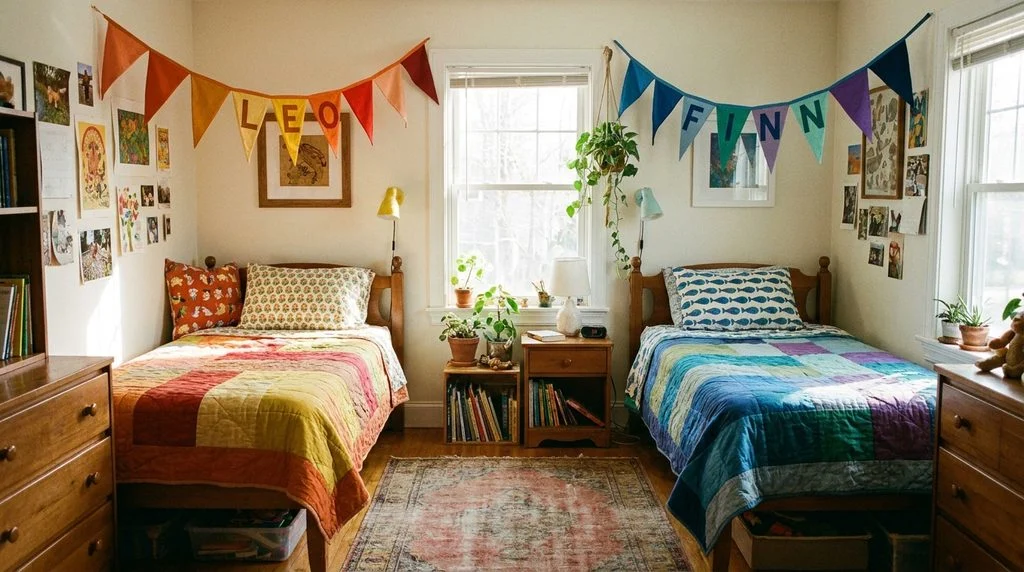
21. Anchor everything with white walls and colorful accents
When two personalities collide, a white or soft-neutral wall is the peacemaker. It lets both kids’ favorite colors shine through bedding, art, and accessories without the room feeling loud or lopsided.
22. Try a nature-inspired palette for boy-and-girl rooms
For mixed-gender rooms, skip the pink-versus-blue tug of war and reach for a nature palette — sage, sand, terracotta, warm wood, soft ochre. It reads as gender-neutral, grows with the kids, and photographs beautifully.
Designing for Different Ages & Genders
A shared room rarely holds two identical kids. The best shared bedroom ideas for kids adjust for age gaps, different routines, and different personalities. Here’s how to design for the most common combinations.
23. Boy-and-girl shared rooms
Lean on a neutral shared base and let each child’s personality come through in accent colors and their own bed wall. Modular furniture makes it easy to give both kids matching-but-personal setups on a budget.
24. Big age gaps (toddler + older sibling)
Place the youngest child’s bed nearest the door for easy nighttime access and keep the climb-up bunk for the older one. Different bedtimes call for that curtain or reading light from earlier so the older child can stay up reading without keeping the little one awake.
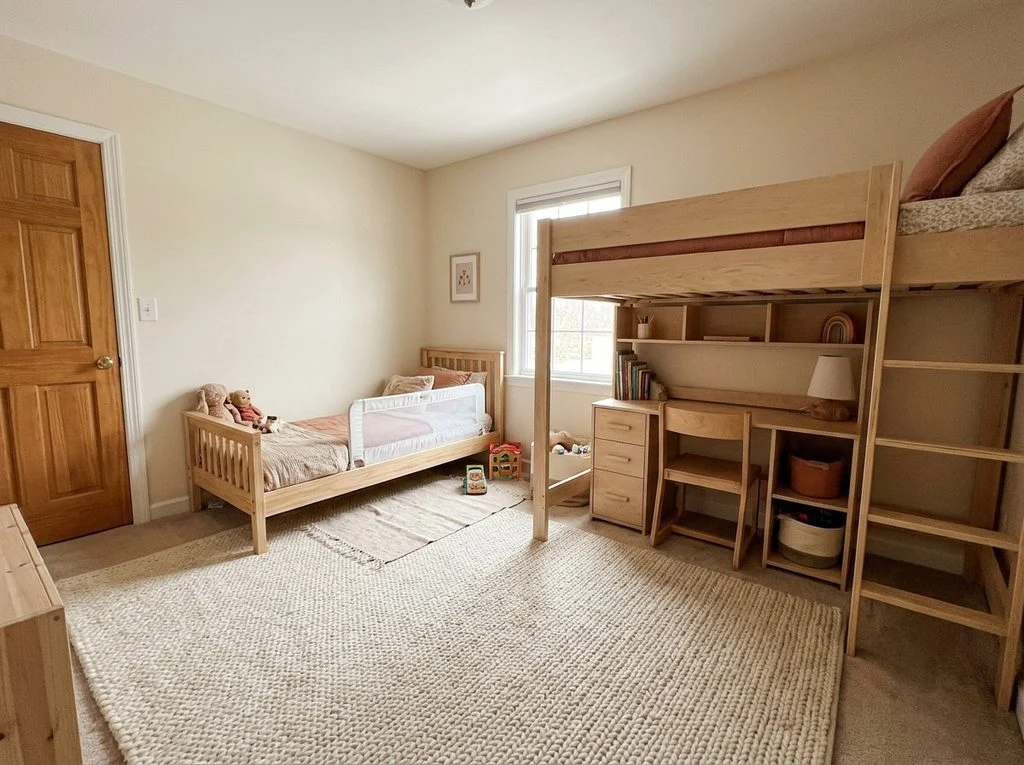
25. Same-age or twin siblings
Twins and close-in-age siblings can share the most, but they also crave individual identity the most. Symmetry is your friend: mirror-image layouts with each child’s name and chosen color keep things scrupulously fair.
26. Three kids in one room
For a trio, combine a bunk with a trundle, or use a triple bunk, and get ruthless about vertical storage and per-child bins. A clear color code per child becomes essential rather than optional.
More Smart Design Moves Worth Stealing
Some shared-room problems are less about dividing territory and more about choosing the right room, furniture, and storage strategy. These extra shared bedroom ideas for kids fill those gaps without repeating the bed-divider and color-zoning advice above.
31. Give the Shared Room the Best Bedroom If It Makes Sense
If one bedroom is noticeably larger, brighter, or easier to furnish, consider giving that room to the children instead of automatically placing them in the smallest bedroom. A better-proportioned room can make two beds, storage, and play space work far more comfortably.
32. Try Fold-Away or Murphy-Style Bunks in a Very Tight Room
Where floor space is extremely limited, fold-away bunk beds can free up much of the room during the day and open only when it is time to sleep. This works especially well when the bedroom also needs to function as a play or activity space.
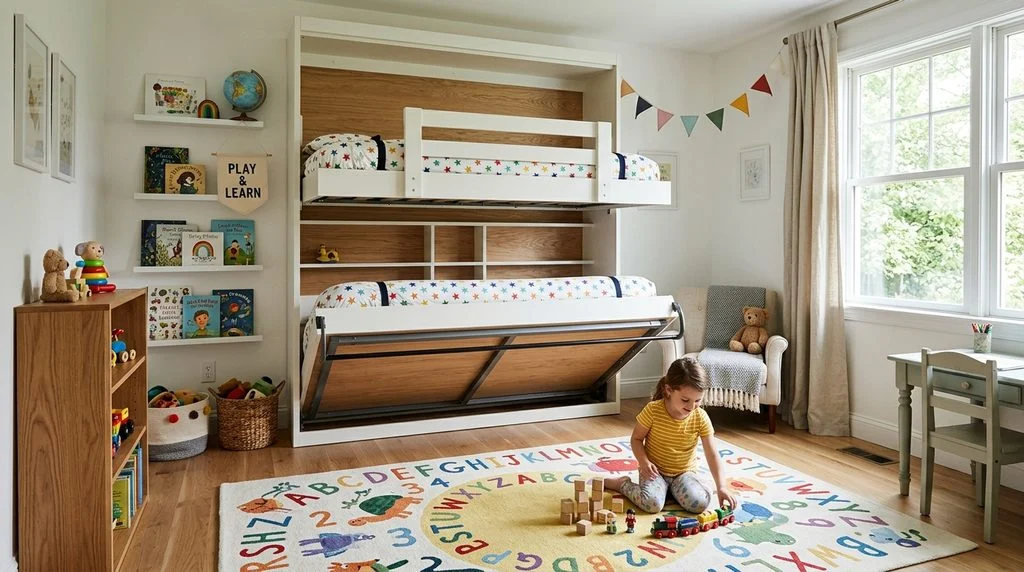
33. Move Most Toys Out of the Bedroom When You Can
If you have a playroom, family-room corner, or another storage zone, moving bulky toy collections out of the bedroom can make sharing much easier. The bedroom then has to handle mainly sleeping, clothes, books, and a smaller selection of favorite toys.
34. Use a Freestanding Armoire When There Is No Closet
Older homes and small apartments do not always have built-in closets. A freestanding wardrobe or armoire can create organized hanging and drawer space without construction, and the inside can be clearly divided so each child has their own section.
35. Use Custom Storage in Awkward Corners
Sloped ceilings, narrow alcoves, and unusual wall shapes can waste valuable space. A fitted platform bed, low cabinet, or custom cubby can turn those awkward areas into useful storage while keeping the center of the room open.
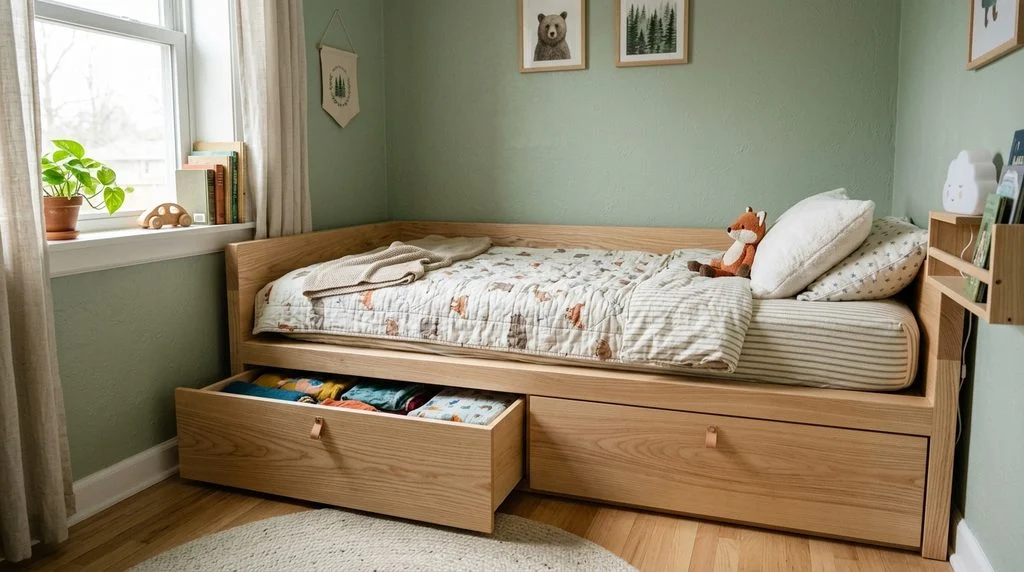
36. Use One Shared Theme as the Room’s Visual Anchor
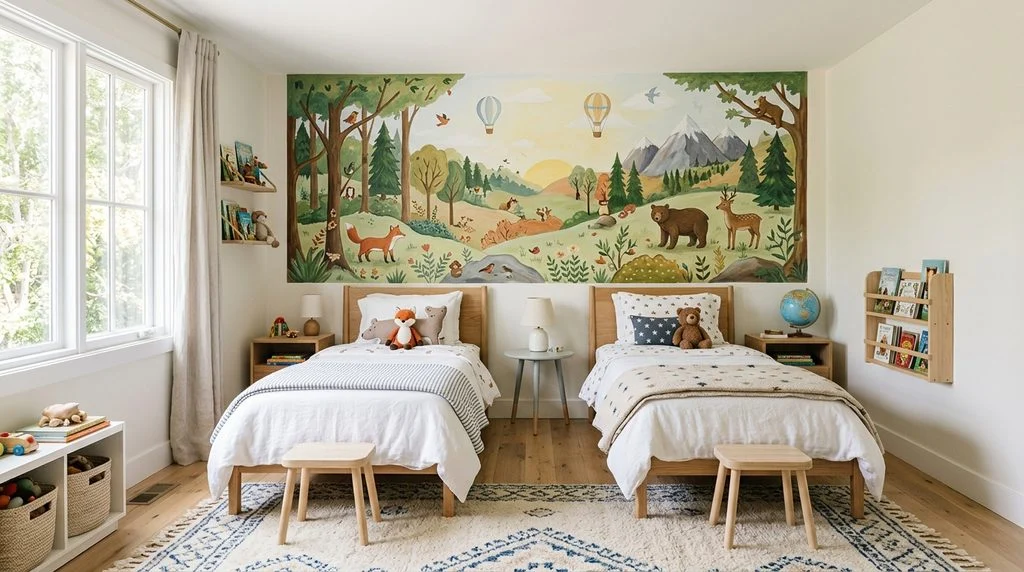
If both children genuinely like the same theme or interest, use it as the common layer that ties the room together. A nature theme, maps, space, animals, or a favorite hobby can unify the room while bedding, storage, and personal displays still give each child individuality.
37. Add a Statement Wall Instead of Decorating Every Surface
A mural, large map, or bold wallpaper on one wall can give the whole room a strong identity without making every corner visually busy. Keep the remaining walls calmer so each child’s personal belongings still have room to stand out.
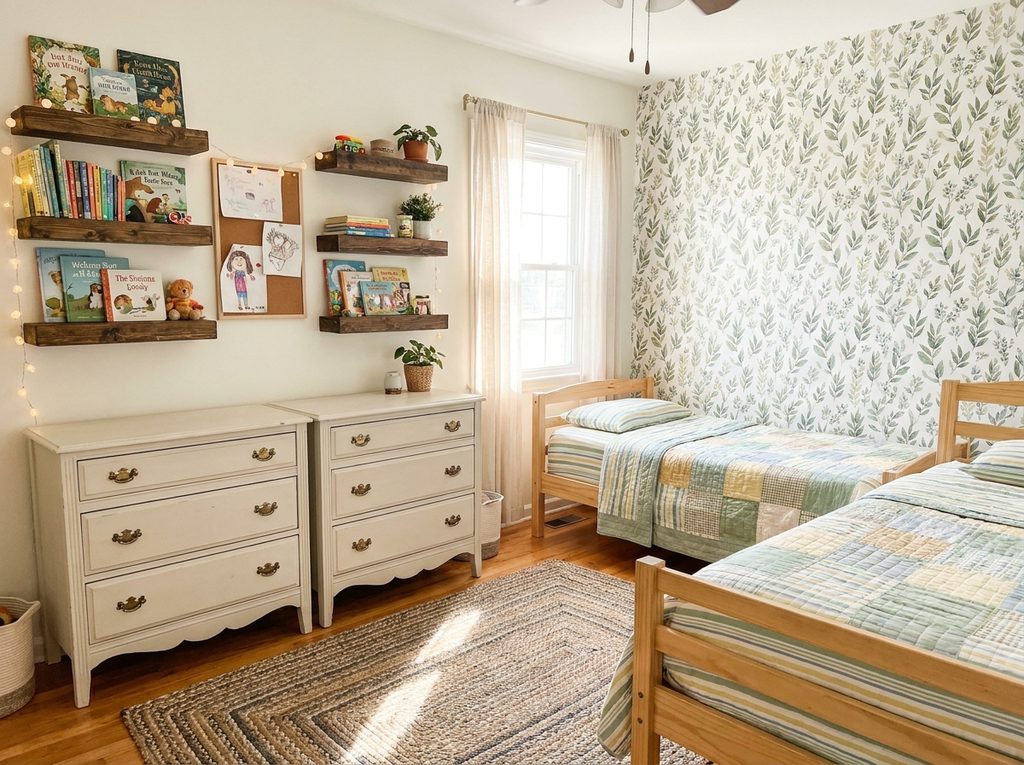
38. Mix in Timeless Furniture and One-of-a-Kind Pieces
Not every item needs to be marketed as children’s furniture. A sturdy vintage bookcase, solid-wood dresser, or simple adult-sized storage piece can last longer and make the room feel more timeless. Keep the larger pieces neutral, then let bedding, art, and accessories change as the children grow.
Safety Essentials You Shouldn’t Skip
Space-saving beds are wonderful, but shared rooms pack more furniture into less space, so a quick safety pass matters.
- Anchor every tall dresser, bookshelf, and divider unit to the wall with anti-tip straps.
- Keep the top bunk for children age 6 and up, with guardrails on all open sides and a securely attached ladder.
- Leave 33–36 inches of clearance above the top bunk, and never position it under a fan, vent, or window.
- Use cordless blinds and shades to eliminate strangulation hazards.
- Secure string lights, cords, and outlets, and choose low-VOC paint where you can.
Budget-Friendly Ways to Pull It Together
You don’t need a full renovation. Budget-friendly shared bedroom ideas for kids can rely mostly on paint, textiles, flexible storage, and clever reuse.
- Unify mismatched hand-me-down furniture with one coat of paint and matching hardware.
- Splurge on the two things kids touch daily — mattresses and bedding — and save on everything else.
- Shop secondhand for solid-wood dressers and bookcases; they’re cheaper, sturdier, and paintable.
- Use removable peel-and-stick wallpaper or decals for big impact without the commitment.
- Let inexpensive, swappable accessories carry the personality so you can refresh as tastes change.
4 Finishing Touches for Sibling Harmony
The last few shared bedroom ideas for kids are less about furniture and more about keeping the peace — which, in a shared room, is the whole point.
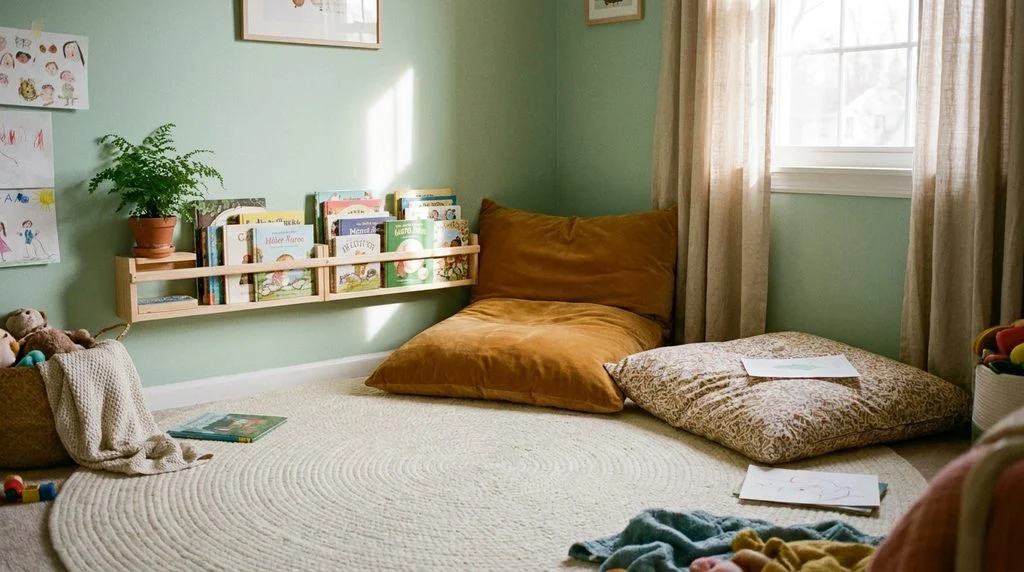
27. Add a shared cozy corner
A small floor-cushion reading nook or teepee in a neutral corner gives the kids a shared “neutral zone” to play together, balancing all those individual boundaries with a spot that’s deliberately for both of them.
28. Build in a homework or activity zone
A double desk or a long wall-mounted shelf-desk with two chairs gives each child their own workspace side by side. It keeps school clutter out of the sleep zone and scales up neatly as they get older.
29. Make cleanup a two-player game
Open bins, low hooks, and clearly labeled “homes” for everything mean even young kids can tidy their own side. When the system is obvious, cleanup stops being a fight over who made the mess.
30. Plan for the room to grow
Kids’ tastes change fast. Keep the big-ticket pieces neutral and modular so that when the dinosaurs give way to guitars, you only need to swap bedding, art, and accessories — not the whole room.
Frequently Asked Questions
What is the best bed setup for a small shared kids’ room? For the tightest rooms, bunk beds with built-in storage save the most floor space. If ceiling height or age is an issue, a trundle bed or an L-shaped twin layout keeps both kids at ground level while still leaving room to play.
How do I give each child privacy in a shared bedroom? Combine a simple divider (an open bookshelf, a curtain track, or the bunk bed itself) with per-child touches like an individual reading light, a personal feature wall, and a bed canopy. Privacy-focused shared bedroom ideas for kids work best when boundaries are clear but flexible.
What’s the best way to decorate a boy-and-girl shared room? Start with a neutral, nature-inspired base (sage, sand, terracotta, warm wood) and let each child express themselves through accent colors, bedding, and the wall behind their own bed. These shared bedroom ideas for kids keep the room cohesive without forcing both children into the same style.
At what age can kids use the top bunk? Most manufacturers and safety guidelines recommend the top bunk for children age 6 and older, always with guardrails on all open sides and a securely attached ladder or stairs.
How do I stop siblings from fighting over the shared room? Give each child something that is unmistakably theirs (a drawer, shelf, light, or wall), use a per-child color or label system for storage, and add one shared neutral zone for playing together. The most practical shared bedroom ideas for kids make ownership obvious and fair.
Putting It All Together
A shared kids’ bedroom is really an exercise in balance: shared space with personal territory, cohesive style with individual expression, and smart storage with room to actually play. When choosing shared bedroom ideas for kids, start with the bed layout, carve out simple zones, build storage up and under, then let each child stamp their own personality on a calm, neutral canvas.
Do that, and the room stops being a nightly battleground and becomes what a shared room can be at its best: the place where siblings build a whole childhood of memories together.