30 Shared Bedroom Ideas for Small Rooms That Save Space
Fitting two kids, two sets of belongings and two personalities into one small bedroom is a real space-planning challenge. The best shared bedroom ideas for small rooms focus on saving floor space first, then building in storage and personal zones without making the room feel crowded.
This guide is specifically for compact bedrooms. If you want broader inspiration, see our shared bedroom ideas for kids. If your main problem is bed placement, see our shared bedroom layouts for siblings. For privacy and dividers, use our guide on how to divide a shared kids’ bedroom.

Below are 30 shared bedroom ideas for small rooms, covering bed configurations, storage, room division, colour and layout tricks that make the most of every square foot.
Before You Start: Measure the Small Room
Before moving furniture, measure the usable width and length of the room and mark the door swing, windows, closet doors, radiators and outlets. In a compact shared bedroom, a few inches can decide whether two separate beds, an L-shaped arrangement, or a bunk setup is realistic.
Choose one main priority before you buy anything: more open floor space, more storage, more privacy, or a study zone. Trying to maximize all four at once can make a tiny room feel overfilled.
Shared Bedroom Ideas for Small Rooms: Save Bed Space First
1. Bunk Beds to Free Up the Floor
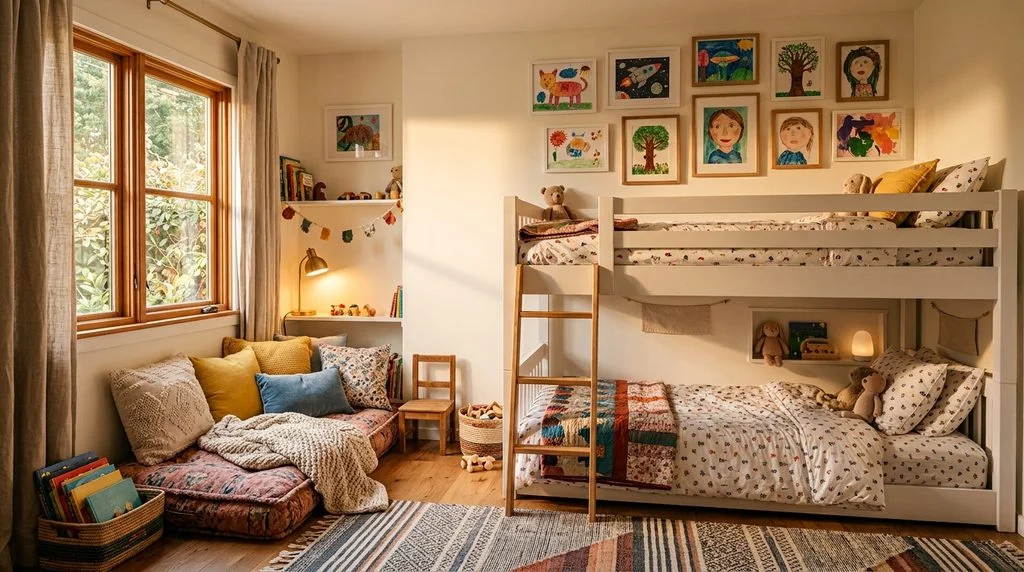
Bunk beds are still one of the most useful shared bedroom ideas for small rooms because they stack two sleeping areas into the footprint of one, leaving the rest of the room open for play, storage or a shared desk.
2. Loft Beds With a Function Underneath
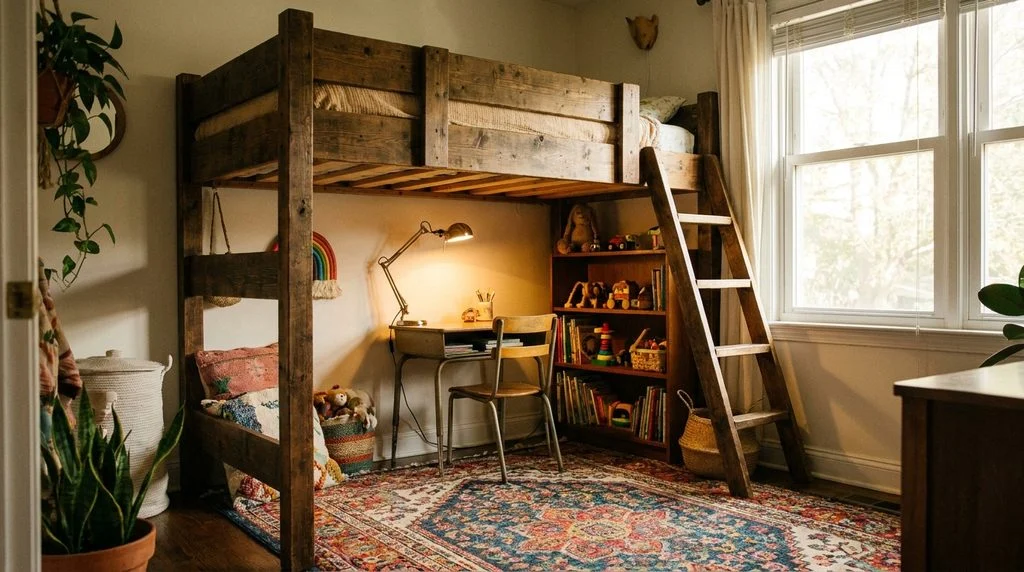
A loft bed raises the mattress and frees up the space below for a desk, dresser or a cozy reading corner — giving each child their own “zone” even in a single small footprint. This is one of the most flexible shared bedroom ideas for small rooms because one furniture footprint can handle both sleeping and another daily function.
3. Two Loft Beds, One on Each Wall
For two kids who each want their own defined territory, positioning a loft bed on either side of the room — with open floor space in between — gives each child a raised sleeping nook plus a personal area below for storage, a desk or a hangout spot.
4. Trundle Beds for Flexible Sleepovers
A trundle bed tucks a second mattress on wheels beneath the main bed, staying out of sight during the day and rolling out easily for sleepovers, guests, or a younger sibling who eventually moves in.
5. An L-Shaped Bed Layout
Positioning twin beds perpendicular to each other in a corner, rather than side by side, creates a natural L-shape that opens up the rest of the room for a play area, storage or a shared desk.
6. Back-to-Back Beds Against a Shared Wall
Placing both beds with their headboards against the same wall, foot-to-foot facing outward, gives each child a sense of distance from the other even in a tight room, since neither child is looking directly at their sibling while falling asleep.
7. A Deconstructed Bunk Bed
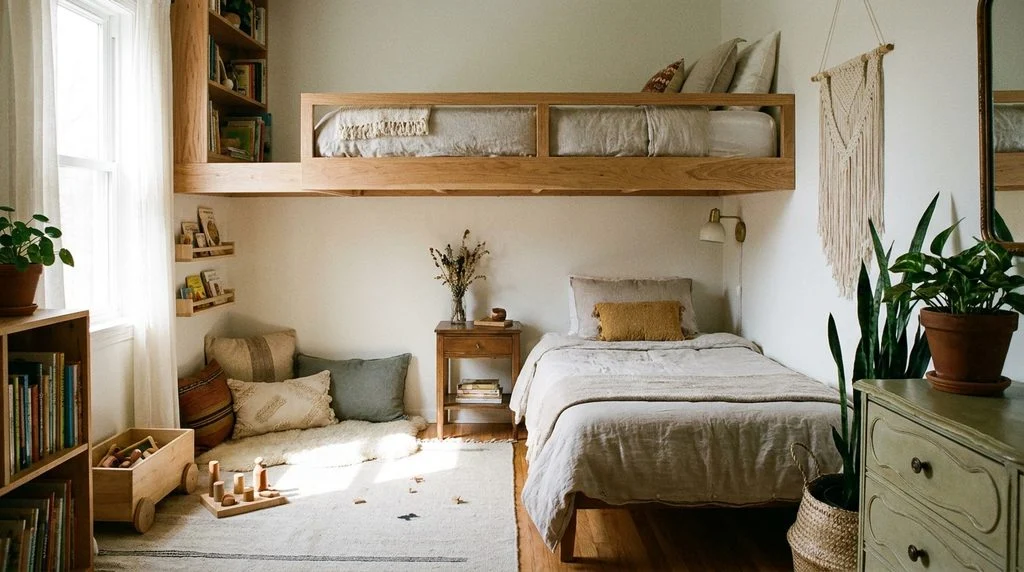
Rather than a full bunk set, one raised bed paired with a standard bed positioned underneath (in an L-shape instead of stacked directly) opens up more usable floor space than a traditional bunk while still saving room overall.
Giving Each Kid Their Own Space
8. One Long Headboard for Two Beds
A single oversized headboard that spans across both beds visually unifies the room while still keeping two separate mattresses — a simple way to make the layout feel intentional rather than just “two beds pushed together.”
9. A Half-Wall or Short Partition
A low partition wall between two beds gives each child a sense of privacy at night without blocking light or airflow across the room, and it doesn’t require a full renovation to install.
10. A Bookshelf as a Room Divider
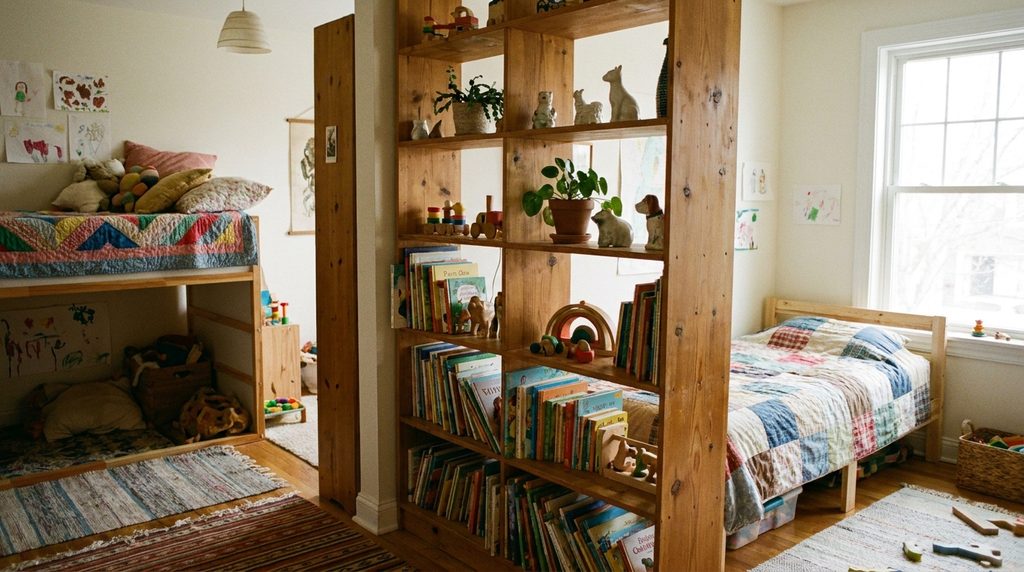
An open-backed bookshelf placed between the beds creates a soft visual break between each child’s space while doing double duty as storage — books, keepsakes or bins can face either side. For families comparing shared bedroom ideas for small rooms, this works especially well because the divider also earns its space as storage.
11. Curtains Around a Bunk or Bed
Hanging a curtain around the base of a bunk bed, or along one side of a bed, gives a child a way to close off their own little nook when they want privacy, then tie it back the rest of the time.
12. A Shared Canopy Overhead
A canopy draped over both beds ties the room together visually while still giving each child their own space underneath — a cozy option for younger kids who share a room but aren’t ready for a hard divider.
13. Split Wall Colours or Paint Treatments
Painting each side of the room in a different colour, or adding a distinct pattern behind each bed, is a low-cost way to give each child a sense of ownership over “their” half without any construction.
14. Matching Furniture, Personalized Accents
Identical bed frames and bedding create a calm, cohesive look, while letting each child choose their own lamp, throw pillow or wall art keeps the room feeling personal rather than uniform.
15. Different Bed Frames, Same Bedding
Flipping the previous idea — using two different bed frame styles but tying them together with matching linens — gives each child a distinct piece of furniture while still keeping the room visually consistent.
Small-Room Storage That Works for Two
16. A Shared Dresser With Divided Drawers
One large dresser with plenty of drawers, split evenly between both kids, saves floor space compared to two separate dressers and still gives each child a clear, defined spot for their clothes.
17. Under-Bed Storage Drawers
Beds with built-in drawers underneath — or storage bins that slide beneath a standard bed frame — make use of space that would otherwise sit empty. Among practical shared bedroom ideas for small rooms, hidden under-bed storage is especially valuable because it can replace a separate dresser.
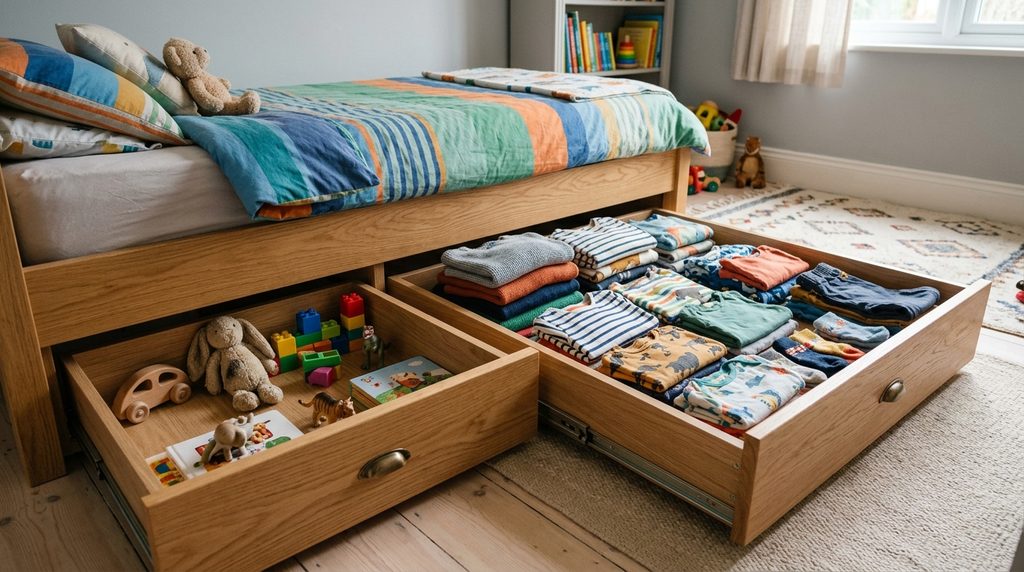
18. Wall-Mounted Shelves Instead of Floor Furniture
Shelving mounted directly on the wall keeps the floor clear for play while still giving each child a spot to display books, toys or keepsakes. Wall-mounted storage is one of the easiest shared bedroom ideas for small rooms to use when a full bookcase would take up too much floor space.
19. Labeled Storage Bins for Each Child
Colour-coded or labeled bins — one set per child — make it easy for kids to know exactly where their own belongings go, which cuts down on mix-ups and squabbles over whose toy is whose.
20. A Closet Organizer System
A closet fitted with shelves, drawers and double hanging rods lets two kids share one closet efficiently, splitting the space evenly instead of one child’s clothes taking over.
21. Storage Built Into Bunk Bed Stairs
Bunk beds with stairs instead of a ladder often include built-in drawers within each step — a clever way to add storage without taking up any additional floor space.
How to Make a Small Shared Bedroom Feel Bigger
22. Light, Neutral Wall Colours
Pale neutral walls reflect more light and make a small shared room feel more open, while still leaving plenty of room to add colour and personality through bedding, art and accessories.
23. Vertical Stripes or Tall Furniture
Furniture and decor that draw the eye upward — tall bookshelves, vertical stripes, floor-to-ceiling curtains — can make a room with a small footprint feel taller and less cramped.
24. Mirrors to Bounce Light Around
A well-placed mirror reflects natural light across the room and creates the illusion of more space, which is especially useful in a shared room where floor space is already tight.
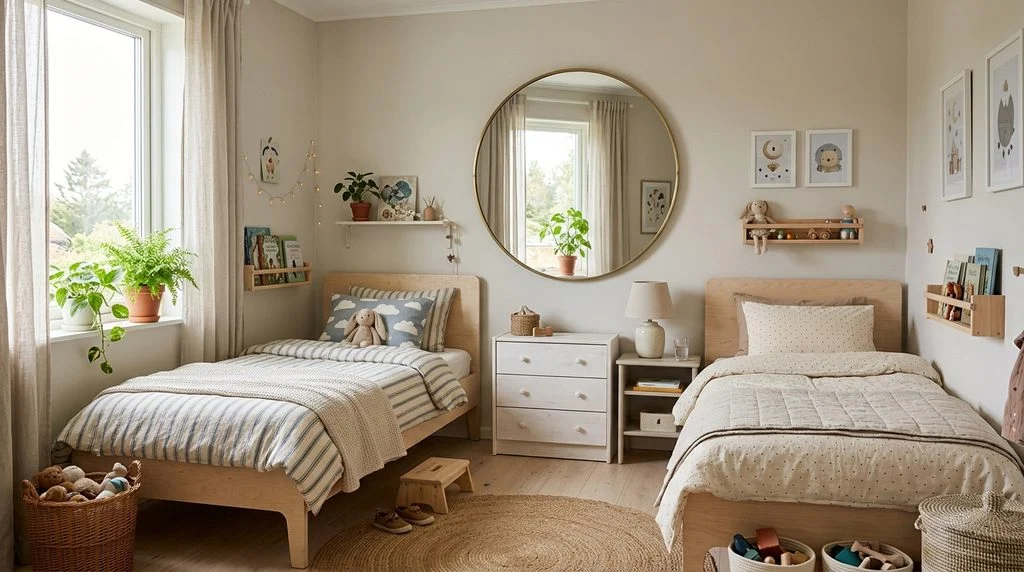
25. Furniture on Casters
Pieces that can be rolled out of the way — a trundle bed, a small storage cart, a rolling desk — add flexibility in a small room. Flexible furniture makes shared bedroom ideas for small rooms work better because the same floor area can serve play, homework and sleep at different times.
Shared Spaces That Still Feel Personal
26. A Shared Reading Nook
A small cushioned corner with a shared basket of books gives both kids a common space to unwind together, which can ease some of the friction that comes from splitting every other inch of the room.
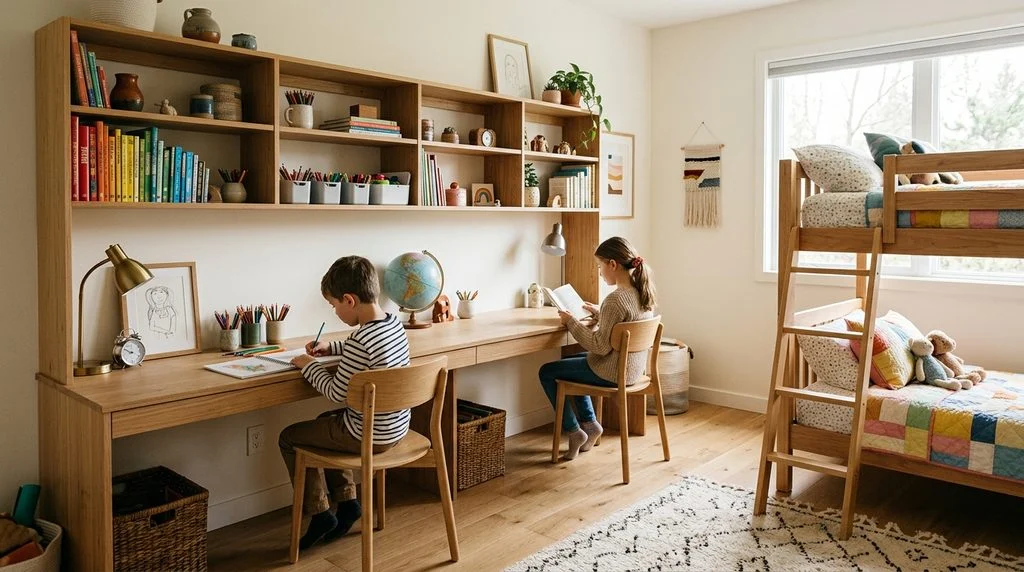
27. A Study Zone Built for Two
A single long desk (or two small desks pushed together) along one wall lets both kids do homework side by side, saving the space that two separate desk setups would otherwise require. Multi-use study zones make shared bedroom ideas for small rooms more practical as children get older.
28. A Gallery Wall With Space for Both Kids
Splitting one gallery wall into two halves — each child choosing their own art, photos or drawings for their side — adds personality to the room without needing two separate walls to work with.
29. A Rug That Defines Each Zone
Two smaller rugs, one under each bed area, can visually separate each child’s space within an otherwise open room, without the commitment of a physical divider.
30. Rotating “Together Time” Decor
A small shared shelf or corner reserved for things both kids choose together — a shared plant, a joint art project, a rotating display of their own crafts — reinforces that the room is a shared space they both have a hand in, not just two halves pushed together.
Making It Work Long-Term
A small shared bedroom takes more planning than a single-kid room. The strongest shared bedroom ideas for small rooms use vertical space wherever possible, give each child a clearly defined personal area, and rely on flexible, multi-purpose furniture that can change as their needs grow. The goal isn’t to split the room perfectly in half — it’s to make every square foot useful while keeping the room fair, personal and calm.