Healthy Snacking for Kids: A Practical Guide for Parents
This article is for general information only and isn’t a substitute for advice from your child’s pediatrician or a registered dietitian, especially if your child has specific health, growth or feeding concerns.
Healthy snacking for kids works best when snacks fit naturally between meals, include a mix of familiar foods, and stay simple enough for everyday family routines. This guide focuses on healthy snacking for kids as a routine: when snacks fit, how to build a balanced option, and how to make everyday snack habits easier. For a large list of specific ideas, see our 100+ healthy snack ideas for kids.
Snacking gets a mixed reputation, but for kids, it’s not just about filling a gap between meals — well-chosen snacks genuinely help supply the energy and nutrients growing bodies need. The habits kids build around snacking now, from what they reach for to how they eat it, also tend to carry into adulthood. Here’s a practical guide to how much and when kids should snack, smart snack ideas organized by category, and a few simple habits that make healthy snacking easier for the whole family.

Is Snacking Good for Kids?
Yes — in general, snacking is a normal and healthy part of a child’s day, not something to minimize or avoid. Kids have higher energy needs relative to their body weight than adults do, since their bodies are constantly growing and developing, and two or three meals a day often isn’t enough to meet that need on its own.
That said, snacking works best with a little structure. Kids who graze all day, without ever feeling truly hungry or full, can have a harder time learning to recognize their own hunger and fullness cues — a skill that matters for maintaining a healthy relationship with food well into adulthood. Snacking with intention, rather than constant unstructured grazing, also helps prevent the crankiness and low energy that comes with a hungry, “hangry” kid.
How Much Should Kids Snack?
- Younger children generally do well with three meals plus two snacks a day.
- Older kids and teens typically need three meals and one snack a day.
- Active teens — those playing sports, going through a growth spurt, or otherwise very active — may need two snacks instead of one.
When Should Kids Snack?
A good rule of thumb is to offer a snack a couple of hours after a meal, and at least an hour or two before the next one, so it doesn’t blunt their appetite. School-age kids should generally have an after-school snack available, especially if they have practice, a club or another activity before dinner.
Building a Better Snack: What to Look For
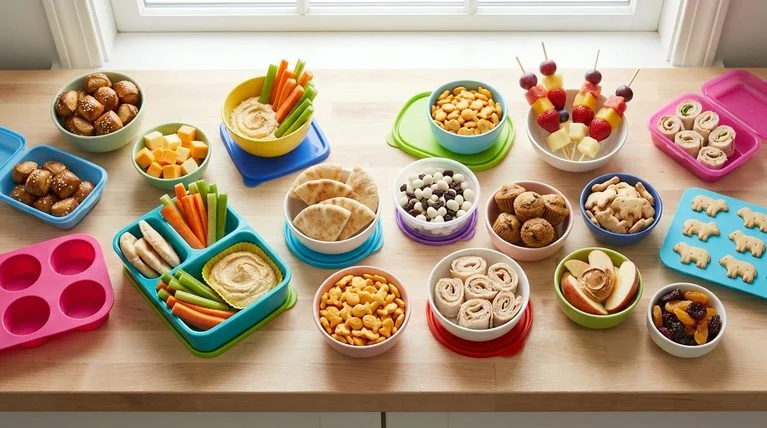
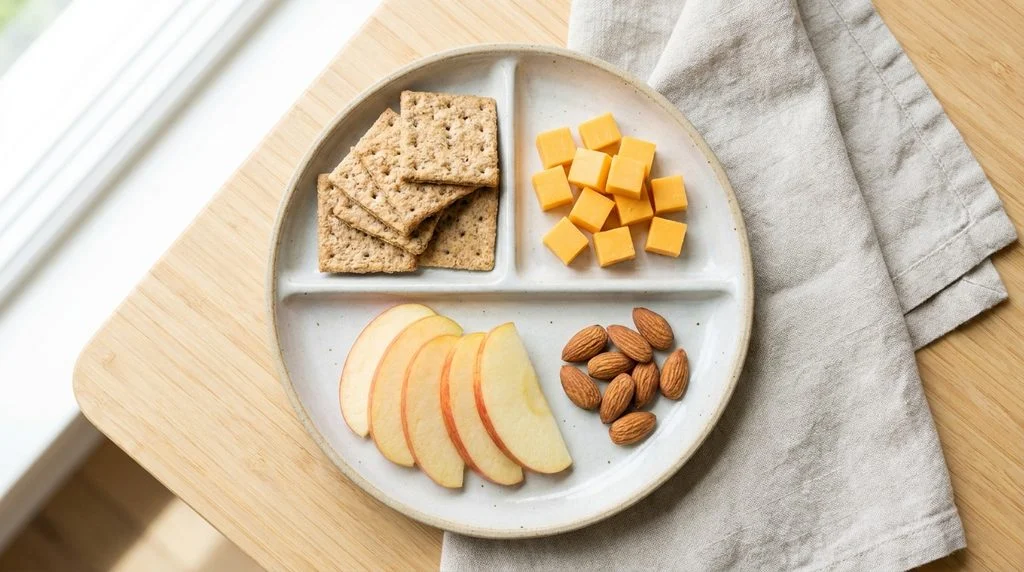
Registered dietitians consistently point to the same formula for a snack that actually satisfies a kid: pair something with fiber or protein alongside a carbohydrate, rather than serving carbs alone. A packet of crackers might curb hunger for twenty minutes; crackers with cheese or a spoonful of nut butter tend to hold a child over much longer, because protein and fiber slow digestion and support steadier energy and mood.
Healthy Snack Ideas by Category
Fresh Fruit
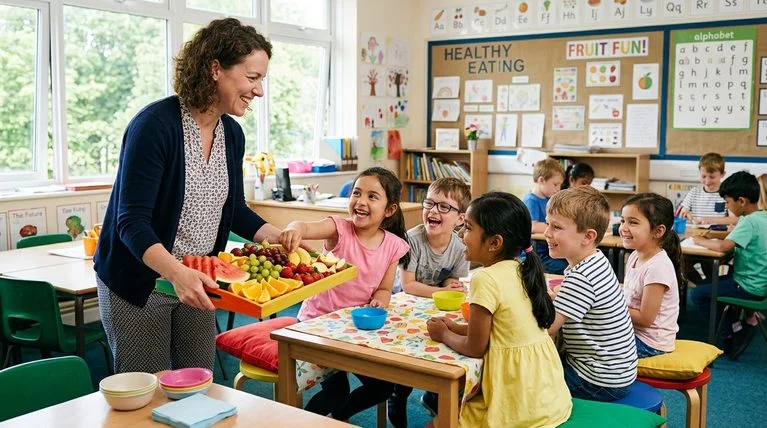
Apples, pears, oranges, grapes, berries, cherries and avocado are all easy grab-and-go options. Keeping a fruit bowl somewhere visible and easy to reach — the counter, the kitchen table, eye level in the fridge — makes it much more likely kids will choose it on their own.
Dried Fruit
Apricots, raisins, dates, prunes and dried cranberries are shelf-stable, easy to pack for school or activities, and a good source of fiber. Since dried fruit is more concentrated in natural sugar than fresh fruit, portioning it out (rather than snacking straight from a large bag) helps keep servings reasonable.
Fresh Vegetables
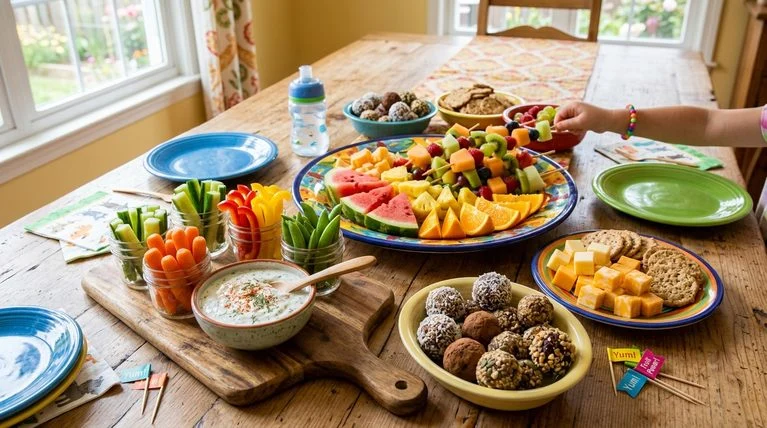
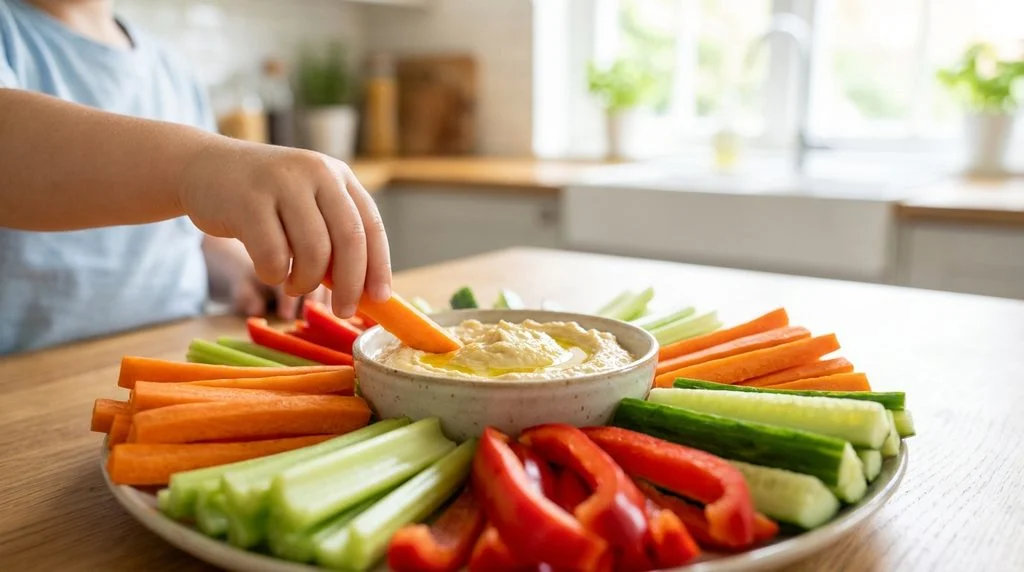
Carrot sticks, celery, bell pepper strips, cucumber and cherry tomatoes become a lot more appealing to kids when paired with a dip like hummus, guacamole or a yogurt-based ranch. A classic combo worth trying: celery with peanut butter and raisins, sometimes nicknamed “ants on a log.”
Protein-Forward Snacks
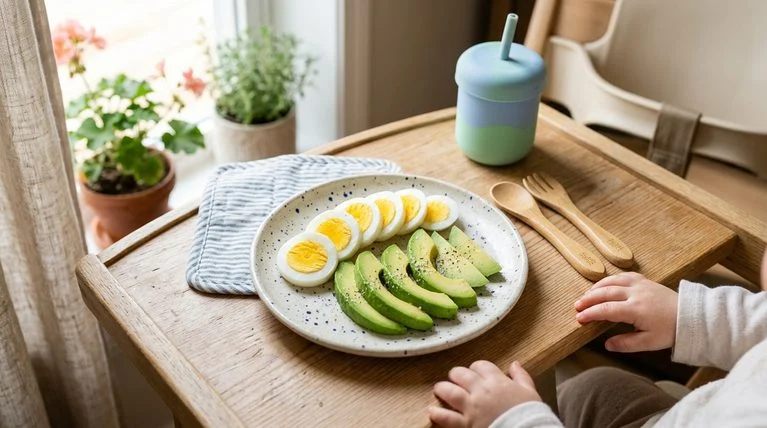
Peanut butter on whole-grain toast, tuna on toast, hard-boiled eggs, cheese slices, and a small handful of nuts or sunflower seeds all deliver protein that helps kids feel fuller for longer between meals. (For younger toddlers, whole nuts are a choking hazard — use nut butter or finely chopped nuts instead.)
Dairy & Yogurt
Plain or lightly sweetened yogurt topped with fresh fruit and a sprinkle of granola is an easy way to combine protein, calcium and fiber in one snack. Look for yogurts with minimal added sugar where possible, and let kids help pick their own fruit toppings to build buy-in.
Smoothies
A fruit or vegetable smoothie is a good option for picky eaters or mornings when there isn’t much time — blending in a handful of spinach or a scoop of nut butter is an easy way to sneak in extra nutrients without changing the flavor much.

Snacks to Keep Out of Regular Rotation
Treats like candy, cake, chips and ice cream don’t need to disappear from a child’s life altogether — birthday cake on a birthday is still birthday cake — but most dietitians recommend keeping them as occasional treats rather than daily after-school snacks. Simply keeping less of these items in the house makes them easier for kids (and parents) to skip on an ordinary day.
Packaged, processed snacks are worth a closer look too, since they tend to carry more added sugar and sodium and less nutritional value than whole foods. When a packaged snack is the most convenient option — which, realistically, it often is — checking the ingredient list can help: ingredients are listed from most to least prevalent by weight, so a vegetable-based chip that lists a vegetable first is a better bet than one where vegetable flavoring is buried near the bottom.
Building Healthy Snacking Habits
Beyond what’s on the plate, how snacks fit into a child’s day matters just as much.
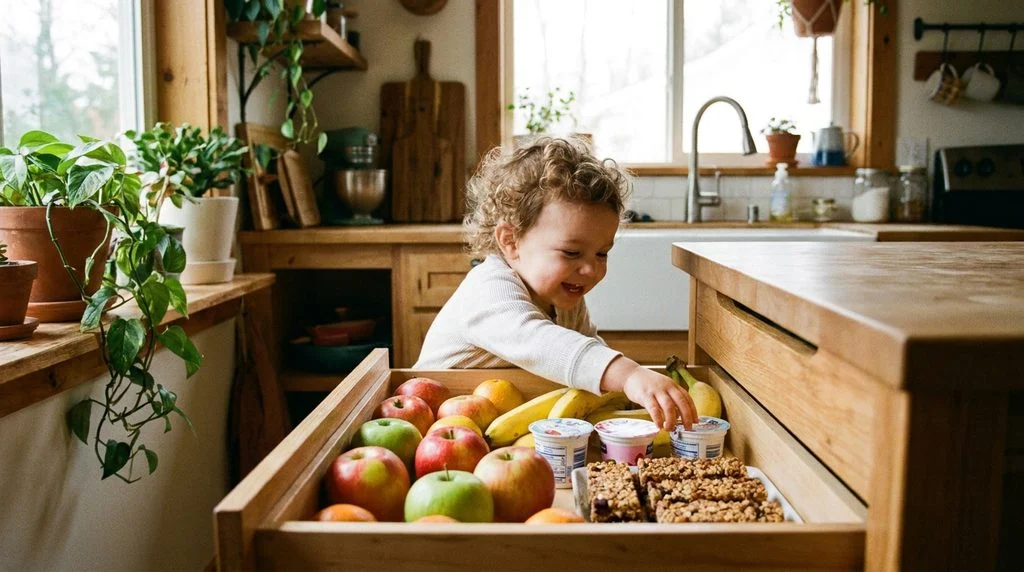
Keep healthy options visible and reachable. A fruit bowl on the counter or healthy snacks stored at kid height in the fridge and pantry make it far more likely kids will reach for those first. Giving your child their own snack drawer or shelf stocked with foods you’re comfortable with lets them make an independent choice within boundaries you’ve already set.
Let kids build snack independence. Simple snacks — baby carrots, sliced peppers, whole-grain cereal — are often within a young child’s own ability to grab and prepare. Even preschoolers can usually learn to rinse fruit or spread peanut butter on toast with a little supervision.
Designate a snack spot. Keeping snacking limited to one or two spots in the house — the kitchen table, a specific counter — helps prevent the kind of mindless, all-day grazing that makes it harder for kids to notice when they’re actually hungry.
Skip snacking in front of screens. Eating while watching TV or scrolling a tablet has been linked to overeating, since it’s easy to keep eating past the point of fullness when attention is elsewhere. Keeping meals and snacks screen-free helps kids stay tuned into their own hunger cues.
Talk about food, not just eat it. Simple conversations about eating a variety of colors, or where different foods come from, build food literacy that sticks with kids well beyond snack time.
Snack smart on a budget. Frozen fruit offers the same nutrition as fresh at a lower cost, and it won’t spoil before you use it — making it an easy addition to smoothies or a yogurt topping without the waste.
Set older kids up for independence. As kids move into their teen years and start managing more of their own schedule — sports, jobs, a busier social life — the daily habits built in childhood matter more than ever. Keeping convenient, healthy options on hand at home gives them something better to reach for than whatever’s available at a vending machine or drive-through.
The Bottom Line
Healthy snacking for kids isn’t about eliminating treats or being rigid about timing — it’s about building a rhythm where nutritious, satisfying options are the easy, default choice most of the time. Pair protein or fiber with the snacks your kids already love, keep the good stuff visible and within reach, and let a little independence and variety do the rest.
A practical approach to healthy snacking for kids is to keep a few reliable options available, then vary the fruit, grain, dairy, protein, or vegetable component through the week.
For most families, healthy snacking for kids becomes easier when snack timing is predictable and the choices are simple enough to repeat without extra stress.