25 Snacks for Toddlers and Young Children
Snacks for toddlers should be simple, age-appropriate, and easy to fit into everyday routines. Young children often need small eating opportunities between meals, so this guide focuses on practical snack ideas for home, outings, daycare, and busy family days.
This guide stays focused on snacks for toddlers and younger children, with age-specific ideas for home, outings, and everyday snack routines. The best snacks for toddlers are easy to handle, familiar enough to eat, and simple for parents to prepare. For broader ideas across ages, browse our healthy snack ideas for kids.
This guide covers everything you need to know: whether toddlers actually need snacks, what makes a snack genuinely healthy and balanced, and a big list of practical ideas — from no-cook options to batch-cooked favorites and clever ways to turn leftovers into a snack.

Snacks for Toddlers: Do Young Children Need Snacks?
Current UK guidance suggests that under 1 year of age, babies don’t really need dedicated snacks — once a baby is established on three meals a day, their milk feeds in between should provide enough energy and nutrients. After the first birthday, health organizations generally do recommend offering snacks to children between ages 1 and 5.
In practice, though, whether or not a child needs regular snacks really does depend on the individual. Some toddlers eat large, varied meals and do just fine without snacking much at all — extra snacks can even reduce their appetite for the next proper meal. Other toddlers eat more like a series of “mini meals” throughout the day, with a smaller appetite at breakfast or dinner, meaning regular snacks genuinely help keep them fueled and satisfied.
Practically speaking, snacks are useful for keeping little ones occupied, preventing hunger when a full meal isn’t an option, and — especially for pickier eaters — offering more chances throughout the day to get nutrients in.
What Makes a Snack Genuinely Healthy for Toddlers?
It’s easy to lean on convenient but less nutritious options like crisps, biscuits, or sweets, especially since you know your toddler will eat them without a fuss. But because young children have small stomachs and high nutrient needs relative to their body size, it helps if the calories they’re eating come packed with real nutrition too.

A well-rounded snack should generally include:
- A piece of fruit — banana, tangerine, plums, apricots, or a small pot of blueberries are some of the easiest options.
- A starchy carbohydrate — bread, an oatcake, a pancake, or a cracker.
- A protein food — cheese, yogurt, meat, fish, beans, pulses, or nuts and seeds.
Thinking of snacks as “mini meals” — balanced, varied, and genuinely filling — helps keep toddlers going between meals while topping up their nutrient intake where it’s needed.
A few examples of a balanced snack:
- Oatcakes with peanut butter and tangerine segments
- Mini tuna and cucumber sandwiches
- Pancakes with cream cheese and quartered cherry tomatoes
Not every single snack needs to check every box, especially when you’re out and about — but aiming for this kind of balance whenever you reasonably can leads to more satisfying, sustaining snacks overall.
Snacks for On-the-Go Toddlers
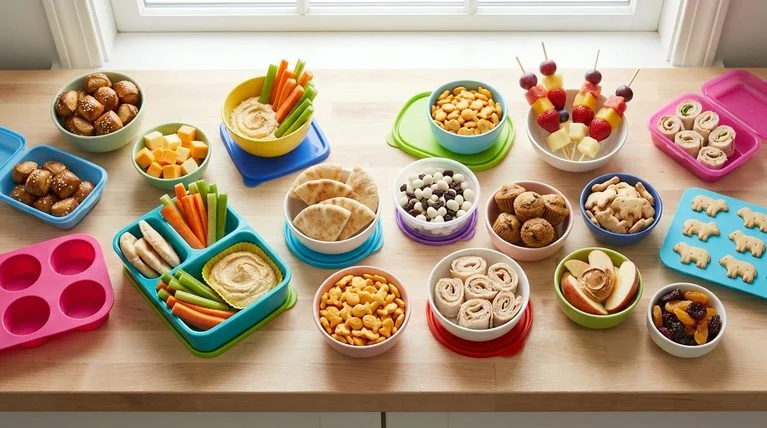
Having easy snacks ready to grab when you’re heading out the door makes a real difference. A few essentials worth keeping on hand:
- Small freezer bags
- Reusable containers
- A mini cool bag
- An ice pack
- A lidded, free-flowing water cup
Keep these ready to toss into a bag along with whatever needs to stay cool.

No-Cook Snack Ideas for Babies and Toddlers
- Breadsticks or veggie sticks with iron-rich dips
- Mini sandwich quarters
- Plain, natural yogurt with chopped banana
- Avocado with cream cheese and tomato chunks
- Buttered bread fingers with a hard-boiled egg
- Peanut butter and mashed banana on bread or crackers
- Oatcakes with nut butter, Marmite, or cream cheese
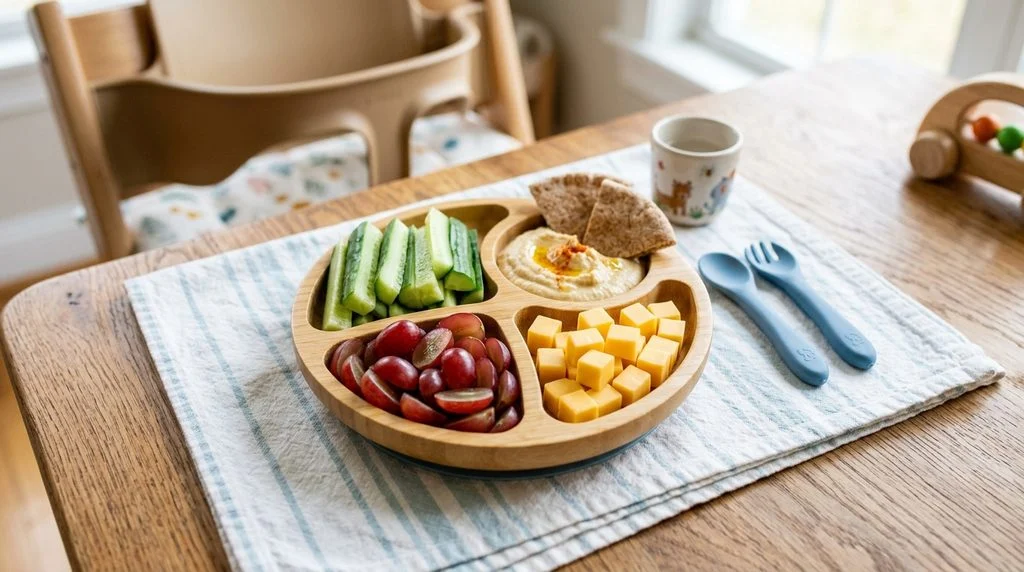
- Crackers with cheese and chopped grapes
- Cucumber fingers with homemade hummus
- A cup of plain or fortified milk with breadsticks
- Dates filled with nut butter
- Celery sticks filled with nut butter, cream cheese, or hummus
Batch-Cook Snack Ideas for Babies and Toddlers
When you have a little extra time, these freezer-friendly options are worth making in bulk:
- Veggie-packed savory flapjacks
- Savory muffins
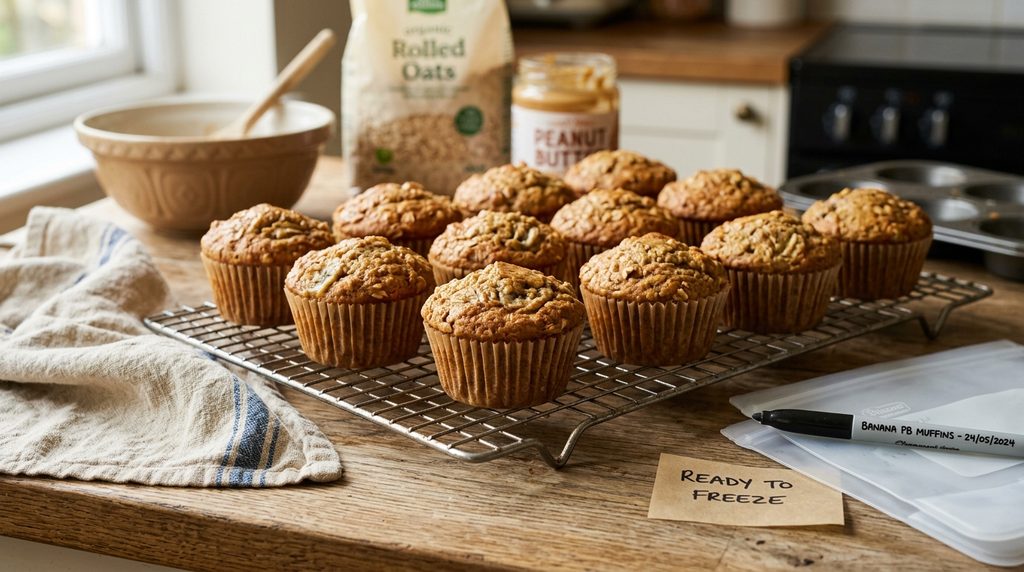
- Banana and peanut butter muffins
- Blueberry baked oats
- Egg- and dairy-free blueberry muffins
- Pancakes served with nut butter, ground nuts, milled seeds, and fruit
- Sweet potato falafel bites
- Scones with chopped strawberries
- Chocolate raisin bread — a genuine household staple in many families, often served with nut butter and yogurt
- Baked banana bars
- Veggie green egg muffins — freezer-friendly and great for lunchboxes
- Toddler-friendly raspberry oaty cookies
Turning Leftovers Into Toddler Snacks
Leftovers make some of the easiest, most nutrient-dense snacks around — no extra cooking required.
- Cold pasta fingers with a tomato dip and a bit of cheese
- Figgy porridge fingers
- A mini pot of peas with fish fingers
- Cooked broccoli with a pot of grated cheese
- Sweet potato wedges with a yogurt dip
- Leftover cooked vegetables — serve with a dip, blend into a pasta sauce, or spread as a veggie “pâté” on toast
- Leftover meat with a dip
- Tofu fingers with peas and potato wedges
- Leftover fish turned into fishcakes or salmon and potato tots
- Leftover baked beans or potatoes for a simple, balanced snack
- Leftover fritters — a flexible way to use up veg, potatoes, and meat scraps

Snacks You Can Prep in 10 Minutes or Less
- Courgette or carrot and sweetcorn fritters
- A hard-boiled egg
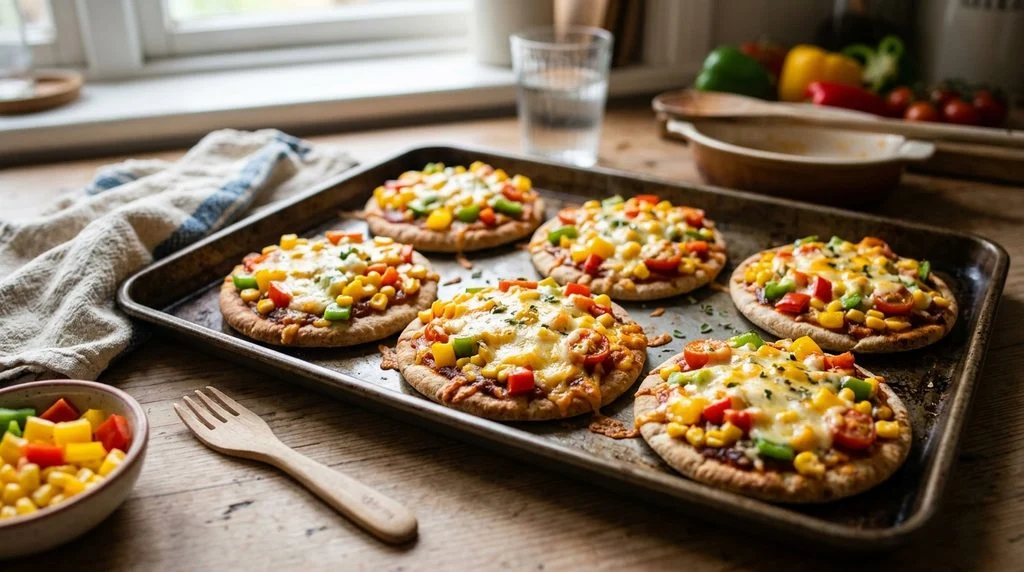
- Mini pitta pizzas
- Tinned fish (sardines, mackerel, salmon, or tuna) mixed with a little yogurt and lemon, served on toast, crackers, or a rice cake
- No-bake energy balls
- Porridge — a perfectly reasonable snack, not just a breakfast food
- A yogurt or smoothie bowl, blending frozen fruit into yogurt or kefir with nut butter and milled seeds
- Pesto pasta, a simple way to sneak in hidden nutrition
- Air-fryer pizza toasts
- Easy pinwheel wraps
Bonus Ideas Worth Adding
A few extra favorites gathered from other pediatric dietitians, great additions to the rotation above:
- Avocado and Egg Combo — Mashed avocado paired with sliced hard-boiled egg delivers healthy fats, protein, iron, and vitamin C in one simple, toddler-friendly snack.
- Fruit and Nut Butter Packs — Pre-cut apple slices paired with a single-serve nut butter packet make a filling, easy-to-carry snack for busy days out.
- Crackers with Cheese and Hummus — A simple protein-and-fiber combo (crackers, cheese, hummus) helps toddlers feel fuller for longer between meals.

A Quick Note on Framing Snacks
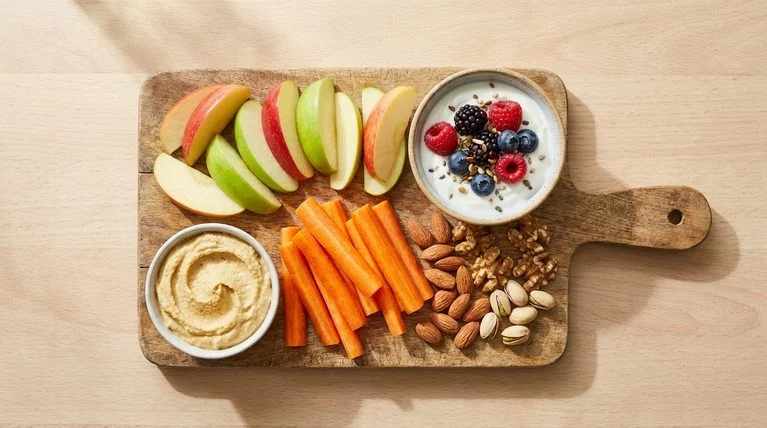
Rather than labeling foods as strictly “good” or “bad,” it helps to think and talk about snacks in terms of balance. A snack combining two or three food groups — fruit with yogurt, or crackers with hummus — will nearly always be more satisfying and nourishing than a single-food snack alone, without needing to frame any one food as off-limits.
Final Thoughts
There’s no single “right” way to approach toddler snacking — some kids thrive on three solid meals with barely any snacks, while others genuinely need regular little top-ups throughout the day. The goal isn’t perfection at every single snack time, but building a rotation of balanced, easy options you can lean on, so that even on the busiest days, snack time doesn’t have to mean starting from scratch.