Healthy School Snacks: A Practical Guide by Food Group
Healthy school snacks should be practical, easy to pack or serve, and suitable for the setting where children will eat them. This guide organizes snack ideas by food group so parents, teachers, and caregivers can build simple options for lunchboxes, classrooms, clubs, and after-school activities.
For a broader list of everyday ideas, see our healthy snack ideas for kids. If you need age-specific options, use our snacks for toddlers guide.
Use this as a flexible framework rather than a strict rulebook. School policies, allergies, age, appetite, and individual needs all matter, so always follow your school’s guidance and use age-appropriate preparation for younger children. A short list of reliable healthy school snacks can make school-day planning much easier.
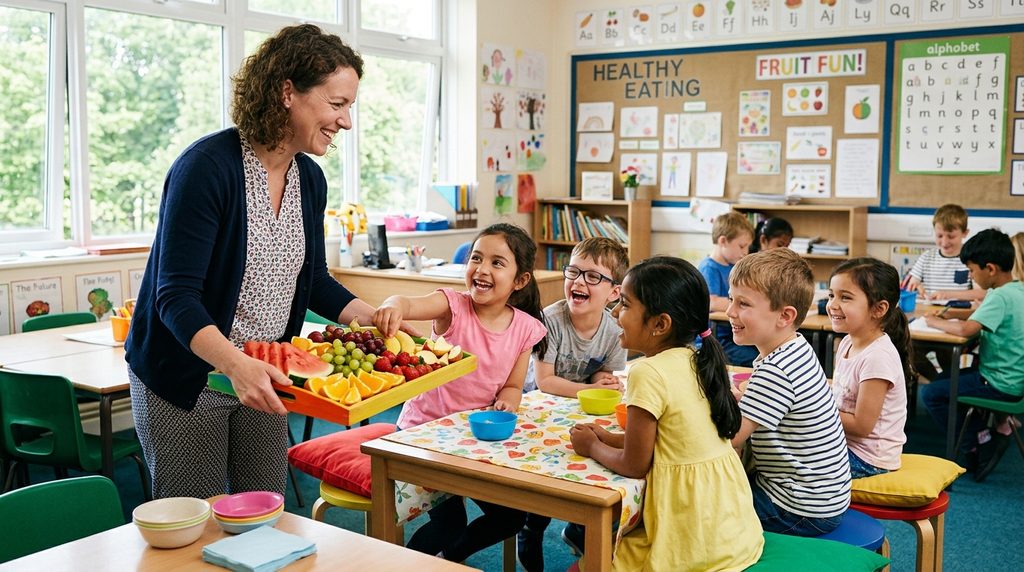
Healthy School Snacks: Start With Fruits and Vegetables
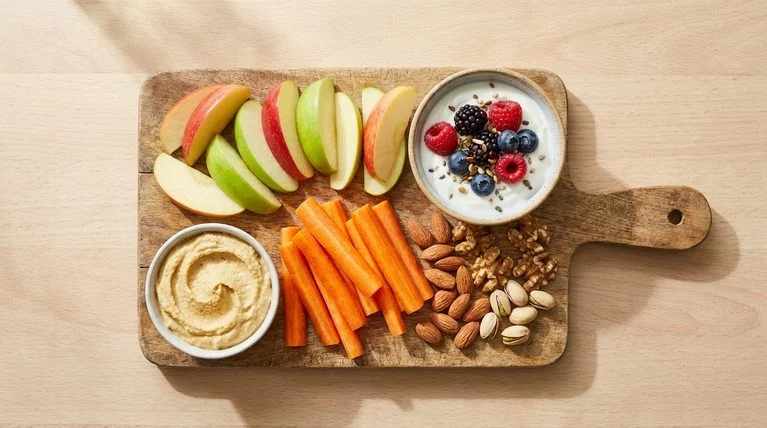
Fruits and vegetables are useful school-snack options because they are easy to portion, colorful, and simple to pair with other foods. Offering a variety of produce across the week can help keep snack time interesting without making preparation complicated.
Fresh produce can feel less convenient than packaged snacks, but washing and portioning a few options ahead of time makes school-day prep easier. Rotate different fruits and vegetables and note which textures and formats your child actually eats. These can become simple healthy school snacks when paired with another familiar food.

Fruit Ideas
- Applesauce, fruit cups, and canned fruit — Long shelf life, low-cost, and healthy when canned in juice (not syrup) and free of artificial dyes.
- Dried fruit — Raisins, apricots, apples, pineapple, and mango, ideally with little to no added sugar.
- Frozen fruit — Frozen grapes, blueberries, strawberries, peaches, or mangoes make a refreshing, no-prep option.
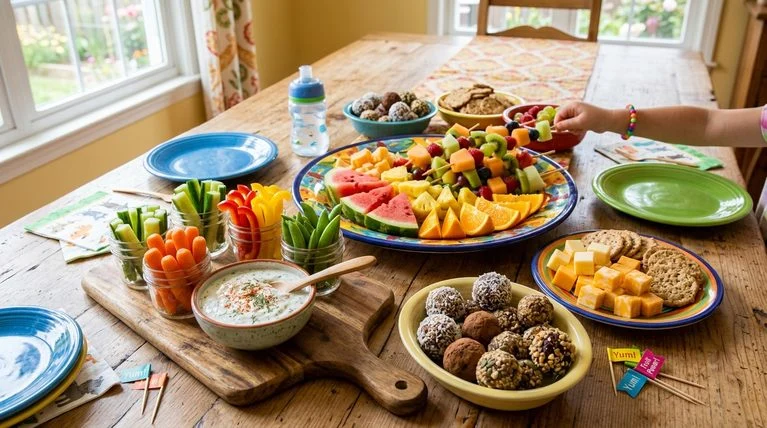
- Fruit salad — Let kids help chop and mix a colorful variety for extra appeal.
- Smoothies — Blend fruit with water, a splash of juice, and low-fat yogurt or milk. Be cautious with store-bought smoothies, which often carry hidden added sugars.
- Fresh fruit platters — Many grocery stores now offer pre-cut fruit platters, a convenient option for larger groups.
Good whole-fruit choices include apples, apricots, bananas, blackberries, blueberries, cantaloupe, cherries, clementines, grapefruit, grapes (halved for younger children to prevent choking), honeydew, kiwi, mangoes, nectarines, oranges, peaches, pears, pineapple, plums, strawberries, tangerines, and watermelon.
Vegetable Ideas
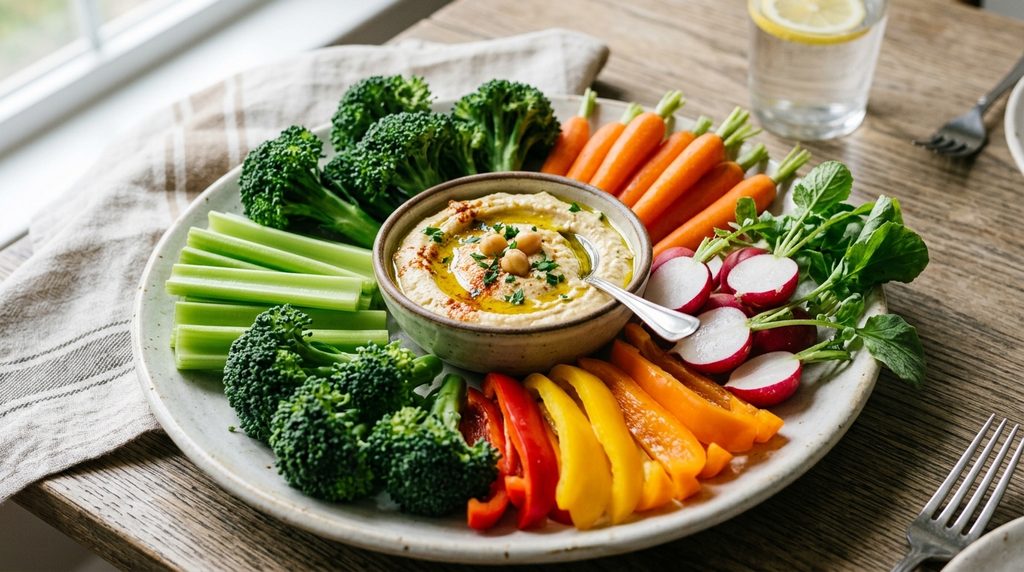
- Dips — Vinaigrette dressings, light store-bought dips, tzatziki, guacamole, salsa, or sesame-free bean dips all pair well with raw veggies.
- Salad — Set out a simple salad bar and let kids build their own.
- Edamame — Fun to eat and easy to prepare; just microwave frozen edamame for 2–3 minutes.
- Veggie pockets — Whole wheat pita halves stuffed with vegetables and hummus or dressing.
Low-prep raw veggie options include broccoli, carrot sticks or baby carrots, cauliflower, celery sticks, cucumber, bell peppers, snap peas, snow peas, string beans, cherry or grape tomatoes, yellow squash, and zucchini slices.
A note on allergies: Many bean dips, including hummus, contain sesame (often labeled as tahini) — one of the most common food allergens. For school settings, consider a black bean dip instead, or make hummus at home using extra olive oil in place of tahini.
Choose Whole Grains Over Refined Ones
Most kids already eat plenty of grain-based snacks, but too many of those are cookies, snack cakes, and sugary cereals made from refined grains. Whole grains offer significantly more fiber, vitamins, and minerals. As a general guideline, aim to keep added sugars and saturated fat each under 10 percent of daily calories, and save cookies, snack cakes, and chips for occasional treats rather than daily staples.

Whole Grain Options
- Whole-wheat English muffins, pita, or tortillas — Stuff with veggies or dip in sesame-free hummus.
- Breakfast cereal — Dry or with low-fat milk, whole-grain cereals make a solid snack. Look for options with no more than 6 grams of added sugar per serving and no synthetic food dyes.
- Whole-grain crackers — Woven wheat crackers, rye crispbreads, or whole-wheat matzos work well alone or topped with veggies or low-fat cheese.
- Rice cakes — Choose ones made from whole-grain brown rice.
- Popcorn — Pre-popped bagged popcorn or homemade air-popped popcorn, seasoned with a spritz of olive oil and parmesan, garlic powder, or other spices.
- Granola and cereal bars — Look for nut-free, low-sugar, moderate-calorie options, especially soft-baked whole-grain bars.
Go Low-Fat With Dairy
Dairy is a great source of calcium for building strong bones, but full-fat dairy products are also one of the biggest sources of saturated fat in kids’ diets. To protect both bones and hearts, stick to low-fat or fat-free dairy options whenever possible.
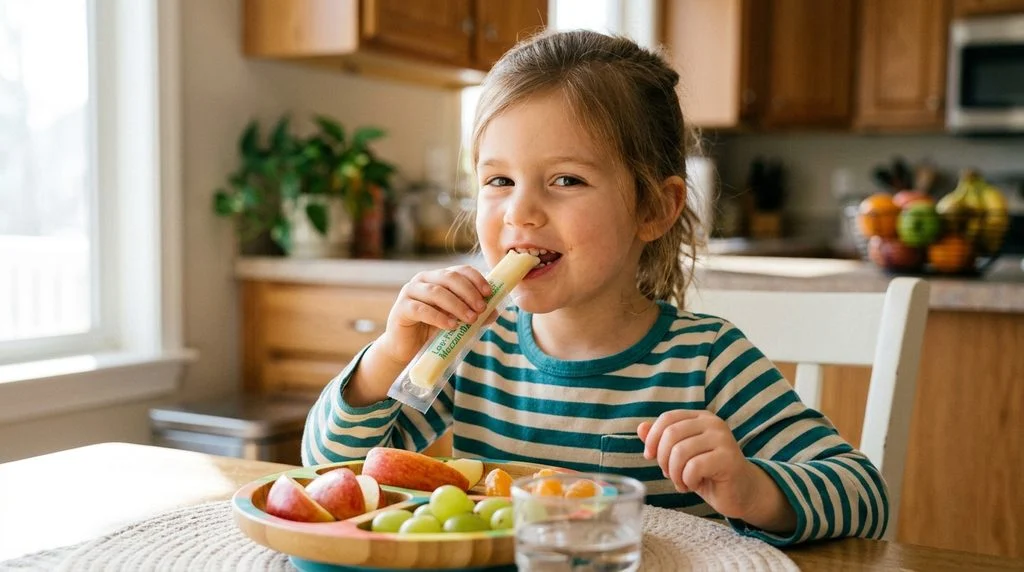
- Yogurt — Choose low-fat or nonfat varieties, moderate in sugar (no more than about 12 grams per 6-oz. cup), and high in calcium (at least 20% of the daily value per serving). Pair with fresh or frozen fruit for extra flavor.
- Low-fat cheese — Cheese is a leading source of saturated fat in children’s diets, so opt for reduced-fat versions and pair with fruit, vegetables, or whole-grain crackers rather than serving alone.
Keep an Eye on Allergens
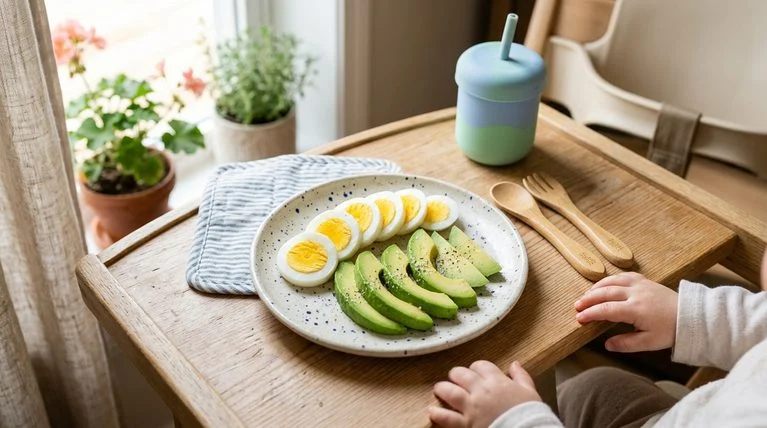
Because any child can be allergic to any food, it’s not always obvious what’s safe to serve in a shared setting. When snacks will be shared among a group, it’s safest to avoid the nine most common allergens: dairy, eggs, fish, shellfish, wheat, peanuts, tree nuts, soy, and sesame — together responsible for more than 90 percent of allergic reactions in the U.S.
Most whole fruits and vegetables are safe bets for shared snacks. When in doubt, especially in a classroom or team setting, steer clear of anything containing peanuts, tree nuts, or sesame, since these can trigger reactions even among students or staff who aren’t eating the snack themselves.

Don’t Forget Healthy Beverages
Water should be the default drink at snack time. It satisfies thirst without added sugar or calories, and it’s the most budget-friendly option for parents and teachers alike. Serve from a water cooler or gallon container into reusable cups to cut down on single-use plastic. If kids are used to sweetened drinks, it may take a little time for them to adjust to water as the default.

Other Good Options
- Seltzer or sparkling water — Free of the sugar, calories, and caffeine found in soda. For an occasional treat, mix with a splash of 100% fruit juice.
- Low-fat (1%) or nonfat (skim) milk — A good source of calcium and vitamin D, without the saturated fat found in whole or 2% milk. Flavored milk should have no more than 130 calories per 8-oz. serving.
- Fortified non-dairy milk — Soy, pea protein, or protein-enriched almond milk can match cow’s milk in protein when fortified with calcium, vitamin D, and B-12. Unsweetened or “original” varieties are lower in added sugar than flavored ones.
- Infused water — Add cut fruit like berries, citrus, kiwi, or cucumber to a water bottle for natural flavor without added sugar.
A Word on Juice and Soft Drinks
Whole fruit is more nutritious than fruit juice, so limiting juice intake is generally recommended: no more than 4 oz. a day for kids ages 1–3, 4–6 oz. for ages 4–6, and up to 8 oz. for ages 7–18. If packing juice, choose 100% fruit juice with no added sweeteners — many popular “juice drinks” contain 10% juice or less and aren’t much different nutritionally from soda.
Sugary soft drinks — soda, sweetened tea, lemonade, and juice drinks — are linked to higher calorie intake and increased risk of overweight in kids, and they can displace more nutritious drinks like milk from a child’s diet, which matters for long-term bone health. Soda in particular is also linked to dental cavities and tooth decay.
Quick Reference: What to Prioritize
- Lead with fruits and vegetables at nearly every snack opportunity.
- Choose whole grains over refined ones, and save sugary baked goods for occasional treats.
- Go low-fat with dairy to balance calcium benefits against saturated fat.
- Check for common allergens before serving snacks to a group.
- Make water the default drink, saving juice and sweetened beverages for occasional servings.
Final Thoughts
Healthy snacking for kids doesn’t require perfection — it just requires a general framework to fall back on. Prioritizing fruits, vegetables, and whole grains, staying mindful of added sugar and saturated fat, watching out for common allergens in shared settings, and keeping water as the go-to drink will cover most of what matters. From there, the occasional treat or convenient packaged snack fits in just fine.
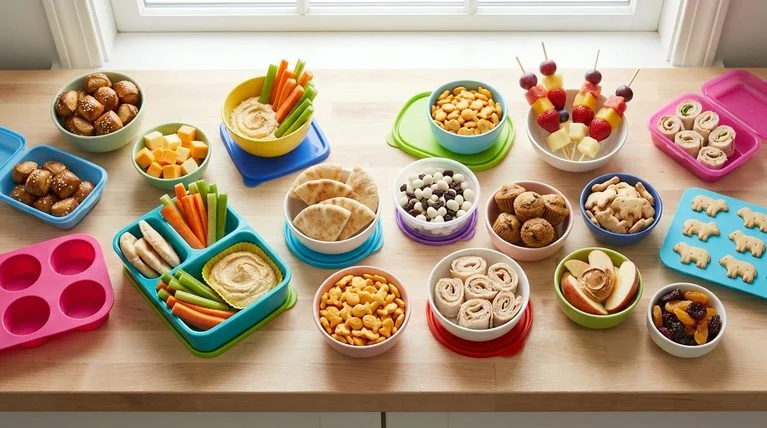
For busy mornings, the easiest healthy school snacks are the ones that can be packed quickly, eaten without much mess, and stored safely until snack time.
Keep your regular healthy school snacks simple, then rotate flavors and food groups through the week so the routine stays practical without becoming repetitive.
More Healthy School Snacks & Related Guides
Keep a short rotation of healthy school snacks that fit your school’s rules, your child’s age, and the amount of time available to eat. Simple, familiar options are often easier to pack and more likely to be finished.