100 School Lunch Ideas for Kids That Actually Work
Finding school lunch ideas for kids that are practical, packable, and likely to come home eaten is harder than it sounds. This guide brings together 100 options for busy school mornings, from five-minute no-cook lunches to make-ahead freezer ideas, thermos meals, bento boxes, and picky-eater-friendly combinations.
These school lunch ideas for kids are organized around the problems parents actually face: limited prep time, food that has to survive until noon, short lunch periods, school allergy rules, and kids who suddenly stop eating last week’s favorite. You will also find high-protein choices, global lunchbox ideas, allergy-friendly swaps, and a simple weekend-prep system.

You don’t need to try all of them. Most families run on a rotation of about eight to ten lunches, and that’s completely reasonable. The point of a list this long is that when your rotation goes stale in October — and it will — you have somewhere to go.
If you are short on time, start with five school lunch ideas for kids: a turkey wrap, a bento snack box, cold pasta salad, a quesadilla, or a warm thermos meal. Those five formats cover most school-day situations and are easy to customize.
What Makes a School Lunch Actually Work
The most useful school lunch ideas for kids are not just nutritious on paper; they also need to be practical, easy to open, and appealing enough to get eaten during a short lunch period.
Before the ideas, the framework. A packed lunch has to clear four bars, and they’re not all nutritional:
It has to be eaten. A perfectly balanced lunch that comes home untouched has fed nobody. This is the bar that matters most, and it’s the one that gets ignored in favour of the other three.
It has to hold up. School lunch is packed between 7 and 8 a.m. and eaten between 11 and 1. That’s four to five hours in a bag. Anything that goes soggy, brown, warm, or weird in that window is the wrong choice no matter how good it tasted at home.
It has to be fast to pack. If a lunch takes twenty minutes of morning assembly, you will make it twice and then never again. Realistically you have five to ten minutes, and some of that is finding a matching lid.
It has to be reasonably nourishing. Note the word “reasonably.” Lunch is one of three or four eating occasions in a child’s day. It does not have to be nutritionally complete on its own, and treating every lunch box like a report card is a fast route to burnout.
The Lunch Box Formula
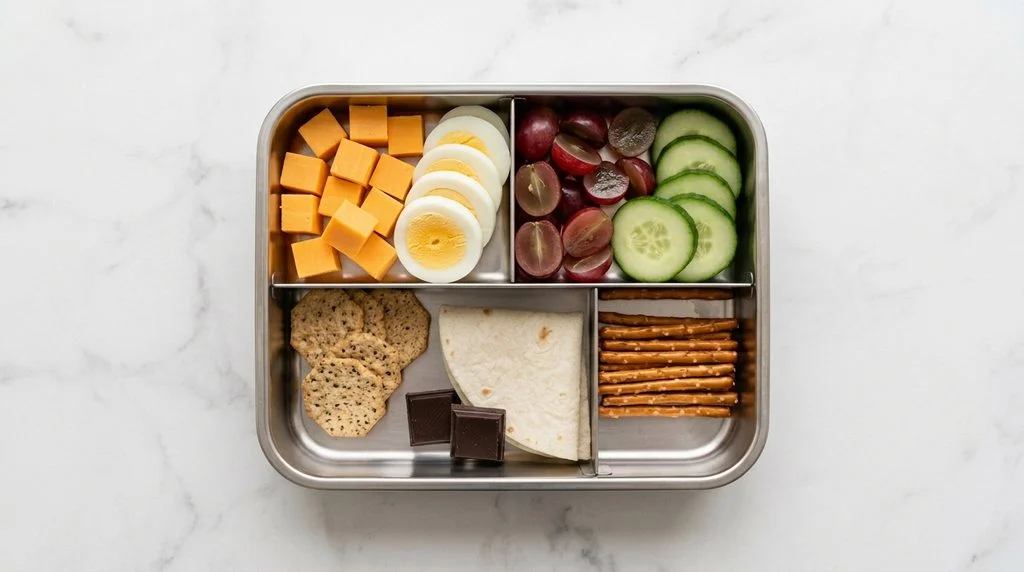
The simplest way to build a lunch without thinking is to fill five slots. Three are the meal; two are the reason your kid opens the box happily.
| Slot | What goes in it | Examples |
|---|---|---|
| Protein | The staying-power item | Eggs, deli meat, chicken, beans, cheese, yogurt, tofu, hummus |
| Produce | Fruit, veg, or both | Grapes, apple wedges, cucumber, peppers, cherry tomatoes, edamame |
| Carb | The filling base | Bread, tortilla, pasta, rice, crackers, pita |
| Something crunchy | Texture contrast | Pretzels, tortilla chips, veggie straws, popcorn |
| Something small and fun | Goodwill | Two squares of chocolate, a mini muffin, a few yogurt-covered raisins |
Hit the first three and you have a real meal. Add the last two and you have a lunch a child is glad to see. The fifth slot is not a failure of nutrition — it’s the thing that stops lunch becoming a negotiation.
How Much Food Is Enough?
Portion anxiety is real, and the honest answer is that appetite varies enormously between children of the same age, and in the same child from week to week. As a rough starting point rather than a rule:
- Ages 4–6: roughly a quarter to a third of an adult portion per slot. Small quantities, more variety, easy-open containers.
- Ages 7–10: roughly half an adult portion. This is when the crunchy slot starts disappearing first.
- Ages 11+: close to an adult portion, plus an extra carb or protein item. Growth spurts will outpace whatever you packed.
The useful signal isn’t how much you sent — it’s what comes back. Two weeks of an empty box means increase the volume. Two weeks of leftovers of the same item means stop packing that item.
How to Use This List
The sections are ordered by effort, easiest first. If you’re in survival mode, everything you need is in the first two sections and you can stop reading there.
A few notes before you dive in. Assume every idea below is a main — pair it with items from the sides list further down to complete the box. Where an idea needs to stay cold or hot, it’s flagged. Where an idea is nut-free by default, most of this list qualifies, but check the allergy section if you’re packing for a nut-free classroom. And genuinely — scroll this with your kid and let them point at things. A lunch they chose has a much better completion rate than a lunch you chose well.
Five-Minute No-Cook Lunches
Nothing here needs a stove, an oven, or advance planning. These are the lunches you assemble while the kettle boils. If your mornings are chaos, live in this section.
1. The DIY Snack-Box Lunchable. Cubed cheese, rolled deli turkey or ham, and a handful of crackers in three compartments. It costs a fraction of the store version, you control the sodium, and children are strangely loyal to it. Keep cold.
2. Ham and Cheese Roll-Ups. Lay a slice of ham flat, add a thin slice of cheese, roll tight, slice into two. No bread, no crumbs, no sogginess risk. The most reliable lunch on this entire list.
3. Turkey, Cheese and Cucumber Skewers. Thread folded turkey, a cheese cube, and a cucumber round onto a short blunt skewer or a cocktail stick. Same ingredients as a sandwich, roughly triple the appeal, because food on a stick is simply better.
4. Pepperoni, Mozzarella and Cracker Plate. Mini pepperoni, small mozzarella balls patted dry, and butter crackers. Tastes like pizza, requires no pizza. Pat the mozzarella properly or the crackers will suffer.
5. Greek Yogurt Parfait. Thick yogurt in a small jar, berries on top, granola sealed in a separate bag so it stays crunchy. The separate bag is the whole trick — packed together it turns to sludge by 11 a.m. Keep cold.
6. Smoothie Bottle with a Granola Bag. Blend banana, frozen berries, milk or yogurt. Freeze the bottle overnight and it doubles as the ice pack, thawing to drinkable by lunch. Excellent for a child who won’t chew much when nervous.
7. Cottage Cheese and Peach Bowl. Cottage cheese with tinned peaches or fresh nectarine chunks and a drizzle of honey. Quietly one of the highest-protein no-cook lunches available. Keep cold.
8. The Kid Cheese Board. Two or three cheeses cut into different shapes, grapes, a few crackers, some dried apricots. Call it a cheese board rather than “cheese and crackers” — the naming does more work than it should.
9. Chicken Salad Scoop. Shop-bought or leftover chicken salad in a small tub with crackers or pita triangles alongside for scooping. Keeps its texture far better than pre-made into a sandwich. Keep cold.
10. Sunflower Butter and Banana Rice Cakes. Spread sunflower seed butter on mini rice cakes, top with banana coins. Nut-free, five ingredients, no refrigeration needed. Assemble in the morning so the rice cakes stay crisp.
11. Hummus and Pita Dipper Box. A tub of hummus, warm pita cut into strips, plus carrot and pepper batons. Vegetarian, filling, and the dipping keeps younger children engaged with the vegetables.
12. Bagel and Cream Cheese Halves. A mini bagel split, cream cheese sealed in a separate pot with a small spatula so it’s spread at the table. Sent pre-spread it goes gummy; sent separately it becomes an activity.

High-Protein Lunches for Kids
If your child gets off the bus ravenous and irritable, the lunch was probably short on protein rather than short on calories. Protein is what carries a child from noon through to the afternoon. These are the mains that do it.
13. Two Hard-Boiled Eggs. About six grams of protein each, naturally portioned, and cheap. Peel them at home and pack with a twist of salt in a small square of foil — unpeeled eggs at a lunch table rarely get eaten. Keep cold.
14. Shredded Rotisserie Chicken with Ranch. Pull a supermarket rotisserie chicken apart on Sunday and you have four lunches. A small tub of shredded chicken with ranch or yogurt dip alongside. Keep cold.
15. Pesto Chicken Bowl. The same shredded chicken tossed with a spoon of pesto. Green, herby, and it tastes deliberate rather than like leftovers. Good cold, which matters.
16. Ranch-Seasoned Chicken Bites. Diced chicken breast tossed in dry ranch seasoning and pan-seared, served cold. Salty and savoury enough that children eat them like a snack food.
17. Cold Meatballs with Marinara Dip. Four or five cooked meatballs with a small pot of marinara for dipping. They’re genuinely fine cold, and they freeze beautifully in lunch-sized portions.
18. Tuna Salad Cups. Tuna mixed with mayonnaise or Greek yogurt in a small container, crackers separate. Check your school’s policy first — some classrooms discourage strong-smelling fish. Keep cold.
19. Smoked Salmon and Cream Cheese Roll-Ups. Cream cheese spread on smoked salmon, rolled and sliced. Expensive, but a very high-protein option for a child who likes a bagel-and-lox flavour. Keep cold.
20. Maple-Soy Baked Tofu Cubes. Firm tofu pressed, cubed, tossed in soy sauce and a little maple syrup, then baked until chewy at the edges. Holds texture cold and works for vegan lunches.
21. Chickpea Smash Salad. Chickpeas mashed roughly with mayonnaise, lemon and a pinch of celery salt — a plant-based stand-in for tuna salad, with crackers or in a pita. Bonus: no refrigeration panic.
22. Lentil and Feta Salad. Cooked green or brown lentils with crumbled feta, olive oil and a squeeze of lemon. Eats well cold, holds for two days in the fridge, and is unusually cheap per portion.
23. Chicken Sausage Coins with Honey Mustard. Pre-cooked chicken sausage sliced into rounds, seared briefly, packed with a honey-mustard dip. Tastes like a treat, behaves like a protein.
24. Edamame and Egg Protein Box. Shelled edamame, a sliced hard-boiled egg, cheese cubes, and something crunchy. No cooking beyond boiling water, and an unusually high protein total for a box this simple.

Sandwiches, Wraps and Roll-Ups That Don’t Go Soggy
These school lunch ideas for kids are designed to hold their texture for several hours, with simple tricks that keep bread and wraps from turning soggy before lunchtime.
The sandwich isn’t the problem. The sandwich made at 7 a.m. and eaten at noon is the problem. Every idea here is built to survive the wait — dry barriers between wet fillings and bread, or no bread at all.
25. Sandwich Skewers. Cube the bread, cube the cheese and meat, thread them onto a skewer with a cherry tomato. A deconstructed sandwich reads as fun rather than as lunch, and the bread stays dry because nothing is pressed against anything wet.
26. Turkey and Spinach Tortilla Wrap. Tortilla, thin cream cheese layer, turkey, baby spinach, rolled tight and sliced. The cream cheese acts as a moisture barrier — this is the single most useful sandwich trick there is.
27. Ham, Cheese and Butter Classic. Butter both slices right to the edges. Butter is waterproof; mayonnaise is not. This one small change is why some sandwiches survive and others don’t.
28. Cream Cheese and Strawberry Sandwich. Cream cheese with thin strawberry slices on soft white or brioche. Sweet enough to feel like a treat, and it holds up because there’s no dressing involved.
29. Banana and Granola Wrap. Sunflower butter or cream cheese on a tortilla, a whole banana laid in, granola sprinkled, rolled and halved. Filling, sweet, and completely stable for hours.
30. Banana Pinwheels. The same wrap sliced into rounds so the spiral shows. Identical food, and for a certain age of child, a completely different reception.
31. Hummus and Grated Carrot Sandwich. Hummus on wholegrain bread with finely grated carrot and a few cucumber ribbons. Vegetarian, high in fibre, and the hummus itself is the moisture barrier.
32. Tortilla Sandwich with Scrambled Egg and Spinach. Scrambled egg with wilted spinach folded into a tortilla and pressed in a dry pan. Eats well at room temperature and hides a vegetable inside a shape kids already accept.
33. Cucumber and Cream Cheese Tea Sandwiches. Cream cheese, very thin cucumber, crusts off, cut into four small squares. Small portions genuinely help hesitant eaters — four little sandwiches feel more achievable than one big one.
34. Pita Pocket with Chicken and Lettuce. Half a pita filled with shredded chicken and shredded lettuce, dressing sent in a separate pot. Pita is structurally much sturdier than sliced bread and doesn’t collapse under a filling.

Bento Boxes and Snack-Plate Lunches
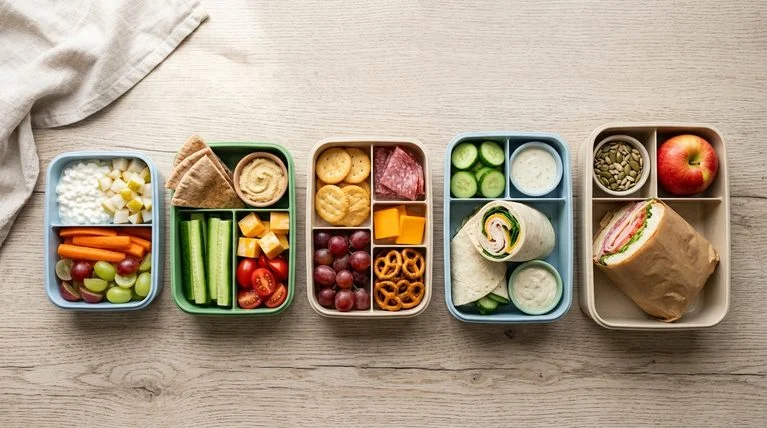
Bento-style school lunch ideas for kids work especially well for children who prefer several small foods instead of one large main.
Some children don’t want a meal — they want six small things they can graze. A snack-plate lunch is not a lesser lunch, and for a lot of picky eaters it’s the format with the highest completion rate. The formula still applies; it’s just spread across more compartments.
35. Ploughman’s Box. Sharp cheddar, sliced apple, wholegrain crackers, a pickle, and a little chutney. A British pub lunch shrunk to child scale, and the sweet-and-sharp combination is more interesting than it sounds.
36. Mediterranean Mezze Box. Hummus, pita triangles, cherry tomatoes, cucumber, a few olives, and feta cubes. Salty, colourful, and adaptable to whatever’s in the fridge.
37. Breakfast Grazing Box. A hard-boiled egg, cheese, blueberries, dry cereal, and a mini muffin. Every item is one your child already eats at breakfast, which is the point.
38. Antipasto Box. Mini pepperoni or salami, mozzarella pearls, cherry tomatoes, breadsticks, and marinated artichokes if your kid is adventurous. Skip the artichokes if not — nobody’s keeping score.
39. Apple and Cheddar Board. Apple wedges brushed with a little lemon water to stop browning, sharp cheddar, and a small pile of pretzel sticks. Three items, five minutes, no cooking.
40. Rainbow Veggie and Dip Box. Pepper strips in three colours, carrot batons, cucumber, cherry tomatoes, and ranch or yogurt dip. Sold on colour, and it works — arrange it as a spectrum and it gets eaten.
41. Sweet and Savoury Snack Plate. Cheese cubes, crackers, grapes, and two squares of chocolate. This is the box for a bad week, and there is nothing wrong with the box for a bad week.

Thermos and Warm Lunches
Warm school lunch ideas for kids give you more variety in colder months and are useful when sandwiches and cold boxes start to feel repetitive.
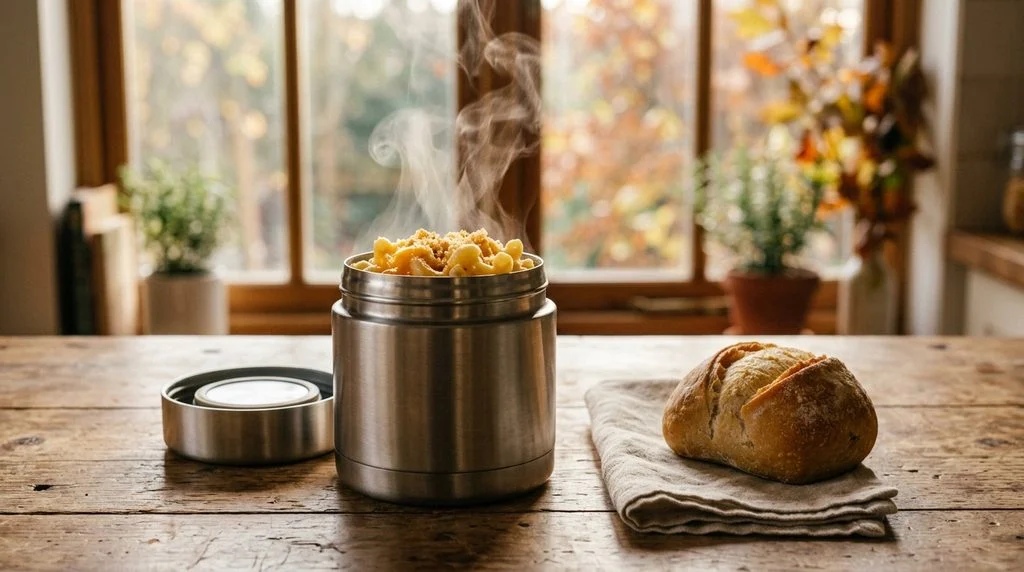
A good insulated food jar changes what’s possible in a lunch box, especially from November onward. The technique matters more than the recipe: preheat the thermos with boiling water for five minutes, tip it out, then add food that is properly steaming hot. Do that and it’s still hot at noon. Skip it and it’s lukewarm by ten.
42. Grilled Cheese in a Thermos. Make it as normal, cut into strips, and pack it hot into a preheated jar. It stays melted and soft, which is the entire reason people buy small thermoses in the first place.
43. Buttered Pasta with Parmesan. The most-requested warm lunch in most households. Slightly overcook the pasta by a minute — it’ll firm up as it sits rather than turning to mush.
44. Meatballs in Marinara. Hot meatballs in sauce with a bread roll on the side for dipping. Freeze in single portions and reheat in the morning.
45. Chicken Noodle Soup. Broth-based soups hold heat better than thick ones. Send a separate bag of crackers or a roll.
46. Macaroni and Cheese. Add a splash more milk than usual before packing, because it thickens as it sits in the jar. Comfort food that reliably comes home empty.
47. Chicken Fried Rice. Yesterday’s fried rice reheated properly and packed hot. Uses leftovers, contains vegetables, and doesn’t taste like leftovers.
48. Chilli with Cheese on Top. Mild bean-and-beef chilli with grated cheese stirred in so it melts. Warm, filling, and genuinely good for a cold day.
49. Warm Potstickers or Dumplings. Cook frozen dumplings in the morning — six minutes start to finish — and pack hot with a small pot of soy dipping sauce. Enormously popular for very little effort.
Pasta, Noodle and Grain Bowls
Cold pasta, noodles, and grain bowls are flexible school lunch ideas for kids because many can be made the night before and packed straight from the fridge.
Cold noodle and grain bowls are the most underrated category in school lunch. They’re made the night before, they improve as they sit, and they don’t need heating or a thermos. If you cook a batch of pasta or grains on Sunday, four lunches build themselves during the week.
50. Pasta Salad with Peas and Cheese. Small pasta shapes, frozen peas thawed in the hot pasta water, cubed cheese, and a light Italian dressing. Better on day two than day one.
51. Buttered Pasta, Cold. Yes, cold. A surprising number of children prefer it that way, and it costs you nothing to test the theory once.
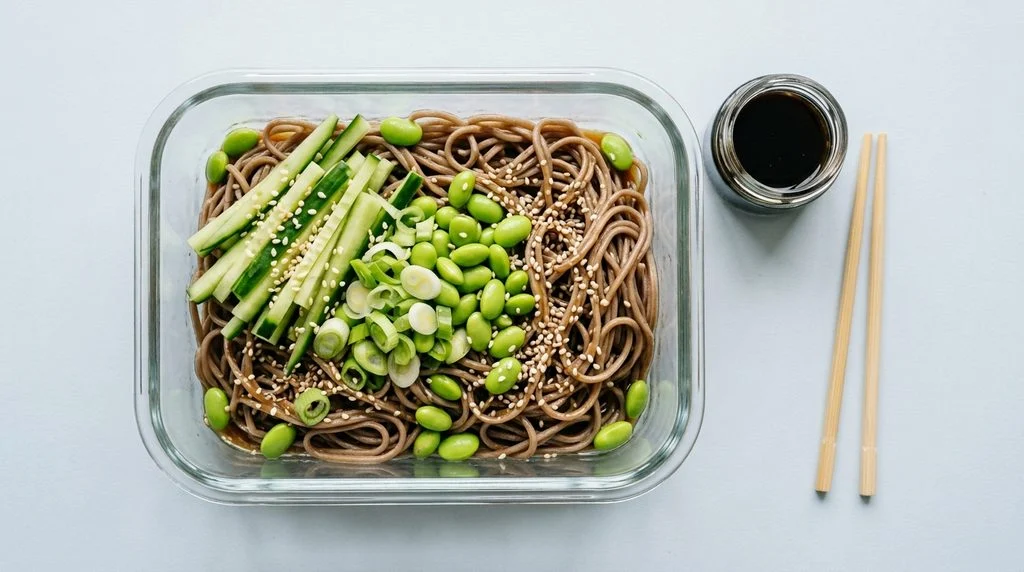
52. Sesame Soba Noodles. Soba tossed in soy sauce, sesame oil and a little honey, with cucumber matchsticks and shelled edamame. Nutty, savoury and completely stable at room temperature.
53. Soba with Plain Tofu. For younger or more cautious eaters: plain cooked soba, diced firm tofu, nothing else. Sometimes plain is the requirement, not the failure.
54. Orzo Salad with Tomatoes and Feta. Orzo, halved cherry tomatoes, crumbled feta, olive oil, lemon. Bright and fresh, and orzo’s small size makes it easy to eat with a short fork.
55. Peanut-Free Sesame Noodles. Rice noodles in a sunflower-butter and soy dressing — the flavour of peanut noodles without the allergen. Safe for nut-free classrooms.
56. Couscous Salad with Chickpeas. Couscous cooks in five minutes with boiling water. Add chickpeas, diced cucumber, mint and lemon. Very cheap, very fast, and filling.
57. Quinoa and Roasted Veg Bowl. Cooked quinoa with whatever roasted vegetables you had at dinner, plus a spoon of yogurt dressing. The most efficient way to repurpose a Sunday tray bake.
58. Macaroni Salad with Ham. Cooked macaroni, diced ham, sweetcorn and a light mayonnaise dressing. An old-fashioned lunch that children still reliably finish. Keep cold.
Tacos, Quesadillas and Tortilla Lunches
Tortilla-based school lunch ideas for kids are useful because wraps, quesadillas, and build-your-own boxes tend to travel well and give you plenty of filling options.
Anything wrapped in a tortilla has an unfair advantage in a lunch box. Tortillas don’t go soggy the way sliced bread does, they fold into whatever shape your container needs, and the assemble-it-yourself versions turn lunch into something a child gets to build.
59. Mini Chicken Tacos. Small soft tortillas with shredded chicken, mild salsa in a separate pot, and grated cheese. Send the components apart and let assembly happen at the table.
60. Cheese Quesadilla Triangles. Cheese quesadilla cooked in a dry pan, cut into triangles. Fine at room temperature, fine cold, and about four minutes of work.
61. Bean and Cheese Quesadilla. The same thing with refried or black beans added, which roughly doubles the protein and fibre for no extra effort.
62. Deconstructed Burrito Box. Rice, black beans, cheese, a scoop of guacamole and tortilla chips in separate compartments. The child builds it however they like, which removes almost every objection.
63. Egg and Tortilla Roll-Ups. Scrambled egg rolled inside a tortilla and sliced into rounds. Good warm, good cold, and a very easy way to get protein into a familiar shape.
64. Chicken and Rice Lettuce Cups. Butter lettuce leaves packed flat with shredded chicken and rice in a separate tub. Assembled at lunch so the leaves stay crisp. Low-carb and a bit of a novelty.
65. Pizza Roll-Ups. Tortilla spread with marinara, sprinkled with mozzarella, rolled, baked briefly, and sliced. All the pizza signals in a shape that travels well.
Global Lunchbox Ideas and Tiffin-Style Lunches
Global school lunch ideas for kids can add variety without making lunch harder, especially when you use foods your family already cooks at home.
Most school lunch roundups stop at the sandwich and the wrap. That’s a narrow view of what children around the world happily eat at midday — and if these flavours are already what your family cooks at home, the lunch box is the easiest place to use them. Almost everything here was designed to be eaten hours after cooking, at room temperature, which makes tiffin traditions unusually well suited to school lunch.
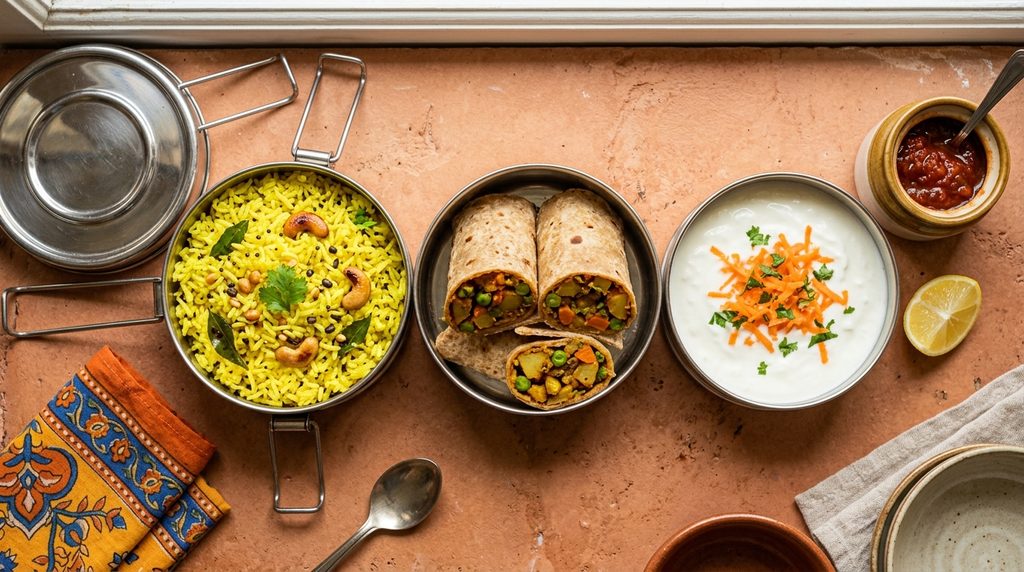
66. Roti Rolls. Leftover roti or chapati spread with a thin layer of dal or a dry vegetable filling, rolled tight and cut into two. Soft rather than crisp, sturdy for hours, and the original lunch-on-the-go.
67. Lemon Rice. Rice tempered with mustard seeds, curry leaves and turmeric, finished with lemon juice. Designed to be eaten at room temperature, keeps beautifully, and pairs with a small pot of yogurt.
68. Curd Rice. Rice folded through yogurt with a light tempering and a little grated carrot. Cooling, gentle on the stomach, and ideal for hot months. Keep cold.
69. Vegetable Pulao. Rice cooked with peas, carrot and beans and mild whole spices. A one-pot lunch that’s filling on its own and reheats well if you’re using a thermos.
70. Idli with Chutney. Steamed rice-and-lentil cakes with a small pot of coconut or tomato chutney. Naturally soft, gluten-free, and a strong choice for younger children.
71. Aloo Paratha Wedges. Potato-stuffed flatbread cut into wedges, packed with a pot of plain yogurt. Substantial, satisfying, and perfectly good at room temperature.
72. Vegetable Sushi or Onigiri. Rice rolled with cucumber and avocado, or shaped into salted rice triangles wrapped in nori. Nori sent separately stays crisp; wrapped in advance it softens.
73. Bibimbap-Style Rice Box. Rice with a few seasoned vegetables arranged in sections and a mild sauce on the side. Colourful, sectioned, and easy to adapt to whatever vegetables you have.
74. Summer Rolls. Rice paper rolls with lettuce, cucumber, carrot and cooked chicken or tofu, with a mild dipping sauce. Fresh, light, and visually appealing. Wrap in a damp paper towel so they don’t dry out.
75. Chicken Shawarma Pita. Spiced chicken in a pita with shredded lettuce and a garlic yogurt sauce in a separate pot. Big flavour, and pita holds a filling without disintegrating.
Breakfast for Lunch
Breakfast foods can become easy school lunch ideas for kids because they are familiar, quick to pack, and often work well cold or at room temperature.
Children are conservative eaters, and breakfast foods are the ones they’ve already agreed to. Sending them at noon exploits that loophole entirely, and most of these travel better than a sandwich does.
76. Mini Pancake Stack with Fruit. A stack of small pancakes, berries alongside, and maple syrup in a tiny leak-proof pot. Freezer pancakes are completely legitimate here.
77. Waffle Sticks with Yogurt Dip. Toasted waffles cut into strips for dipping into yogurt. Dippable food gets eaten; the same food on a plate with a fork often doesn’t.
78. Open-Faced Waffle Sandwich. A waffle spread with cream cheese and topped with thin strawberry slices. Sweet, sturdy, and it doesn’t need to stay cold for long.
79. Avocado Toast, Sent Separately. Toast in one compartment, half an avocado and a wedge of lemon in another, mashed and spread at the table. Sent pre-made it’s grey and sad by noon.
80. Overnight Oats Jar. Oats soaked in milk or yogurt with grated apple and cinnamon. Made in thirty seconds the night before and requires nothing in the morning. Keep cold.
81. French Toast Sticks with Cinnamon Sugar. Cut into fingers, dusted with cinnamon sugar, eaten cold. Tastes like a treat and holds together well.
82. Mix-and-Match Breakfast Box. Whatever your child eats at breakfast, in compartments: cereal, yogurt, fruit, cheese, a hard-boiled egg. Zero novelty risk, which is sometimes the whole strategy.
Make-Ahead Bakes for the Freezer
If mornings are rushed, freezer-friendly school lunch ideas for kids can reduce weekday prep to little more than thawing, packing, and adding sides.
This section is a different kind of investment. You spend one hour on a weekend and you have three weeks of grab-and-go mains sitting in the freezer. If mornings are your bottleneck rather than ideas, start here.
83. Ham and Cheddar Egg Muffins. Eggs whisked with diced ham and grated cheddar, baked in a muffin tin. Two per lunch, freeze flat, thaw overnight in the fridge. Roughly the most efficient protein on this list.
84. Veggie and Egg Muffins. The same base with finely diced peppers, spinach and sweetcorn. Fine cold, which is what makes them practical.
85. Sausage and Egg Muffins. Same again with cooked crumbled sausage. Savoury enough that they read as a proper meal rather than a health food.
86. Pizza Pockets. Pizza dough or puff pastry folded around mozzarella and a spoonful of sauce, then baked and frozen. Good warm from a thermos or at room temperature. Send extra sauce for dipping.
87. Cheese and Ham Bread Rolls. Soft dough rolled around ham and cheese, baked as individual buns. Self-contained, no container needed, and they survive being squashed in a bag.
88. Savoury Muffins with Corn and Cheese. A simple savoury muffin batter with sweetcorn, cheese and spring onion. Freezes for a month and fills the carb slot and part of the protein slot at once.

Allergy-Friendly Lunches That Don’t Feel Like a Compromise
These allergy-aware school lunch ideas for kids focus on practical swaps while keeping the meal filling and recognizable.
Most schools now operate some form of nut restriction, and a good number of children are also navigating dairy, egg, gluten or sesame. The vast majority of ideas on this list are nut-free as written. This section goes further — these are built from the ground up around common restrictions.
89. Sunflower Butter and Jam Sandwich. The straight swap for the classic. Sunflower seed butter behaves almost identically and is safe in nut-free classrooms.
90. Dairy-Free Snack Box. Sliced turkey, avocado chunks, wholegrain crackers, grapes and dairy-free chocolate. Coconut yogurt covers the creamy slot if that’s the missing piece.
91. Gluten-Free Rice Paper Rolls. Rice paper, rice noodles, cucumber and chicken or tofu, with a gluten-free tamari dip. Naturally free of wheat rather than an adapted version of something else.
92. Egg-Free Chickpea Salad Sandwich. Mashed chickpeas with dairy-free mayonnaise, lemon and celery salt. Covers the egg-salad craving without the egg.
93. Seed-and-Fruit Snack Plate. Pumpkin seeds, sunflower seeds, dried apricots, fresh apple and rice cakes. Free of nuts, dairy, egg and gluten, and still substantial.
94. Rice, Bean and Corn Bowl. Rice, black beans, sweetcorn, mild salsa and a squeeze of lime. Vegan, gluten-free, cheap, and filling enough for an older child.
Picky-Eater Rescue Lunches
For selective eaters, the most useful school lunch ideas for kids start with familiar foods and make only small, low-pressure changes.
If you’re packing for a genuinely selective eater, most lunch roundups are quietly useless — they assume a child who’ll try things. These six are built on the opposite assumption. The strategy isn’t variety, it’s a reliable base with one very small, very low-pressure addition.
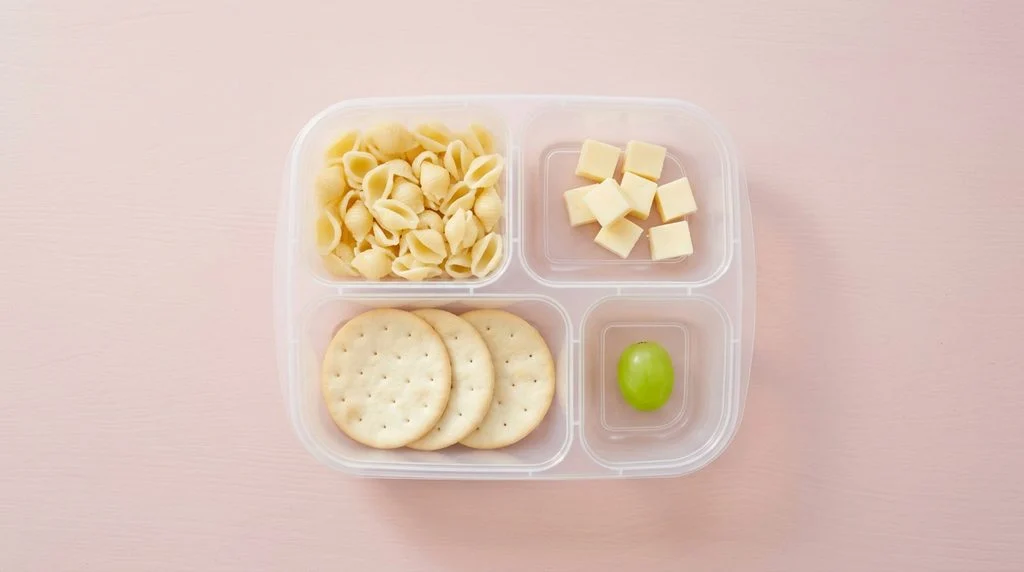
95. The Beige Box, Upgraded. Plain pasta, plain cheese cubes, plain crackers — and one single grape. Not a portion of grapes. One. The ask has to be small enough to be ignorable, or the whole box gets rejected.
96. Same Food, New Shape. Whatever your child already accepts, cut differently: sandwich in strips instead of triangles, cheese in sticks instead of cubes, cucumber in ribbons instead of rounds. Novelty in form rather than in content.
97. Deconstructed Everything. Every component in its own compartment, nothing touching. For a lot of selective eaters, mixed food is the objection, not the ingredients.
98. The Dip Box. A familiar dip your child likes, plus three or four dippers of varying bravery — a safe cracker, a safe vegetable, and one new one. The dip carries the unfamiliar item.
99. Breakfast Repeat. Send the exact breakfast they eat every morning. Unglamorous, entirely effective, and it means they’ve eaten.
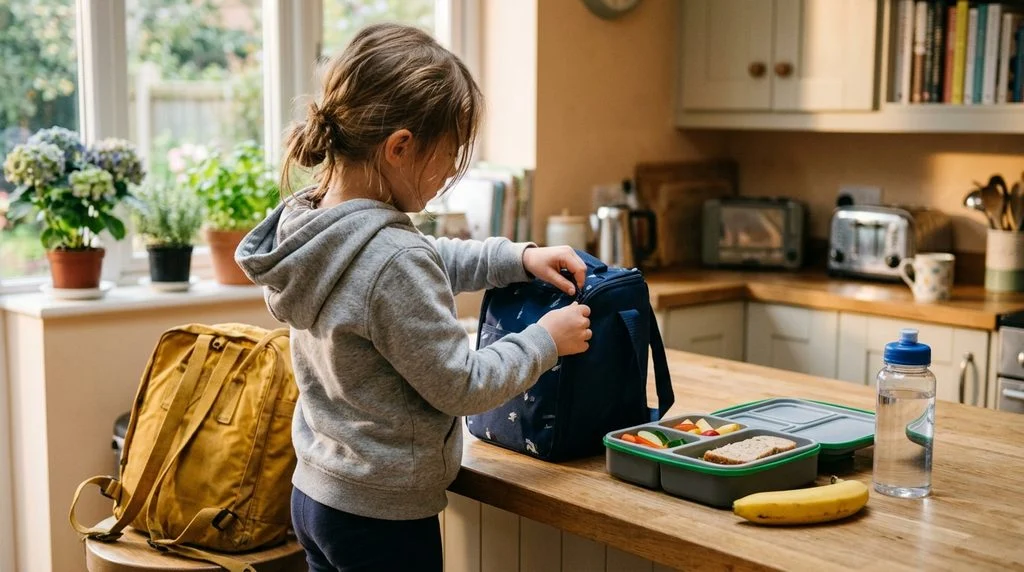
100. Kid-Packed Lunch. Give them the empty box and the formula, then let them fill it from approved options. Autonomy raises completion rates more than almost anything else you can do, and it takes a job off your list.
Sides and Fillers: The Supporting Cast
Good sides turn simple mains into complete school lunch ideas for kids without adding much extra preparation.
The mains above fill one or two slots. These fill the rest. Keep a running mental list of about six items from each column that your child reliably eats, and lunch assembly stops requiring any decisions at all.
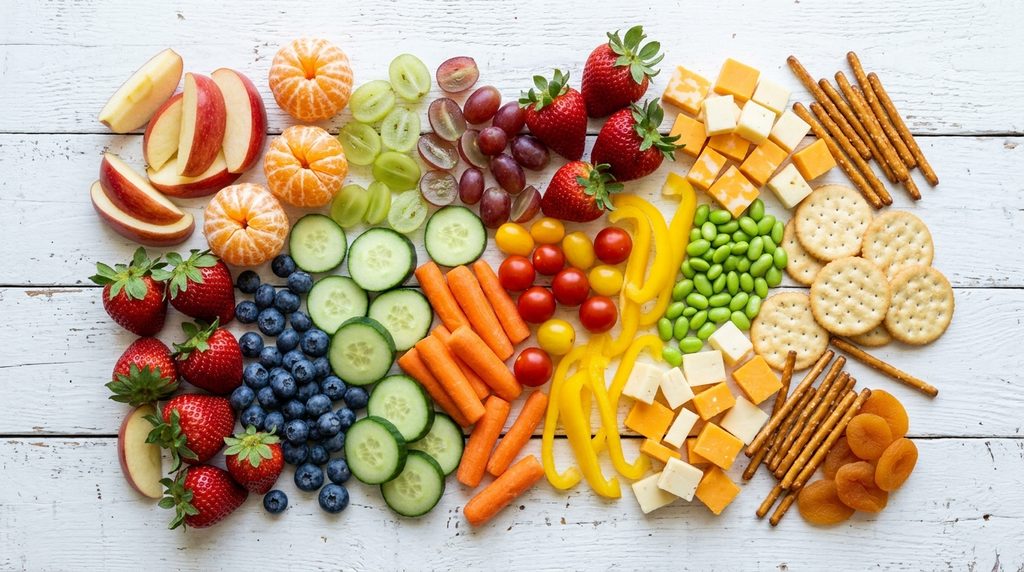
Fruit that survives a lunch bag: apple wedges (a quick dip in lemon water stops the browning), clementine segments, grapes halved for younger children, strawberries hulled and quartered, blueberries, raspberries, melon cubes, pineapple chunks, dried apricots, raisins, freeze-dried strawberries, a small banana left whole in its skin.
Vegetables with a real chance of being eaten: cucumber cut the way your child prefers, carrot batons, cherry tomatoes, pepper strips, sugar snap peas, celery sticks filled with cream cheese, shelled edamame, roasted chickpeas, sweetcorn kernels, steamed green beans, avocado chunks with lemon.
Carbs and crunch: crackers of any kind, breadsticks, pretzels, tortilla chips, rice cakes, veggie straws, popcorn, dry cereal, pita triangles, mini bread rolls, graham crackers.
Protein add-ons: cheese cubes or a mini cheese wheel, a hard-boiled egg, yogurt tube, cottage cheese pot, hummus, sunflower seeds, pumpkin seeds, a slice of rolled deli meat.
Small good things: two squares of chocolate, a mini muffin, a few yogurt-covered raisins, a cookie, a fruit-and-oat bar, a small handful of mini marshmallows. One item, not three — this slot is a garnish, not a course.
The 20-Minute Weekend Prep System
This prep routine turns a long list of school lunch ideas for kids into a practical weekly system you can actually maintain.
This is the part that turns a list of ideas into a week that actually runs. Twenty minutes on a Sunday, four steps, and the weekday mornings mostly take care of themselves.
Boil a batch of eggs. Six to eight at once. Peel them all, store in a sealed container, and you’ve covered the protein slot for most of the week in one go.
Cook one grain or pasta. A large pot of small pasta shapes, rice, quinoa or couscous. Refrigerated, it becomes cold noodle bowls, fried rice, and burrito boxes without further thought.
Break down one protein. Pull a rotisserie chicken apart, or bake a tray of tofu, or brown a pan of meatballs. Portion into four small containers immediately, while you’re already standing there.
Cut fruit and veg into grab bags. Whatever’s in the fridge, cut and divided into five portions. This is the step people skip and it’s the one that saves the most time, because chopping is the actual bottleneck on a weekday morning.
Then each night, spend ninety seconds pulling a main plus four sides into the box and putting it in the fridge. Mornings become “add ice pack, close bag.” If you also involve your child in the ninety seconds, you get the autonomy benefit for free.
Food Safety: The Part Most Lunch Lists Skip
Even the best school lunch ideas for kids need safe temperature control when they include meat, eggs, dairy, cooked rice, or other perishable foods.
A packed lunch sits at room temperature for four or five hours, and that’s the window where bacteria multiply fastest. This is a genuine food safety issue and it’s worth getting right, especially with meat, eggs, dairy and cooked rice.
The general principle used by food safety authorities is the “danger zone” — roughly 40°F to 140°F (4°C to 60°C). Perishable food shouldn’t sit in that range for more than about two hours, and a lunch bag will exceed that easily without help.
Keep cold food properly cold. Use an insulated bag and at least one ice pack — two if the bag is large or the weather is warm, placed above and below the food rather than beside it, since cold sinks. A frozen water bottle or a frozen yogurt tube works as a second ice pack and doubles as part of lunch.
Keep hot food properly hot. Preheat the thermos with boiling water for five minutes, tip it out, then fill with food that is steaming — not warm. Filling a cold jar with warm food creates exactly the conditions you’re trying to avoid.
Be careful with cooked rice. Rice is more prone to problems than most foods when held at room temperature. Cool it quickly after cooking, refrigerate promptly, and pack it either genuinely cold with an ice pack or genuinely hot in a preheated thermos.
Don’t re-serve perishable leftovers. If a sandwich or a meat item comes home uneaten and the ice pack has thawed, throw it out rather than sending it again tomorrow.
Gear That Earns Its Space
The right containers make school lunch ideas for kids easier to pack, easier to open, and more likely to stay fresh until lunchtime.
You do not need much, and you especially don’t need a new lunch box every August. Four things do almost all the work.
A compartmented box is the single highest-value purchase, because the compartments are what make the five-slot formula effortless. Stainless steel lasts years and doesn’t retain smells; plastic is lighter and cheaper but stains. Either is fine — what matters is that your child can open it unaided, which is worth testing at home before the first day rather than discovering at the lunch table.
A small insulated food jar unlocks the entire warm-lunch category. Get one that fits in the bag your child actually carries.
Two ice packs, so one is always frozen while the other is in the wash.
Small leak-proof pots for dips, dressings and syrup. These are what make the soggy-proofing strategies possible, and they cost very little.
Optional but genuinely useful: short blunt skewers for the skewer lunches, silicone cupcake liners as improvised dividers in a box that doesn’t have compartments, and a reusable cloth napkin, which children lose less often than paper ones.
Why Lunches Come Home Uneaten
If your school lunch ideas for kids keep coming home untouched, the problem may be portion size, temperature, packaging, texture, or limited time rather than the food itself.
Worth diagnosing rather than guessing, because the fix is different in each case.
If it came home soggy, the problem is moisture contact — butter or cream cheese to the edges, or send wet components separately. If it came home warm, add a second ice pack. If it came home untouched but intact, the child may not have been able to open the container, which is much more common than parents expect. If only the treat is gone, the main was too large or too unfamiliar; shrink it. If it comes home empty every day and they’re still hungry, increase the protein and carb portions rather than adding more variety. And if it came home untouched on a day with a test, a trip, or a difficult social situation, the lunch was probably fine and the day wasn’t.
Lunch periods are also short — often twenty minutes including queuing and packing up, and some of that time gets spent talking. Food that requires assembly, peeling, or careful handling can simply run out of clock. That’s worth factoring in before concluding a child dislikes something.
More Helpful Lunch & Snack Guides
Use these related guides when you want more specific school lunch ideas for kids by age, protein needs, or snack type.
- Need options matched to developmental stage? See our kids lunch ideas by age.
- For protein-focused lunchboxes, use our high-protein school lunch ideas.
- For snacks that fit alongside lunch, browse our healthy snack ideas for kids.
- For school-specific snack rules, allergens, and food-group guidance, read our healthy school snacks guide.
Frequently Asked Questions
What are good school lunch ideas for kids when there’s no way to heat food? Almost everything on this list needs no heating. The most reliable no-heat options are roll-ups, cold pasta and noodle bowls, snack-plate lunches, egg muffins, and quesadilla triangles, all of which are designed to be eaten at room temperature. For anything warm without a microwave, use a preheated insulated food jar.
How do I stop sandwiches going soggy by lunchtime? Create a fat barrier between the bread and any wet filling — butter, cream cheese, or hummus spread right to the edges. Send tomato, cucumber and dressings in a separate pot to be added at the table. Tortillas and pita hold up considerably better than sliced bread, and cubed or skewered sandwiches avoid the problem entirely.
How much protein should a school lunch have? It varies with age and with how much a child eats at other meals, so treat any single number cautiously. Practically, aim for one clear protein item per box — two eggs, a small handful of shredded chicken, a portion of yogurt or cottage cheese, cheese cubes, or beans and lentils. If your child is consistently ravenous after school, increase the protein before adding more food overall. For specific requirements, ask your paediatrician or a registered dietitian.
What are good nut-free school lunch ideas? Most of this list is nut-free as written. Sunflower seed butter replaces peanut butter almost exactly, and sunflower butter also stands in for peanut sauce in noodle dishes. Egg muffins, quesadillas, pasta salads, snack plates and roll-ups are all naturally nut-free. Always read labels for “may contain” warnings, and confirm your school’s specific policy.
Can I make school lunches the night before? Yes, and you should for most things. Cold pasta and grain bowls, roll-ups, snack plates, overnight oats and prepped fruit are all as good or better the next day. Assemble the night before, refrigerate overnight, and add the ice pack in the morning. The two exceptions are anything that should stay crisp — granola, crackers, nori, rice cakes — and avocado, which is best done fresh.
How do I keep a lunch cold enough to be safe? Use an insulated bag with at least one ice pack, positioned above the food as well as below it. In warm weather use two. A frozen water bottle or frozen yogurt tube works as an extra cold source and thaws into part of the meal. Perishable food shouldn’t spend more than about two hours in the 40–140°F range.
What can I pack for a very picky eater? Send a reliable base of foods they already accept and add one small, low-pressure new item — a single piece, not a portion. Keep components separate rather than mixed, offer familiar food in a new shape, and let them pack the box themselves from approved options. Consistency beats variety here.
How long does a school lunch stay hot in a thermos? A good insulated jar holds food hot for four to six hours if you preheat it. Fill it with boiling water, leave it five minutes, tip it out, then add food that is steaming hot rather than merely warm. Skipping the preheat is the usual reason a thermos underperforms.
The Short Version
A practical rotation of school lunch ideas for kids is more useful than trying to make something completely new every day.
The best school lunch ideas for kids are the ones your child can open, eat within the available time, and reliably finish.
You need roughly eight lunches your child reliably eats, a compartmented box, an ice pack, and twenty minutes on a Sunday. Everything else on this page is there for the week your rotation stops working — which is usually the week after half term, when the sandwich that worked every day since September suddenly doesn’t.
Bookmark this, work through the sections when you need them, and let your child choose from the list. The lunch they picked is the lunch that comes home empty.