10 Sensory Activities for Autistic Children at Home
Sensory activities for autistic children can offer a calm, low-pressure way to explore touch, sound, movement, sight, and other sensory input at home. The goal is not to make a child tolerate every sensation, but to offer predictable choices and notice which kinds of input feel comfortable, regulating, or enjoyable.
Every autistic child has a different sensory profile. Some seek movement or pressure, while others may be sensitive to noise, textures, smells, or visual stimulation. Start small, follow your child’s cues, and stop or adjust an activity if it causes distress.
For a broader, year-round collection, see our sensory activities for kids. For infants, use the separate sensory activities for babies guide because baby-safe setup and supervision needs are different.
Why Sensory Activities for Autistic Children Can Help
Well-matched sensory activities for autistic children can support several areas of development at once, not just one skill in isolation:
| Skill Area | What It Builds |
|---|---|
| Fine motor skills | Scooping, pinching, and pouring strengthen the small hand muscles used for writing, buttoning, and feeding |
| Hand-eye coordination | Digging, catching, and stacking build visual-motor coordination |
| Tactile & body awareness | Exploring new textures helps kids learn what feels comfortable vs. overwhelming |
| Focus & self-regulation | Repetitive actions like pouring or scooping can be calming and organizing |
| Communication & social play | Playing alongside a caregiver builds turn-taking, requesting, and shared attention |
A Few Tips Before You Start
- Make it your own. Every activity below can be adjusted to your child’s interests, age, and sensitivities. There’s no single “right” way to play.
- Start small. If your child is unsure about a new texture or sound, introduce it gradually rather than all at once — a spoonful of rice before a full bin, for example.
- Watch their cues. Look for signs of enjoyment (relaxed body, engagement, smiling) versus overstimulation (covering ears, pulling away, distress). If an activity isn’t landing, it’s okay to stop and try another day.
- Get involved. The real benefit often comes from your interaction — narrate what you’re doing, take turns, and make a big deal out of their discoveries.
- Stock up on bins. A few inexpensive plastic storage bins will make almost every activity on this list easier to set up and contain.
10 Sensory Activities for Autistic Children at Home
1. Window Painting with Shaving Cream
For tactile sensory activities for autistic children, grab a can of shaving cream and head outside — or stay in if you don’t mind a bit of cleanup. Spray a good amount onto a window (let your child take a turn if age-appropriate), then practice writing letters, drawing shapes, or just swirling fingers through it. Keep a towel handy for a quick wipe-down afterward.
Builds: tactile tolerance, fine motor control, turn-taking (if sharing the spray can).
2. Pouring Station
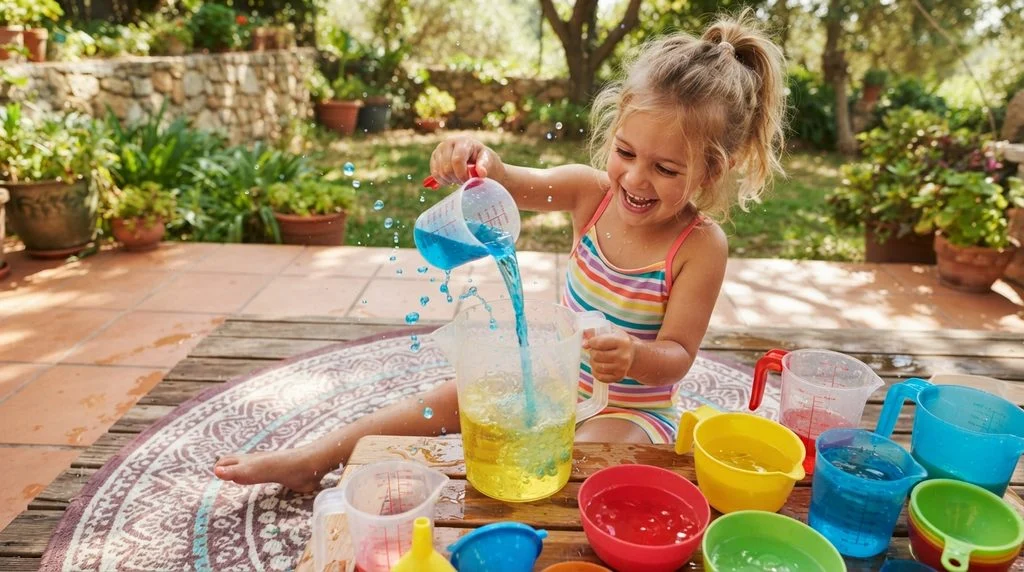
Water-based sensory activities for autistic children can be calming for some children. Lay a shallow bin on the floor or move this one outside. Gather containers of different shapes and sizes — measuring cups, pitchers, funnels, ice cube trays — plus an eyedropper if you have one. Add water and a few drops of food coloring, then let your child pour, mix, and dilute colors between containers.
Builds: attention span, hand-eye coordination, an everyday pouring skill.
3. Ball Pit
Movement and pressure-based sensory activities for autistic children may appeal to sensory seekers. Fill a blow-up pool, pop-up tent, or large box with 200–500 soft plastic balls and let your child dive in. The pressure and movement from the balls may feel organizing or calming for some children, while also building gross motor skills as they climb, throw, and move.
Builds: proprioceptive input, gross motor skills, social play (if throwing balls back and forth).
4. Sensory Walk
Line up a few shallow bins outdoors, each filled with a different texture — large pom poms, sand, dry pasta, fabric squares, feathers, dry leaves, or water at different temperatures. Encourage your child to step from bin to bin, describing what each one feels like along the way.
Builds: tactile tolerance, balance, coordination.
5. Plastic Bag Kites
Tie 1–2 feet of yarn or string to the handles of a plastic or reusable grocery bag, head outside, and let your child run with it catching the wind behind them.
Builds: gross motor skills, auditory and tactile input from the wind and rustling bag.
6. Underwater Scene
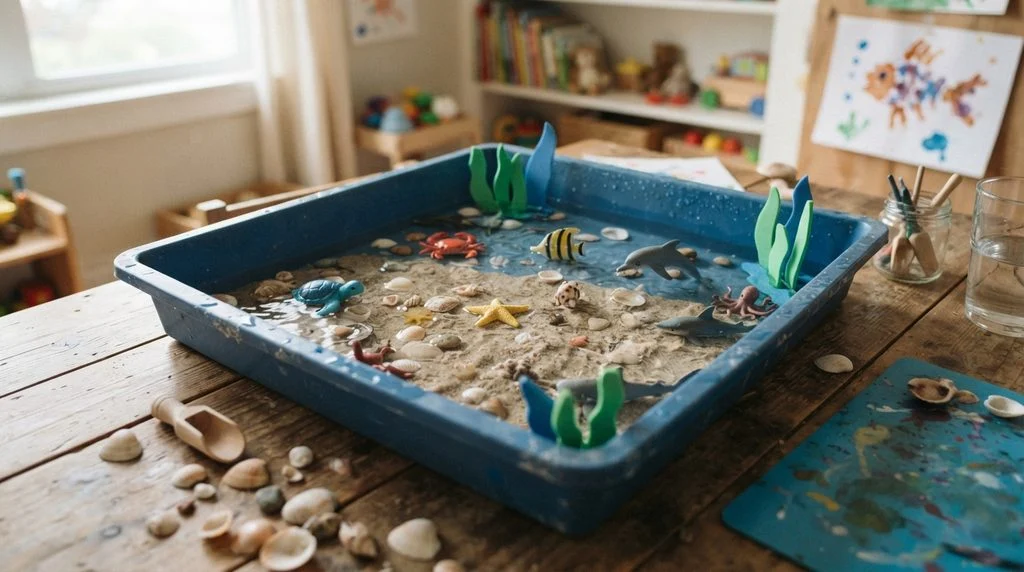
Go on a mini scavenger hunt together to collect stones, shells, sand, and leaves. Back inside, have your child arrange the finds in a plastic bin, add water-safe toy sea creatures, and slowly pour in water to bring their “underwater world” to life.
Builds: pretend play, outdoor exploration, fine motor skills from arranging small objects.
7. Shape Sorting
Fill a large bin or roasting pan with dry beans, rice, or noodles, then hide buttons or pom poms of different shapes and colors inside. Have your child fish them out with tongs or fingers and sort them into a muffin tin or ice cube tray by color or shape.
Builds: fine motor strength, hand-eye coordination, early sorting/categorizing skills.
8. Edible Sensory Bin
Lay out a tablecloth and an old t-shirt for this messier one. Put one or two food items — mashed avocado, cooked rice, corn flakes, shredded coconut, or cranberry sauce — into shallow bowls and let your child smear, squish, and explore like finger paint.
Builds: comfort with new food textures, a safe outlet for children who explore with their mouths.
9. Construction Site
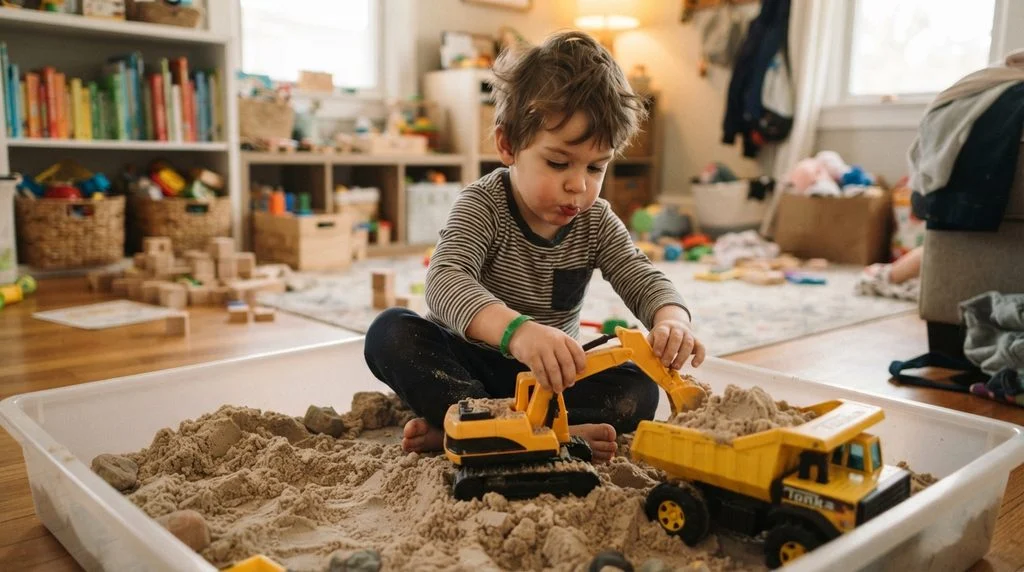
Fill a shallow bin or small pool with shredded paper, torn tissue paper, or sand to make your “site,” then add toy trucks, diggers, and bulldozers (or building blocks). Talk through what’s being built and take turns making construction sounds.
Builds: imaginative play, vocalization, response to sound and touch.
10. Calming Corner & Movement Play
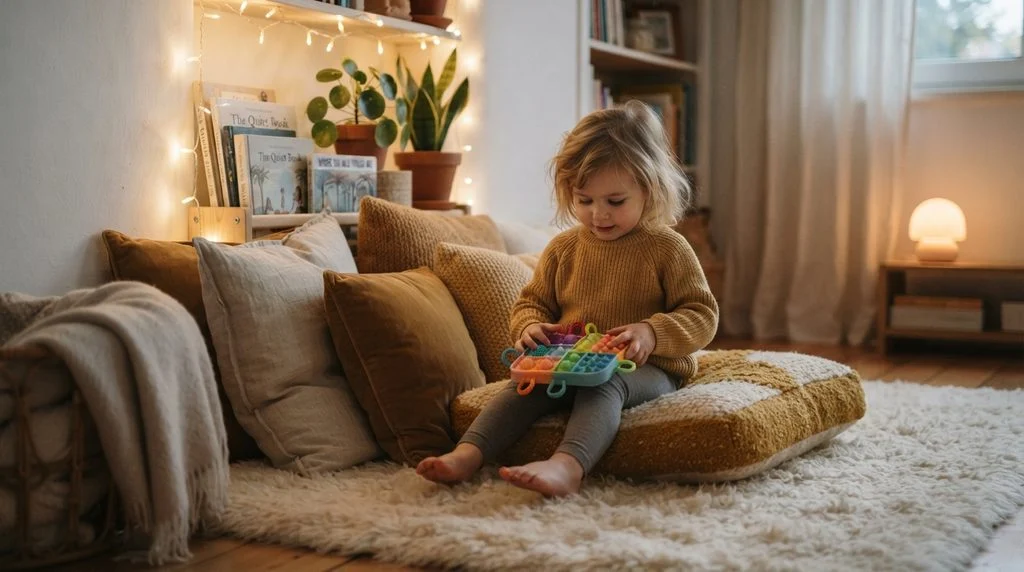
Not all sensory activities for autistic children should be stimulating. Some children need a way to settle down, not just explore. Set up a small “calm corner” with pillows, soft lighting, and a favorite textured item, or offer gentle vestibular input through a backyard swing, therapy hammock, or slow rocking. This pairs well after a more stimulating activity on this list, helping your child transition back to a regulated state.
Builds: self-regulation, body awareness, an easy reset tool for overwhelming moments.
How to Adapt Sensory Activities to Your Child
When choosing sensory activities for autistic children, remember that every child processes sensory input differently — what feels calming to one child may feel overwhelming to another. A few ways to adapt:
- Introduce one new texture, sound, or activity at a time rather than several at once.
- Alternate a “calming” activity (like the calm corner) with an “energizing” one (like the ball pit).
- Offer choices between two activities to build independence and motivation.
- Weave sensory moments into daily routines, like bath time or mealtime, rather than treating them as a separate event.
When to Ask for Individual Guidance
If sensory challenges are affecting daily routines, eating, sleep, school, dressing, or transitions, a pediatric occupational therapist or another qualified clinician can help identify patterns and suggest individualized strategies. This article is for general activity ideas and is not a substitute for professional assessment or therapy.