18 Sensory Activities for Babies: Safe and Simple Ideas
Sensory activities for babies can be simple, low-cost, and built around everyday objects that encourage safe exploration of touch, sight, sound, smell, and movement. This guide is specifically for babies in the first year and early toddler transition, with activities designed for short attention spans and close caregiver involvement.
Because babies explore with their mouths as well as their hands, every activity here requires active, hands-on supervision. Choose large, age-appropriate materials, avoid choking hazards, and use taste-safe options whenever mouthing is likely.
If you need ideas for older children, see our broader sensory activities for kids guide. This page stays focused on baby-safe setup, close supervision, mouthing risk, and first-year sensory exploration.
Why Sensory Activities for Babies Matter
In the first year, well-chosen sensory activities for babies give babies repeated chances to explore new textures, sounds, sights, and movement. Every time they touch a new texture, hear an unfamiliar sound, or watch water move, they’re strengthening those connections. Sensory play also supports early hand-eye coordination, cause-and-effect understanding, and — as babies get a little older — language, as you narrate what they’re feeling and doing.
None of this requires a shopping trip. A sponge, a bowl of oats, or a few kitchen utensils can hold a baby’s attention just as well as a store-bought toy.
Water Sensory Activities for Babies
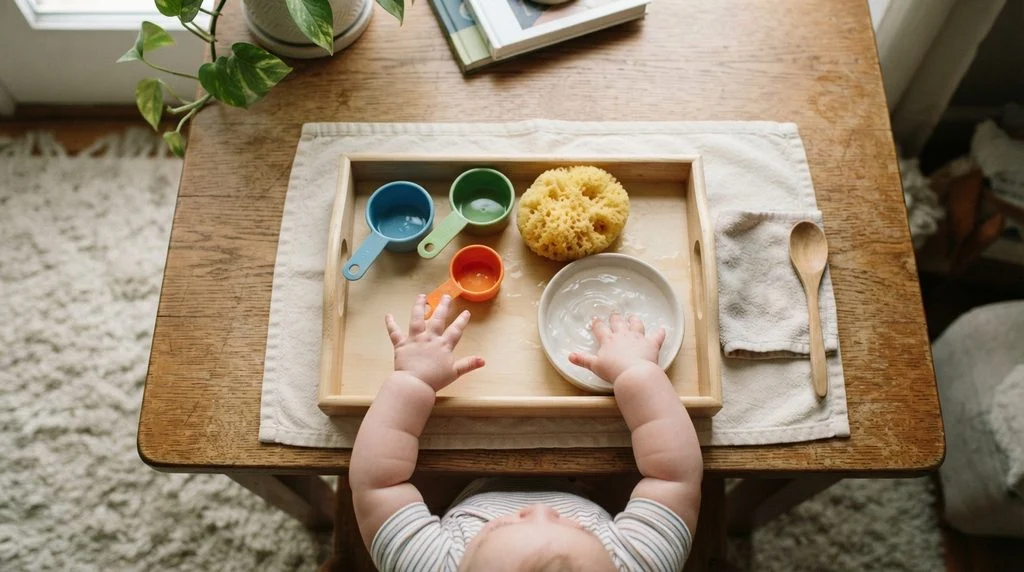
1. Sponge Time is one of the simplest sensory activities for babies. Let baby hold and explore a natural sponge, then drop it into a small bin of water. Watching it soak up water, sink, and get squeezed back out gives baby a simple lesson in cause and effect — and a good excuse to get a little wet.
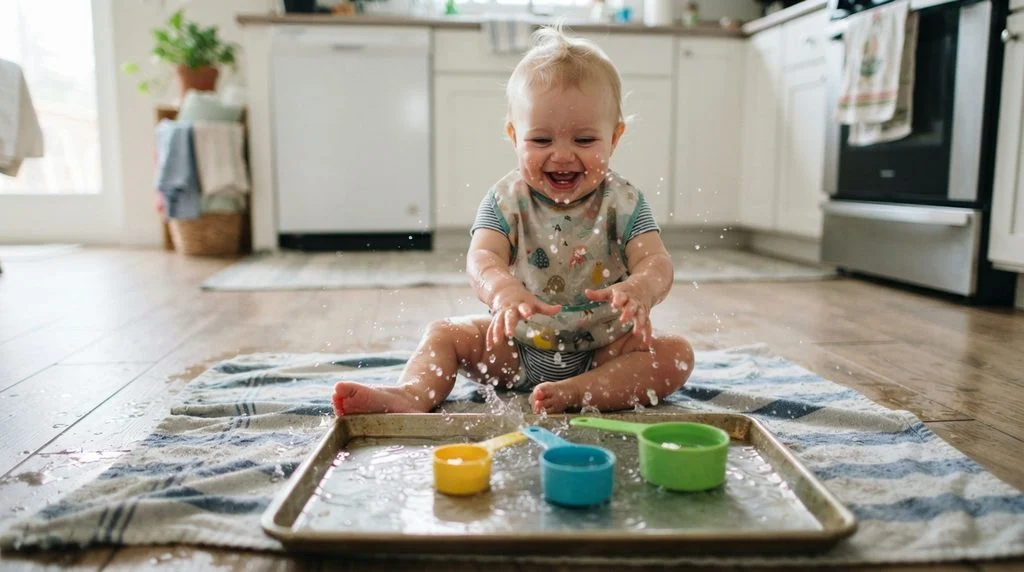
2. Splish Splash Water Time Pour a shallow layer of water onto a cookie sheet or into a small bin, and add a few measuring cups. Sit baby in front of it so they can touch the water and watch familiar objects move differently when wet. Lay a towel down first — this one gets splashy fast.
3. Water Art Dip baby’s fingers into a small bowl of water and let them press their hands onto paper, or use a large art brush to make water marks. Simple, mess-light, and a nice first step before introducing paint.
4. Sink vs. Float Fill a shallow bin with water and drop in a mix of toys — some that sink, some that float. Let baby explore which is which, and use measuring cups to pour water in and out for extra splash appeal.
5. Warm vs. Cold Set out two small bowls, one with warm water and one with ice cubes. Let baby touch both, then help them drop an ice cube into the warm water and feel it melt. Adding a third bowl of cool water lets baby compare three temperatures at once.
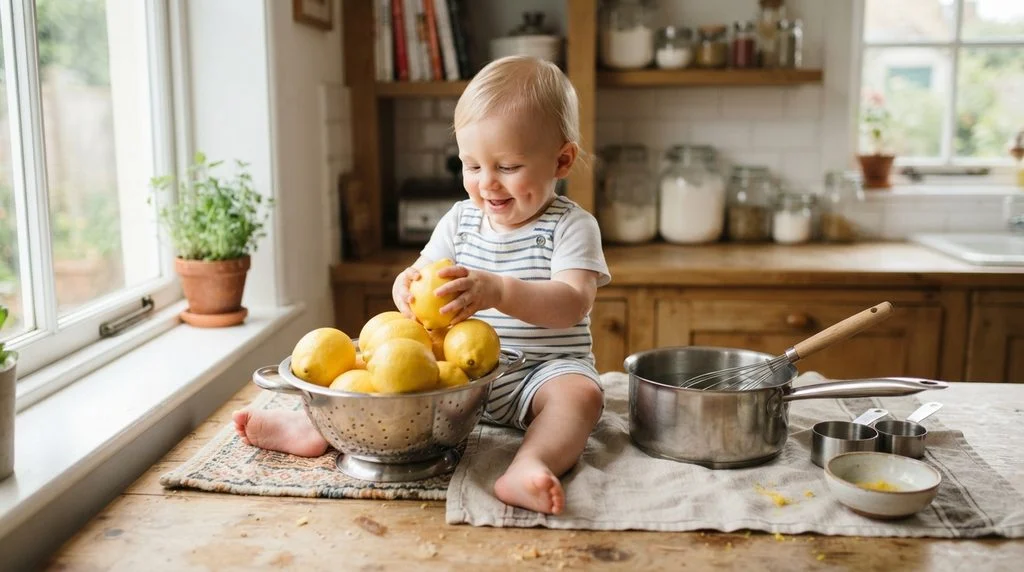
6. Lemon Soup Set out a colander of lemons alongside a pot of water, a whisk, a spatula, and measuring cups. Let baby handle the lemons first, then drop them into the water one at a time and stir. Limes work well too, and both are easy, safe shapes for little hands to grip.
7. Ball Grab Fill a small basin with lightweight plastic balls and let baby try to catch them as they slide around. It’s a fun hand-eye coordination challenge, since wet balls move faster than dry ones.
Texture and Touch Sensory Activities for Babies
8. Rolled Oats Exploration is a low-cost example of sensory activities for babies using a familiar kitchen ingredient. Pour dry rolled oats into a bowl and let baby run their fingers through them. For a second texture, add a bowl of water nearby to dampen a handful, or blend some oats into a fine powder for a third variation. Contain the mess with a bin or a sheet on the floor underneath.
9. Fun with Gelatin Make a batch of unflavored gelatin using water instead of juice, then chill it in a baby food ice cube tray or a shallow dish. Once set, let baby poke, squeeze, and break the pieces apart to feel how the texture crumbles and changes shape. It’s sticky, so have a washcloth handy.
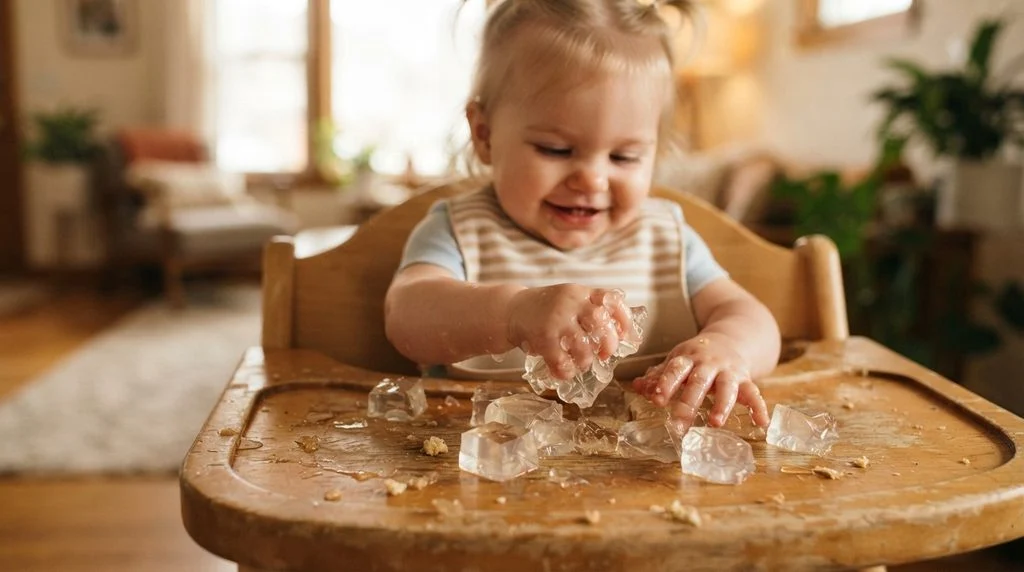
10. Ice Cubes on a Tray Place a few ice cubes on a cookie sheet or baking pan and let baby chase them around as they glide. The slipperiness makes for a genuinely tricky grab, which is great practice for hand-eye coordination.
11. Fun with Tape Stick a few pieces of painter’s tape to a plastic container or directly onto baby’s hand, and let them work out how to peel it off. Simple, cheap, and surprisingly engaging as baby problem-solves the sticky texture.
12. Transform Everyday Materials Gather a few contrasting textures — aluminum foil, parchment paper, a paper towel, a napkin — and let baby feel, tear, and crumple each one. Show them how a torn piece becomes a ball, then unfold it again to compare wrinkled versus smooth textures side by side.
Taste-Safe Sensory Activities for Babies
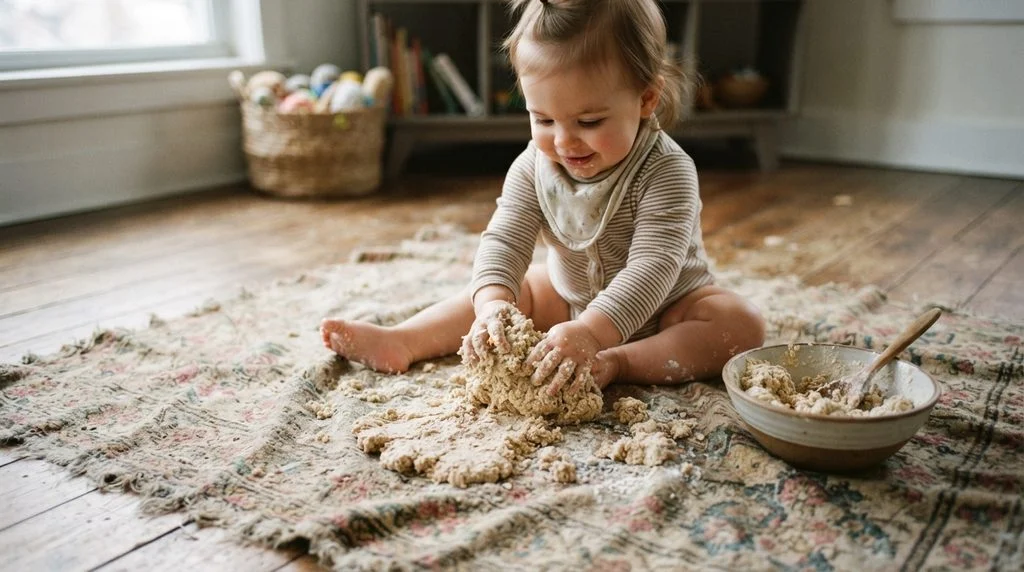
13. Edible Oatmeal Playdough works well when you need taste-safe sensory activities for babies. Mix oats, flour, and water into a simple, baby-safe dough. Let baby help pour and stir the ingredients before diving in to squeeze and pull apart the clumpy mixture. Set it up on an old sheet or blanket, since this one gets genuinely messy.
14. Taste-Safe Finger Paint Make a simple homemade finger paint using plant-based food coloring, and let baby paint directly on paper with their fingers or a paintbrush. For an extra sensory twist, seal a spoonful of paint inside a zip-top bag so baby can squish the color around without the mess.
15. Cornstarch Goo Slowly stir water into a bowl of cornstarch until it turns into a thick, drippy liquid. This simple two-ingredient mixture shifts between liquid, clumpy, and solid as baby handles it — a genuinely fascinating texture for a baby who’s ready for a mess. Lay a sheet down first, since goo travels.
16. Spice and Herb Exploration Open a few spice jars and fresh herbs one at a time and let baby smell each one — cinnamon, cumin, nutmeg, basil, rosemary. Narrate what each one is and what you cook with it. This is a gentle way to build up baby’s sense of smell alongside early vocabulary.
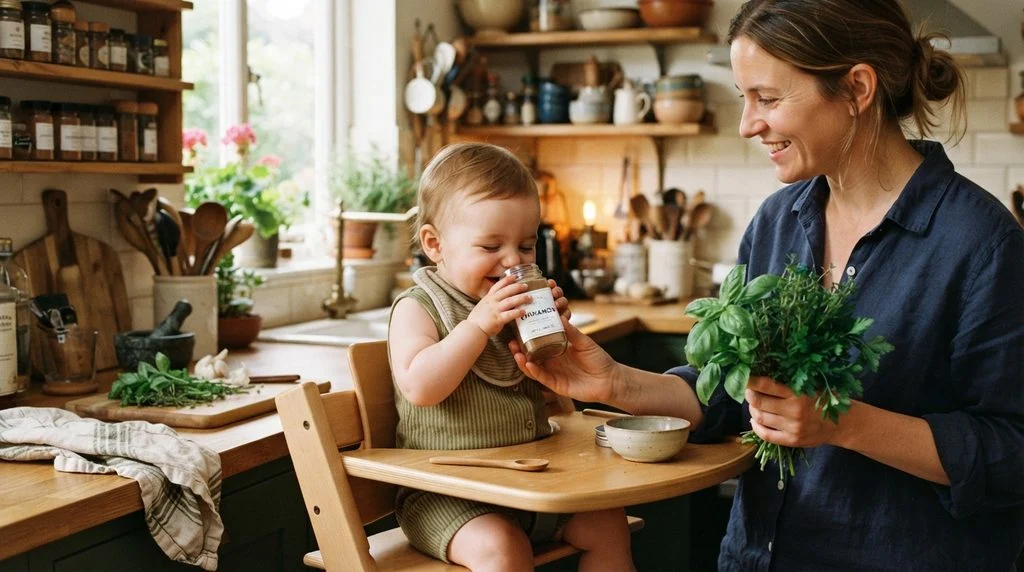
17. Kitchen Produce Exploration Fill a colander with a mix of fruits and vegetables — an apple, a lemon, a carrot, a bell pepper, an onion. Let baby hold and examine each one whole, then cut a few open so they can see, smell, and touch the inside. Different produce offers very different textures and smells, and babies often have a clear favorite.
Simple Sensory Boxes
18. Themed Discovery Boxes are easy sensory activities for babies because they use large everyday objects grouped by texture or purpose. Fill a small box or basket with a handful of everyday items grouped by theme, and let baby pull each one out to explore. A few ideas:
- A kitchen box with large baby-safe items such as a wooden spoon, silicone spatula, and oven mitt
- A soft-items box with a washcloth, small towel, and a pair of socks
- A ball box with large baby-safe balls in different textures
- A bathroom box with a toilet paper roll, empty tissue box, and a soft loofah
Babies love the simple act of emptying a container as much as touching what’s inside, so this one doubles as both a sensory activity and an early sorting game.
A Few Safety Notes
- Stay within arm’s reach for every activity here — babies explore with their mouths, and small or slippery items are a choking risk
- Choose taste-safe ingredients (like the oatmeal dough or cornstarch goo) for babies who are still mouthing everything
- Check for allergies before introducing new foods, spices, or scented materials
- Lay down a towel, sheet, or bin liner before messier activities to make cleanup easier
- If baby seems unsettled by a texture (cold ice, sticky gelatin), don’t push it — try again another day
Final Thoughts
You don’t need a big setup for effective sensory activities for babies. A bowl of oats, a few ice cubes, or a colander of lemons can hold their attention just as well as anything from a store shelf — and you probably already have everything you need in the kitchen right now.