21 Clever Kids’ Shared Bedroom Ideas for a Fair Space Divide
Sharing a bedroom doesn’t have to mean constant squabbles over territory. Done well, a shared room can actually bring siblings closer — as long as each child feels the space is theirs too. The secret is a fair divide: equal storage, equal light, equal say in the decor, and a clear sense of “my side.”
Below are 21 clever, tried-and-tested ideas for splitting a shared kids’ room fairly, whether you’re working with two toddlers, a big-age-gap duo, or three kids in one box room.
Getting the layout right
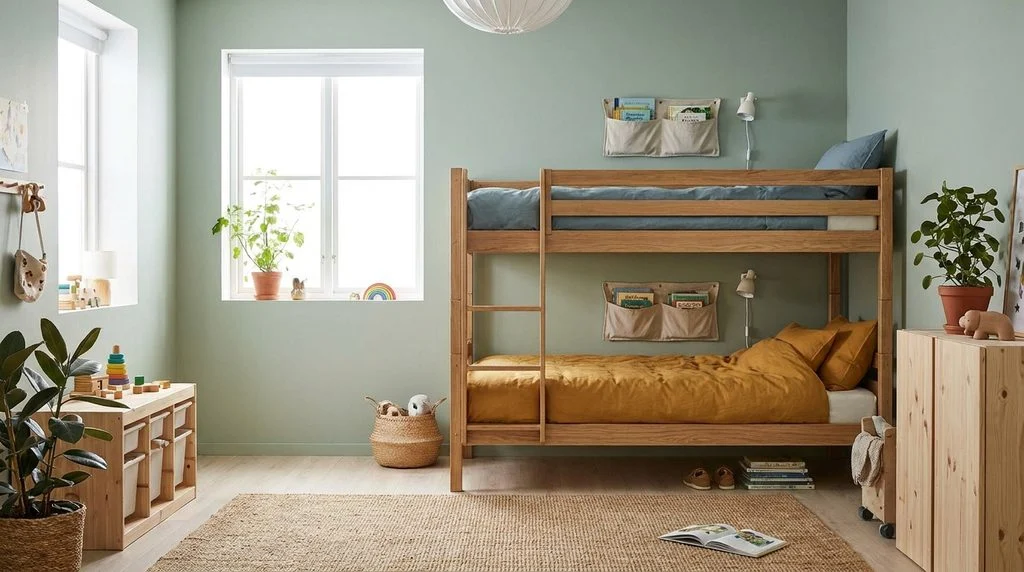
1. Bunk beds to reclaim the floor
The classic space-saver for a reason. Stacking two beds vertically frees up half the footprint for play, desks or storage. Look for a bunk with built-in steps-with-drawers rather than a ladder — you gain storage and lose the midnight ladder wobble. For a fairer feel, let each child “own” their bunk with their own bedding, wall pocket and clip-on light.
2. An L-shaped bed arrangement for age gaps
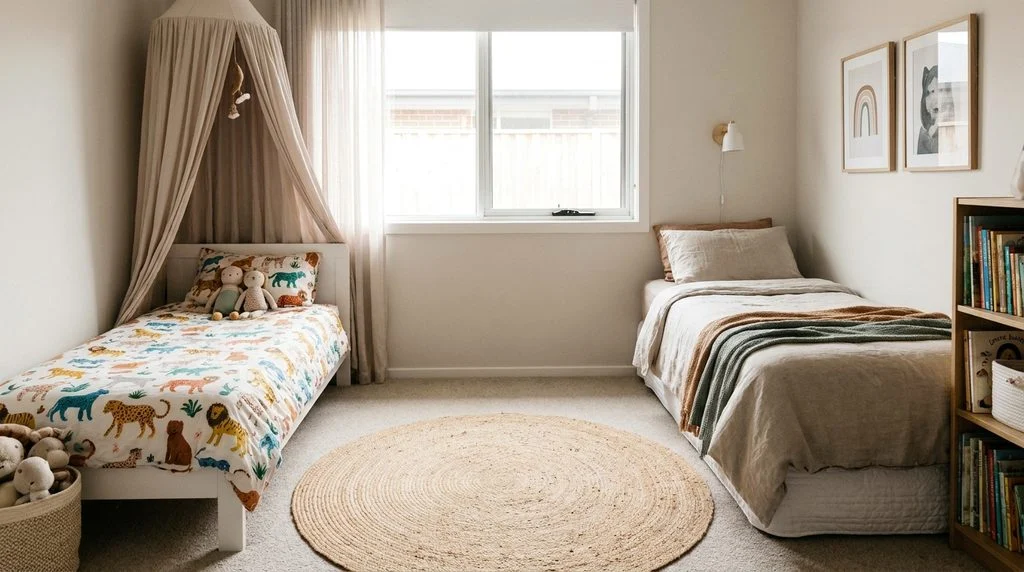
When one child is much older, an L-shape — two single beds meeting at a corner — gives each their own wall and their own “head space” while keeping a shared open zone in the middle. It reads less like a dorm and more like two mini-rooms.
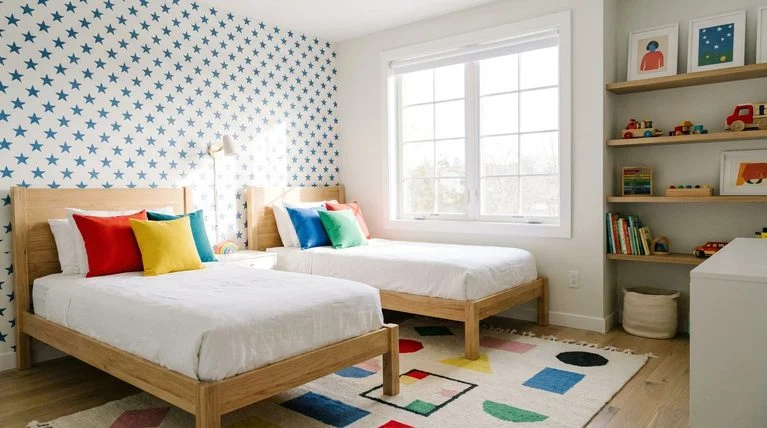
3. Twin beds with a shared bedside between them
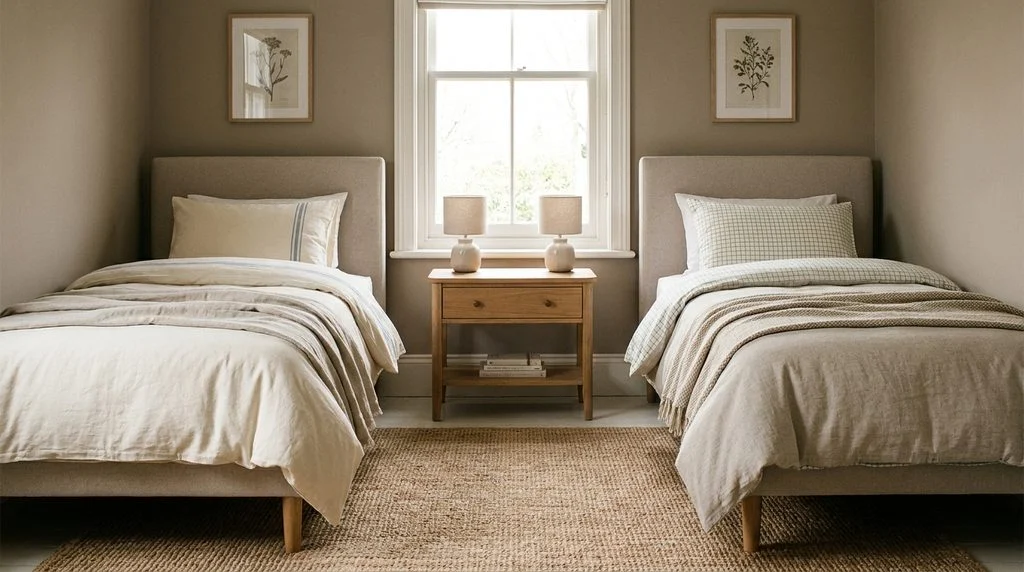
Two matching beds separated by a single shared nightstand is the simplest fair divide of all — perfectly symmetrical, so neither child gets the “better” side. Add a lamp each and a drawer each for balance.
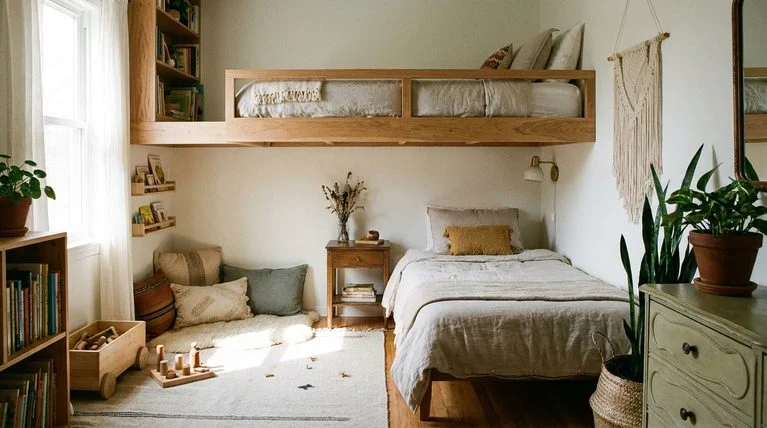
4. A trundle or loft bed to keep a play zone
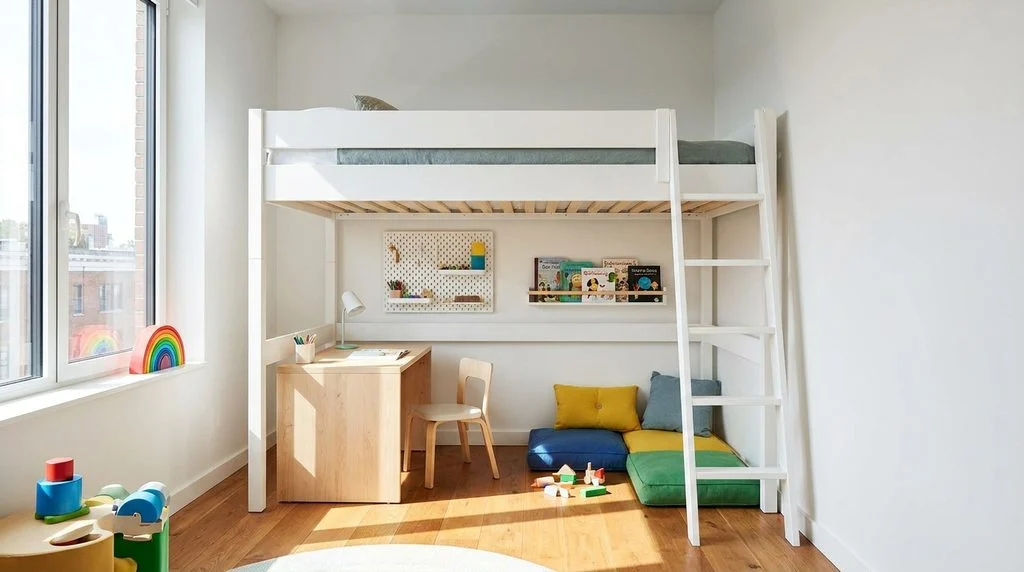
If floor space is precious, a loft bed lifts sleeping up high and leaves a full room-width beneath for a desk, reading nook or toy zone the kids share. A trundle works for rooms that host frequent sleepovers.
Dividing the space fairly
5. A bookshelf as a room divider
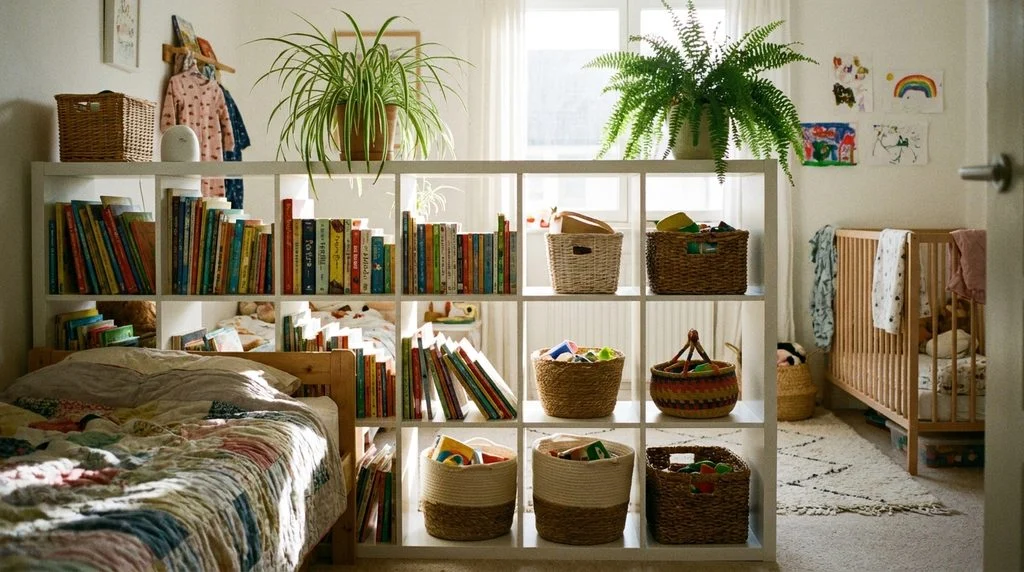
A low, open bookcase placed between the two beds splits the room into clear halves without blocking light. Kids get a visual boundary plus shared storage they can reach from both sides.
6. A canopy or den to create a personal nook
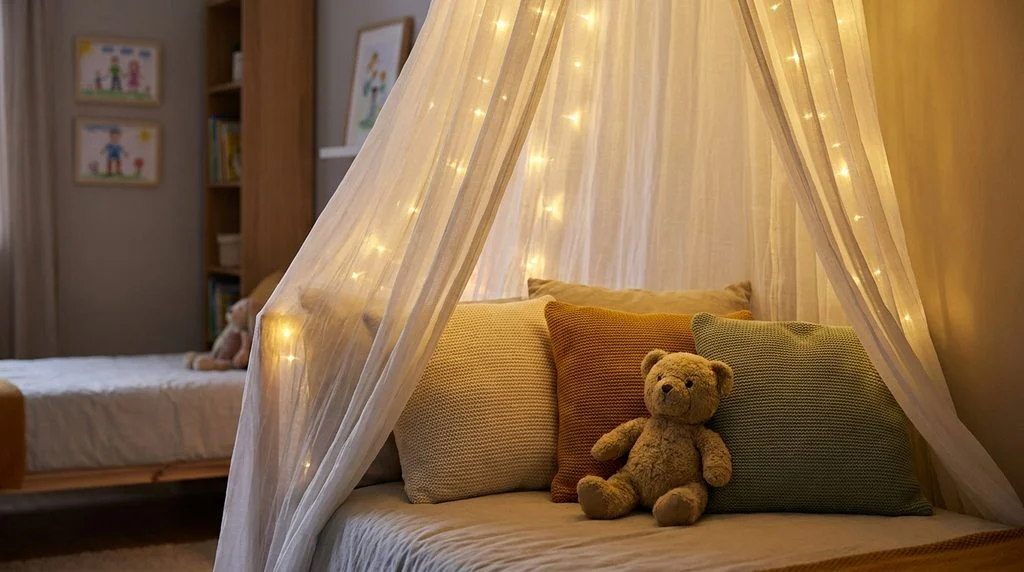
Even in one shared room, every child craves a “mine only” corner. A simple bed canopy, a pop-up teepee or a curtained den gives each child a private retreat — and all it takes is a canopy, some cushions and fairy lights.
7. Colour-zone each child’s side
Paint or wallpaper a different accent behind each bed — two complementary colours rather than a hard split — so each child has a visual anchor while the room still feels unified. Let each kid choose their colour for real ownership.

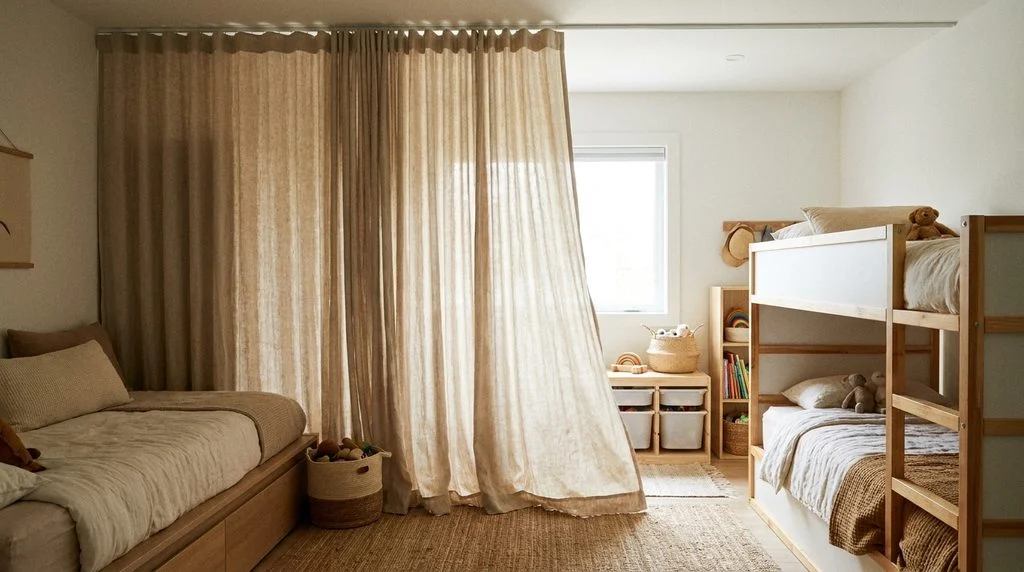
8. A curtain track for instant privacy
A ceiling-mounted curtain track lets kids pull a soft divider across at bedtime and open the room right up by day. Far more flexible than a fixed wall and ideal for siblings with different bedtimes.
Storage that keeps the peace
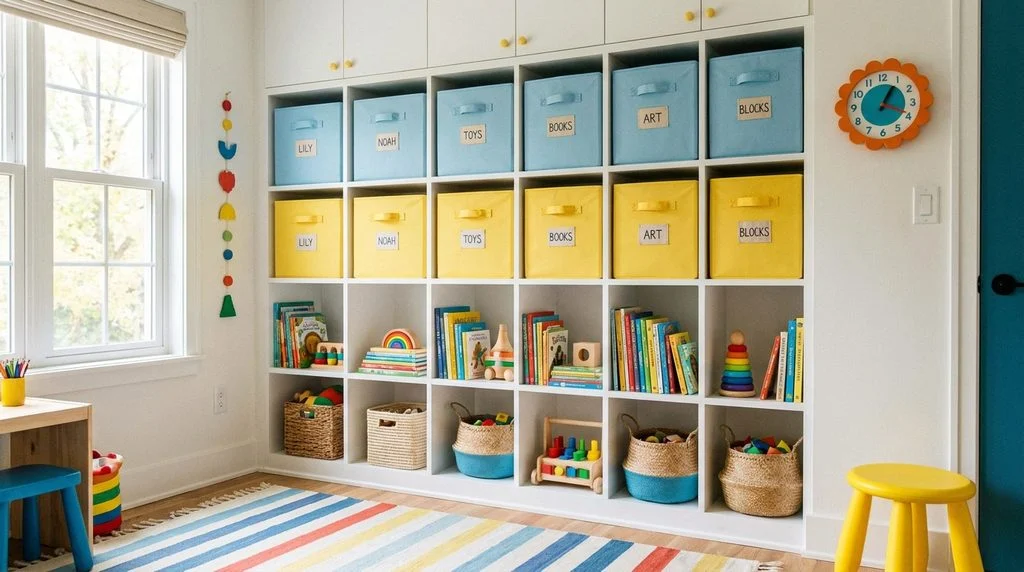
9. Give each child their own labelled storage
Half of all sibling arguments are really about “that’s mine.” Identical baskets, drawers or lockers — one set per child, clearly labelled or colour-coded — removes the debate entirely.
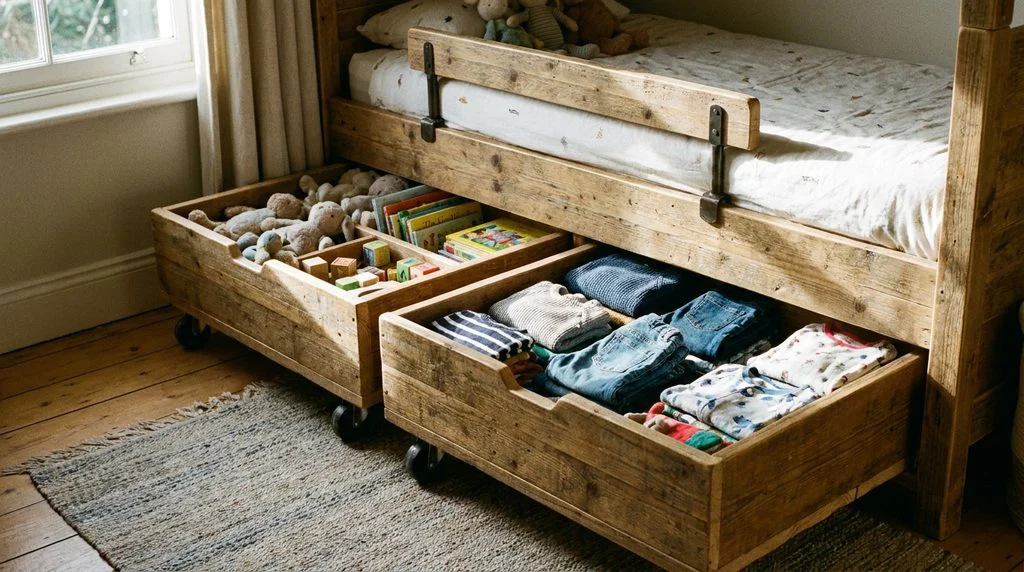
10. Maximise under-bed drawers
The space under every bed is prime real estate. Roll-out drawers or wheeled crates give each child a generous, easy-access store for toys and clothes without adding a single piece of furniture to the floor.
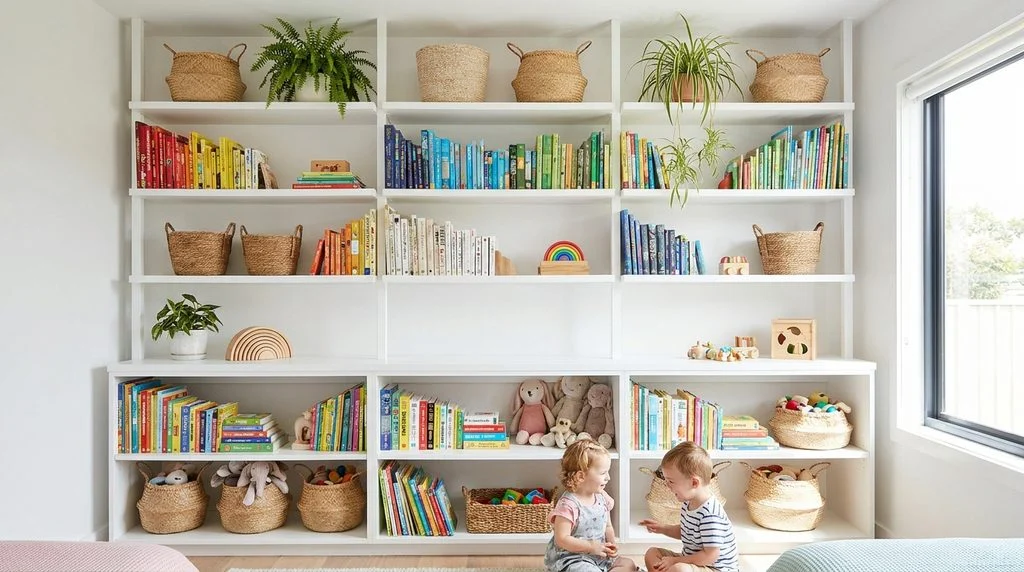
11. Go vertical with tall, shared shelving
Draw the eye up and use the walls. Tall shelving keeps the floor clear for play; put daily items low for the youngest and display or keepsakes up high for the eldest.
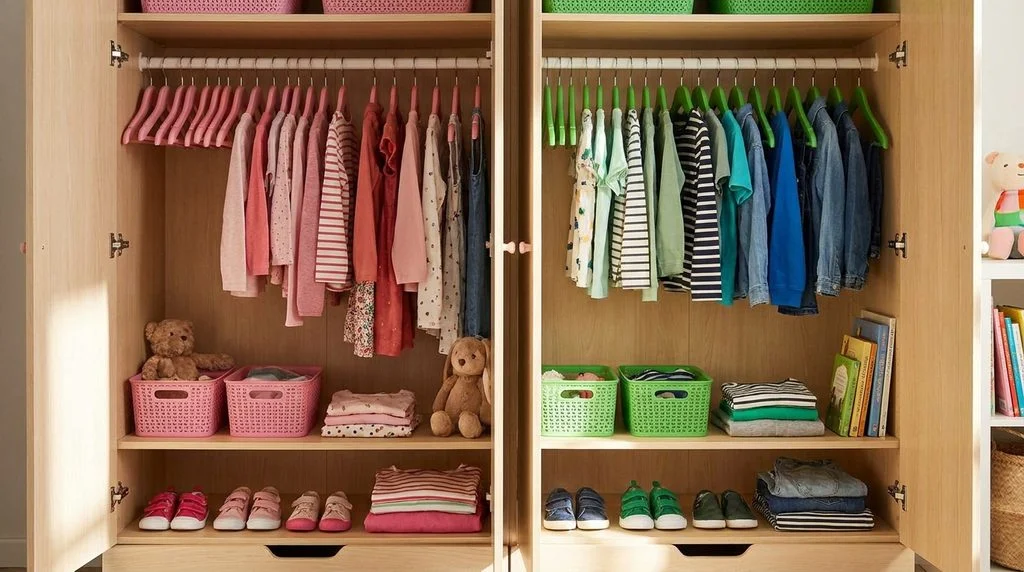
12. A shared wardrobe with a divided rail
One wardrobe, two clearly split halves — a rail each and a shelf each. A simple internal divider or two colours of hangers keeps clothes from creeping across the border.
Study, play and downtime
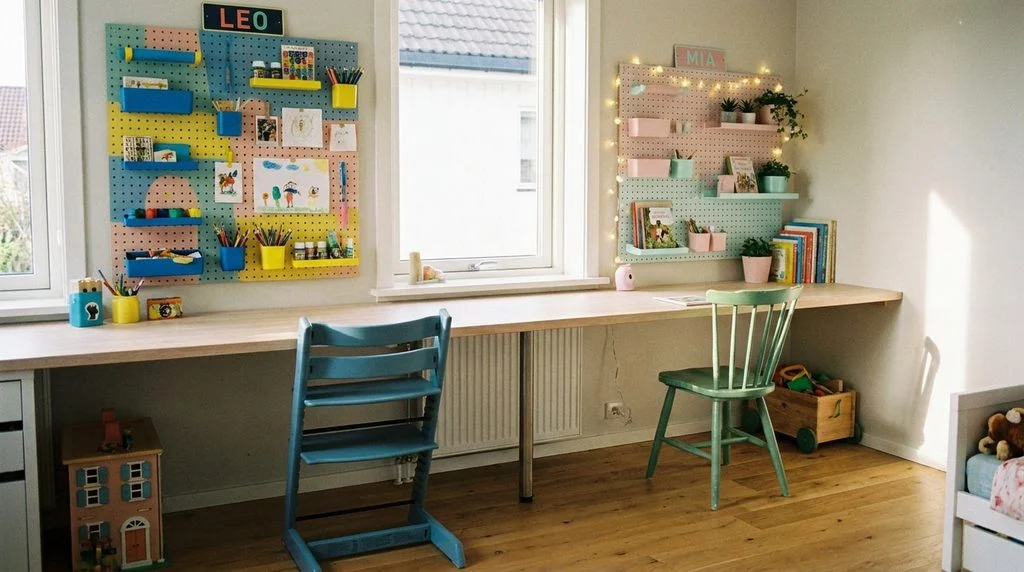
13. A shared desk with two stations
A long desk spanning one wall gives each child their own seat and drawer while sharing the surface. Add a small shelf or pegboard above each seat for individual supplies.
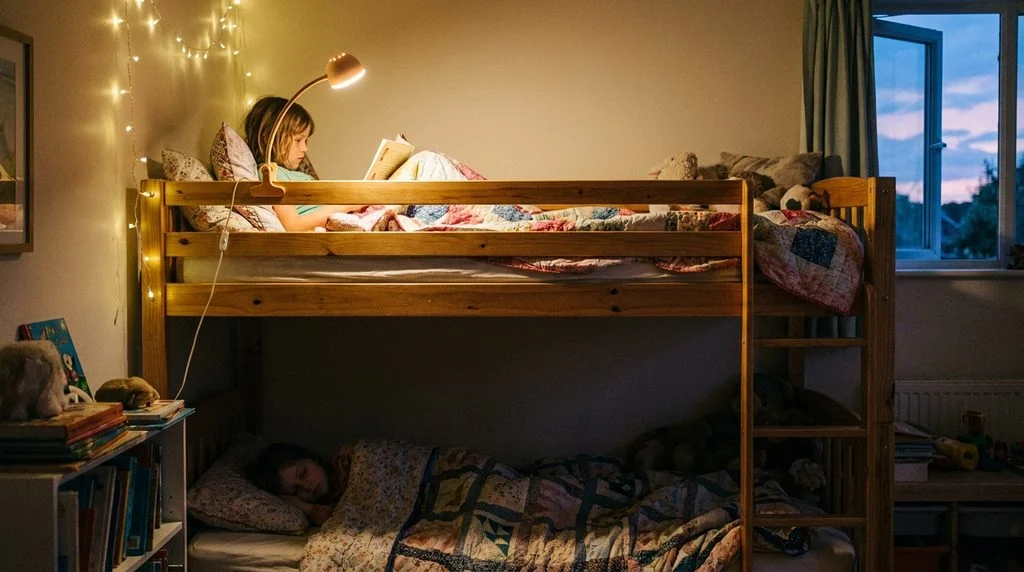
14. Individual reading lights for every bed
Different bedtimes are a classic flashpoint. A clip-on or wall-mounted light per bed lets one child read while the other sleeps — a small touch that saves nightly negotiations.
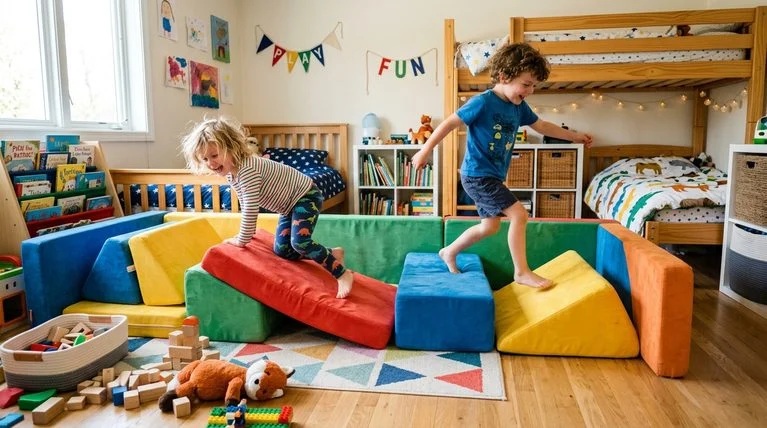
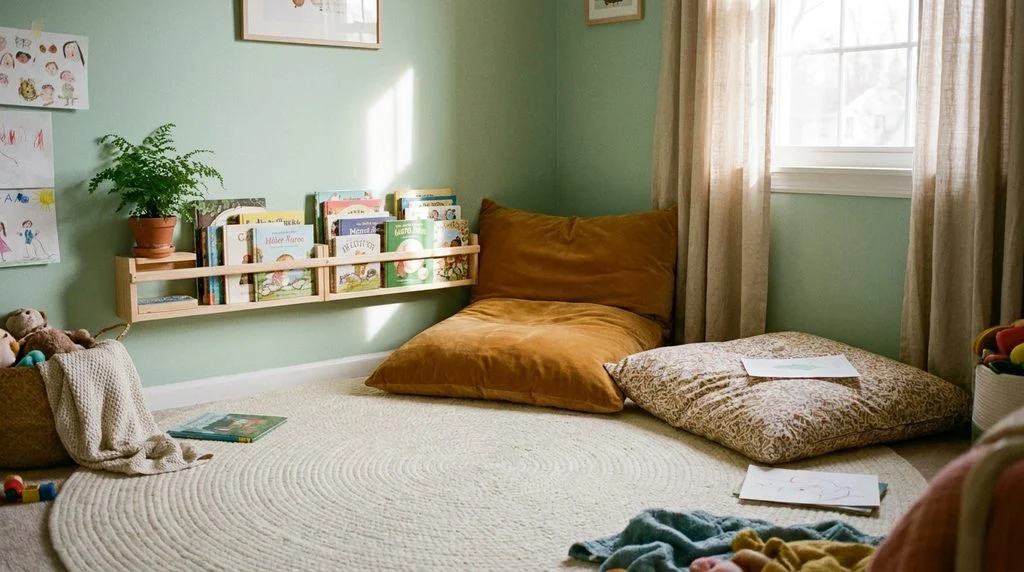
15. A shared cosy reading corner
A rug, a couple of floor cushions and a low shelf of books in one corner makes a neutral shared zone that belongs to both kids equally — perfect for winding down together.
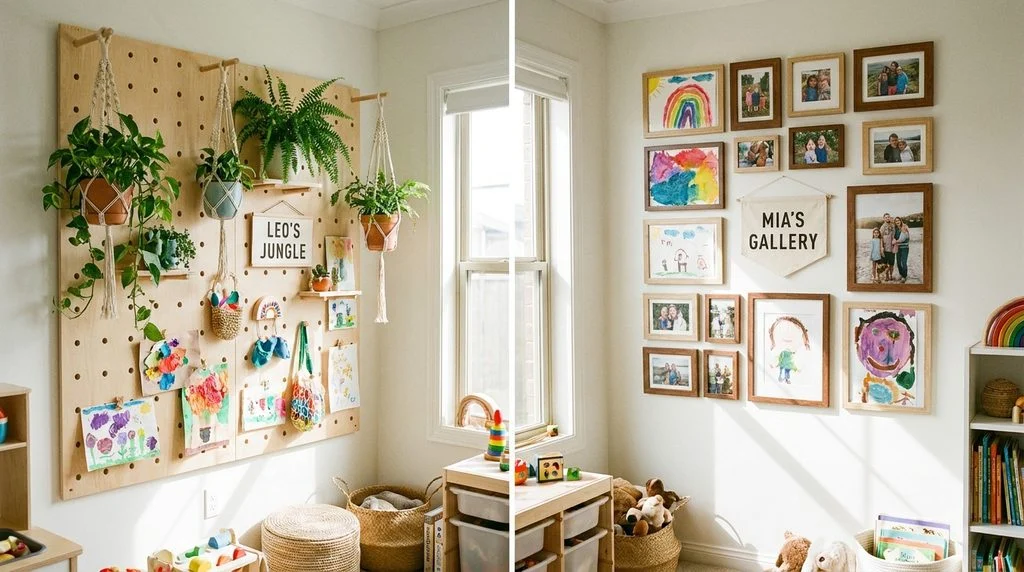
16. A pegboard or gallery wall each
Give every child a defined patch of wall — a pegboard, corkboard or framed gallery grid — to display their own art, photos and treasures. It channels the “this is mine” instinct into something creative.
Making it feel like home for both
17. Let each child choose one thing
Ownership beats symmetry. Let each kid pick one real decision — their bedding, their wall colour, their lampshade. Shared rooms feel fair when both children see their own fingerprint on the space.
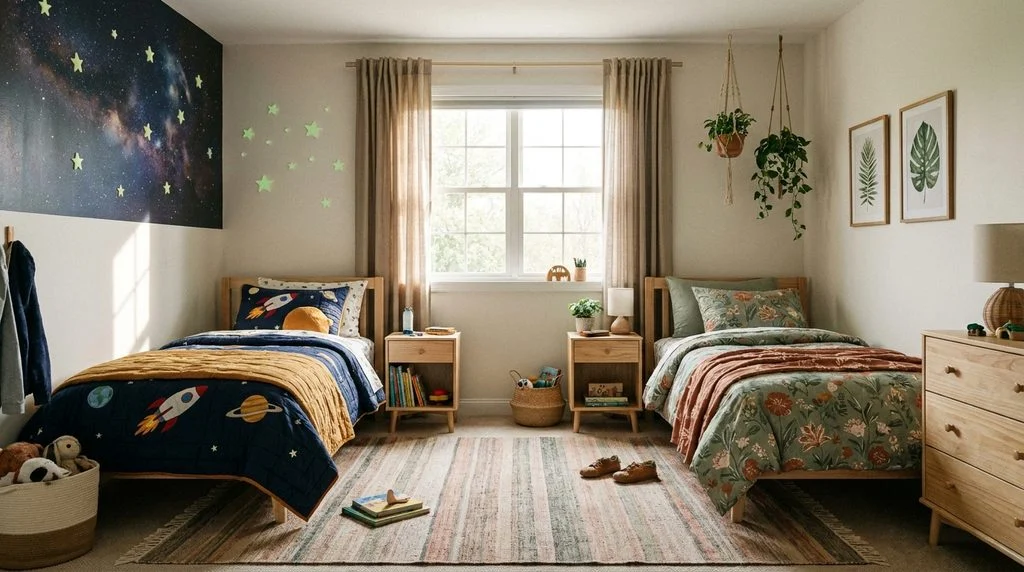
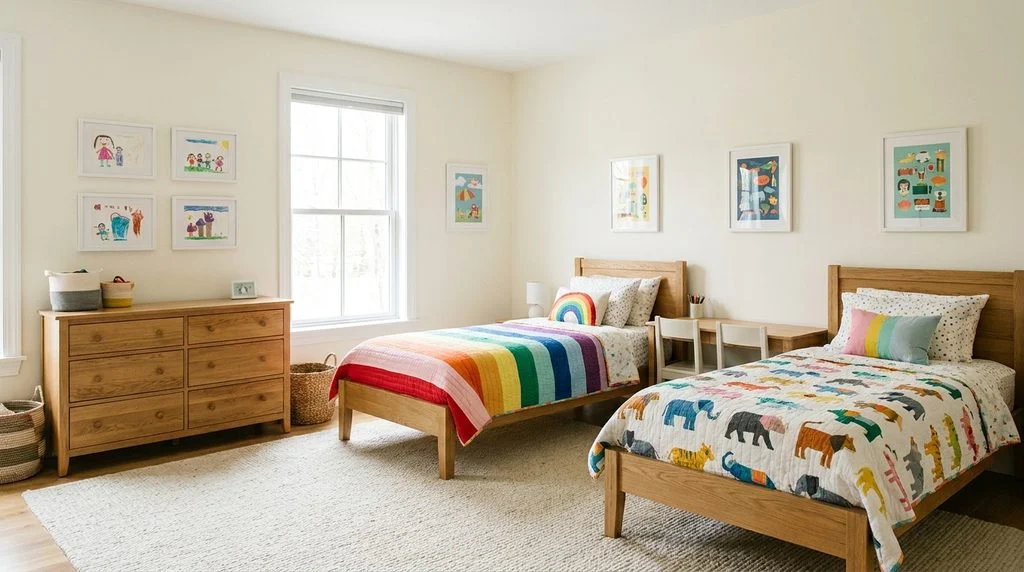
18. Coordinate, don’t match
Fully matching everything can feel like a hotel. Pick a shared palette of two or three colours and let each side interpret it slightly differently — cohesive but with personality on each side.
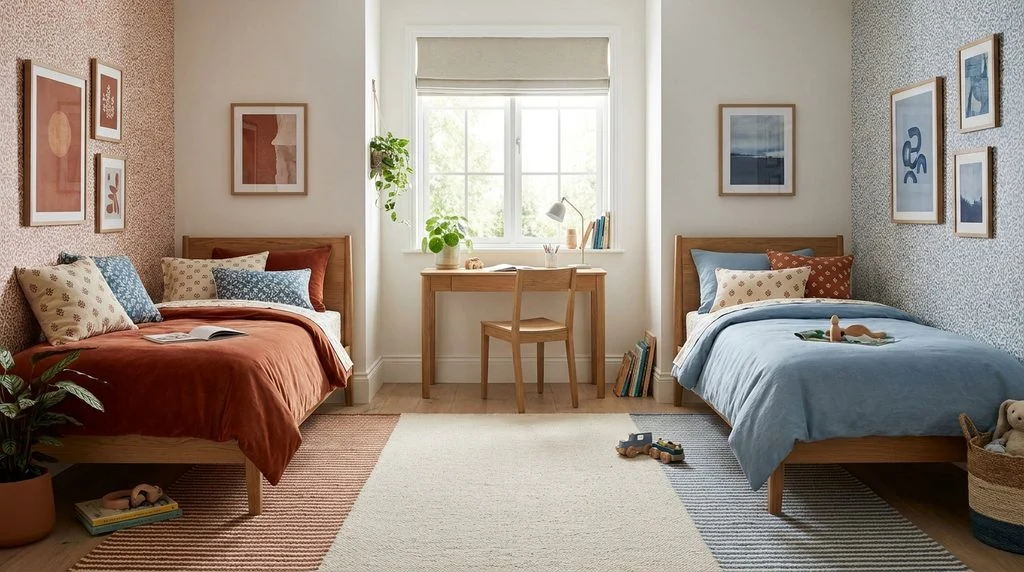
19. Name banners or monograms over each bed
A simple personalized banner, letter garland or monogram above each bed instantly marks whose space is whose — cheap, sweet and effective.
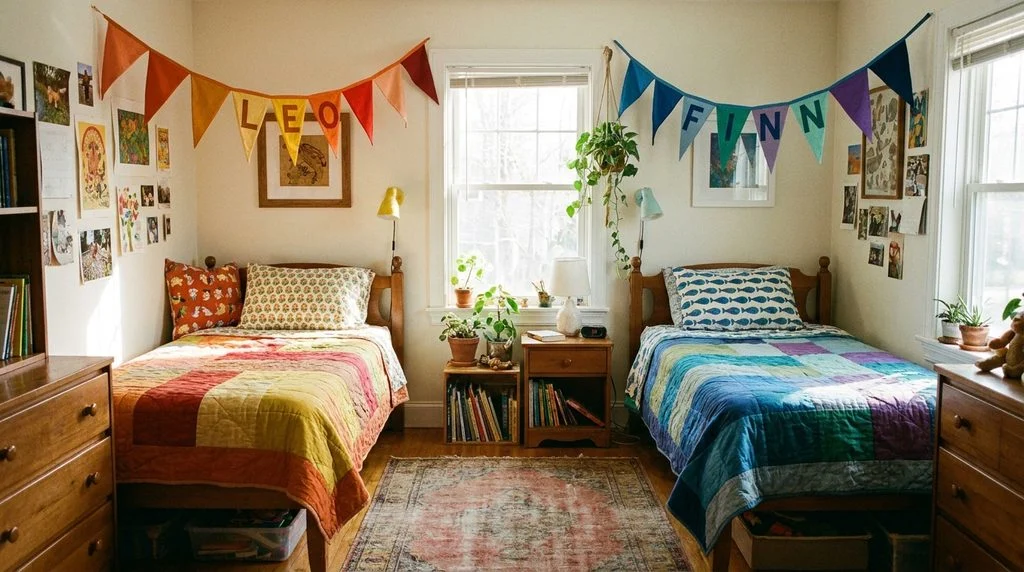
20. Add greenery and soft texture to unify
Plants, a chunky rug and layered cushions soften a shared room and pull the two halves into one calm whole. Shared “neutral” elements stop the space feeling like a divided battleground.
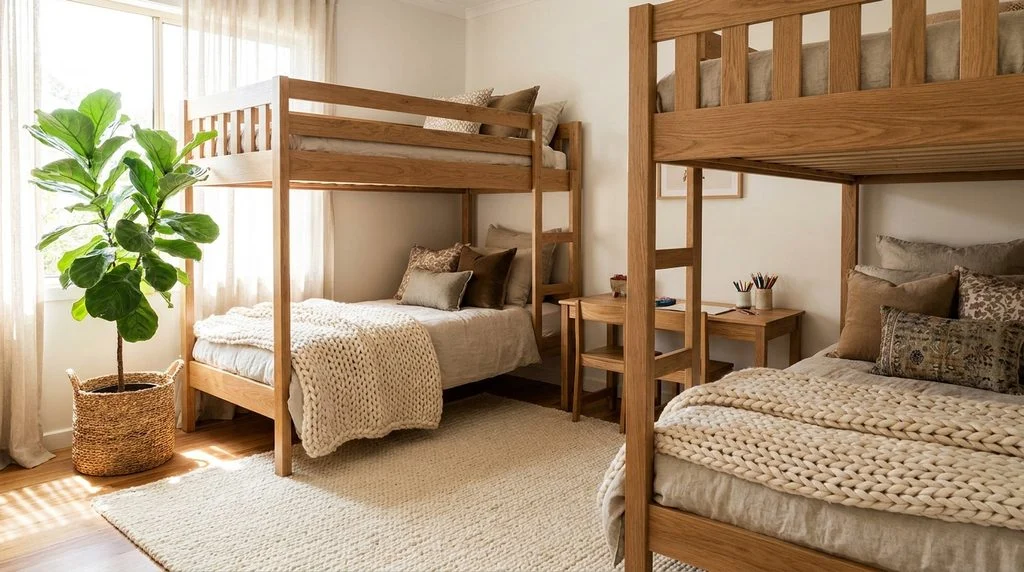
21. Build in flexibility for the future
Kids grow fast and their tastes turn on a dime. Keep the big pieces — beds, storage, wall colour — neutral and long-lasting, and let the cheap, swappable layers (bedding, art, cushions) carry the trend. You’ll re-style, not re-buy.
Quick FAQ
How do you divide a shared bedroom fairly? Give each child an equal, clearly defined share of the three things they actually fight over: sleeping space, storage and light. A visual divider (bookshelf, curtain or colour zone), one storage set each, and an individual reading light per bed cover the essentials.
What’s the best bed setup for a small shared room? Bunk beds reclaim the most floor space; an L-shape suits big age gaps; a loft bed preserves a shared play or study zone underneath. Choose based on the age gap and how the kids use the room by day.
How do you give each child privacy in one room? A bed canopy or den, a ceiling curtain track, or a personal display wall each gives every child a “mine only” pocket without needing a physical wall.
How do you decorate a shared room without arguments? Coordinate rather than match. Agree a shared two- or three-colour palette, then let each child make one genuine choice of their own — bedding, wall colour or a display wall — so both feel ownership.