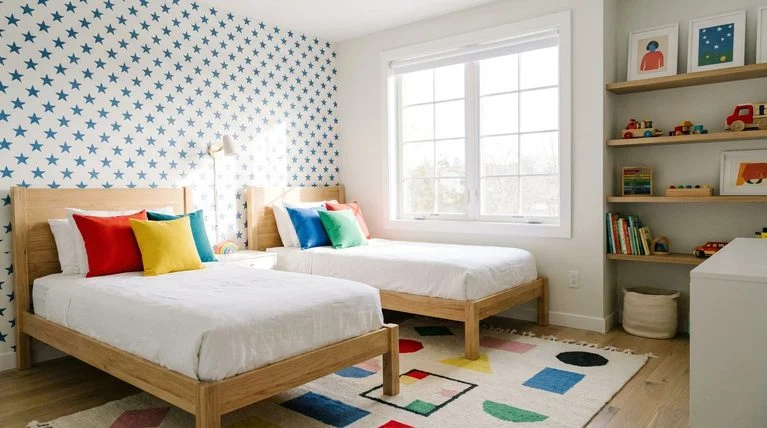
25 Shared Bedroom Ideas to Divide a Kids’ Room
Whether you’re blending families, welcoming twins, or making room for a new baby, there are plenty of reasons to pair siblings up in one bedroom. And with the right layout and a few clever design moves, a shared room can feel far roomier — and far more peaceful — than you’d expect. The goal is simple: maximize the space while giving each child a real sense of privacy and ownership. Here are 25 ways to divide a shared kids’ room so both roommates feel right at home.
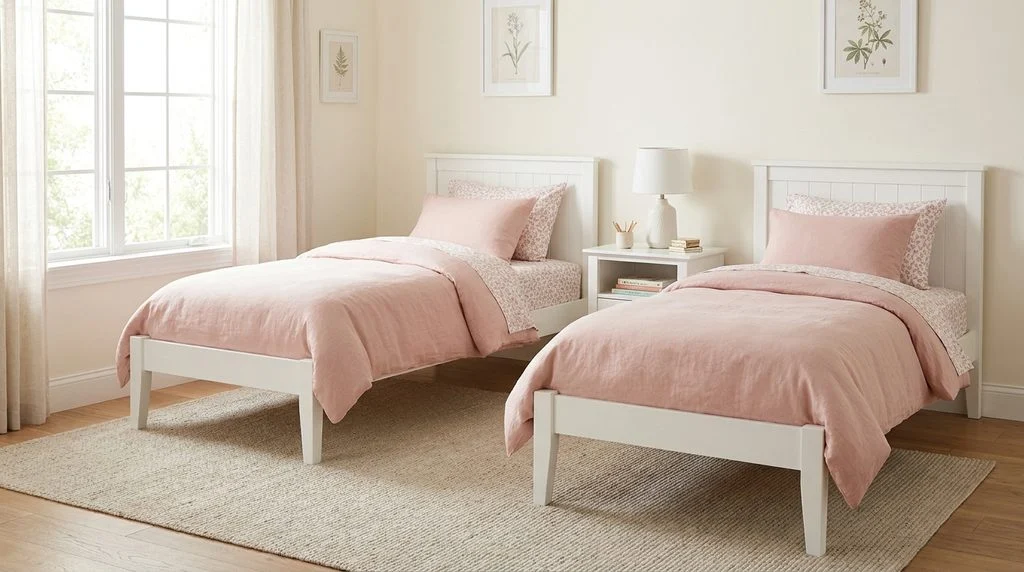
1. Coordinate the Beds
When two beds share one small room, matching (or closely coordinating) the frames and bedding instantly makes the space feel calmer and more intentional. A unified palette pulls the two halves together so a split room reads as one thoughtfully designed space rather than two competing corners.
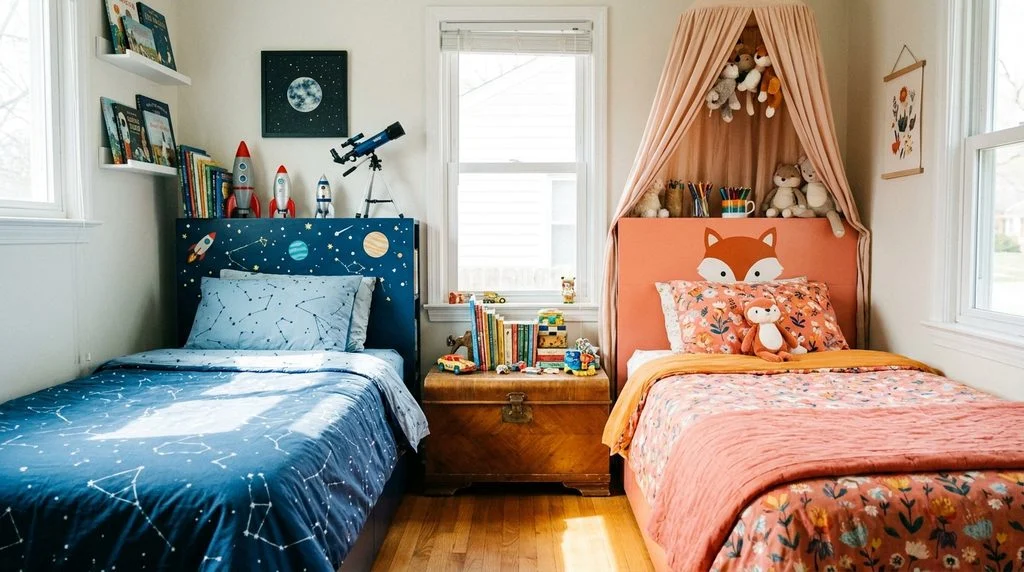
2. Or Contrast Them
The opposite approach works just as well. Giving each bed its own distinct look — different colors, characters, or themes tied to each child’s interests — helps both kids feel they have a space that’s truly their own, even when they’re sharing four walls.
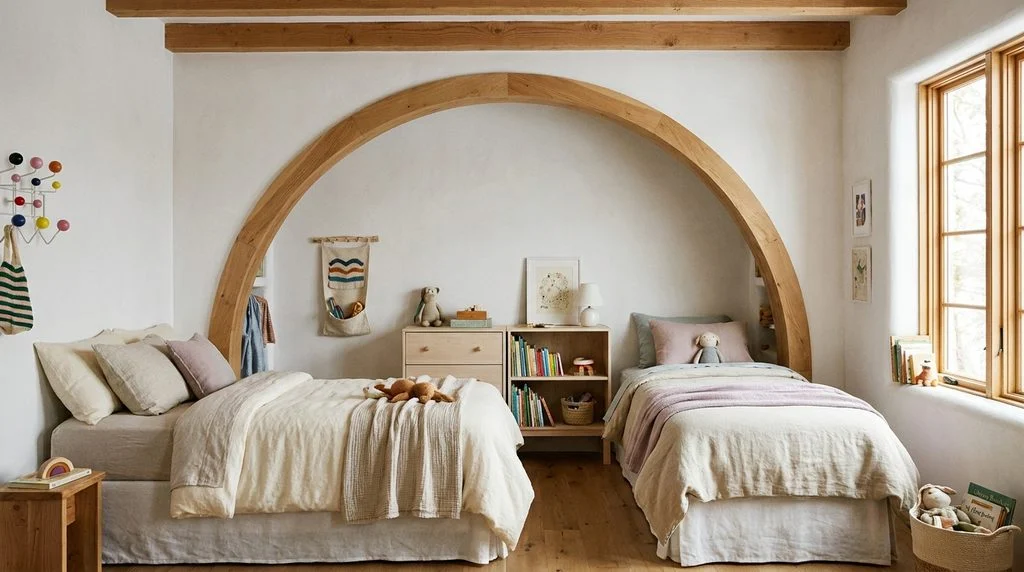
3. Take Advantage of Architectural Quirks
Some of the best room dividers were never meant to divide anything. If your room has an arch, a chimney breast, a sloped ceiling, or another structural feature, use it as a natural boundary between the two sleeping areas instead of fighting it.
4. Create Rooms Within the Room
Short on square footage? Turn each bed into its own mini “bedroom.” Enclosing or framing each sleeping spot — with a canopy, frame, or half-height surround — carves out private retreats for each child without eating up any extra floor space.
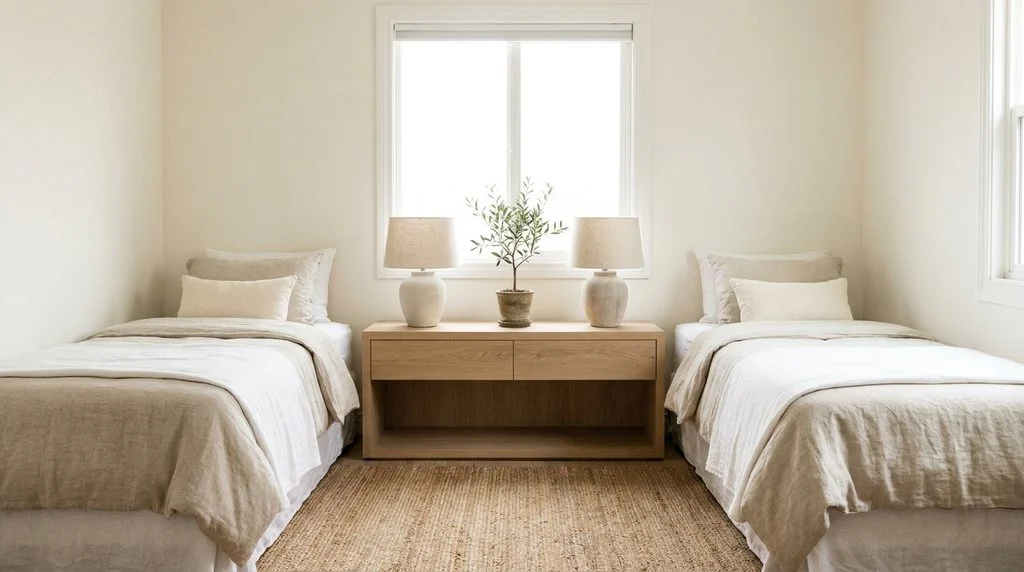
5. Separate With a Shared Nightstand
An extra-wide nightstand or a small dresser placed between the beds is one of the simplest dividers there is. It doesn’t build a physical wall, but it draws a clear, functional line down the middle of the room — and adds handy storage both kids can share.
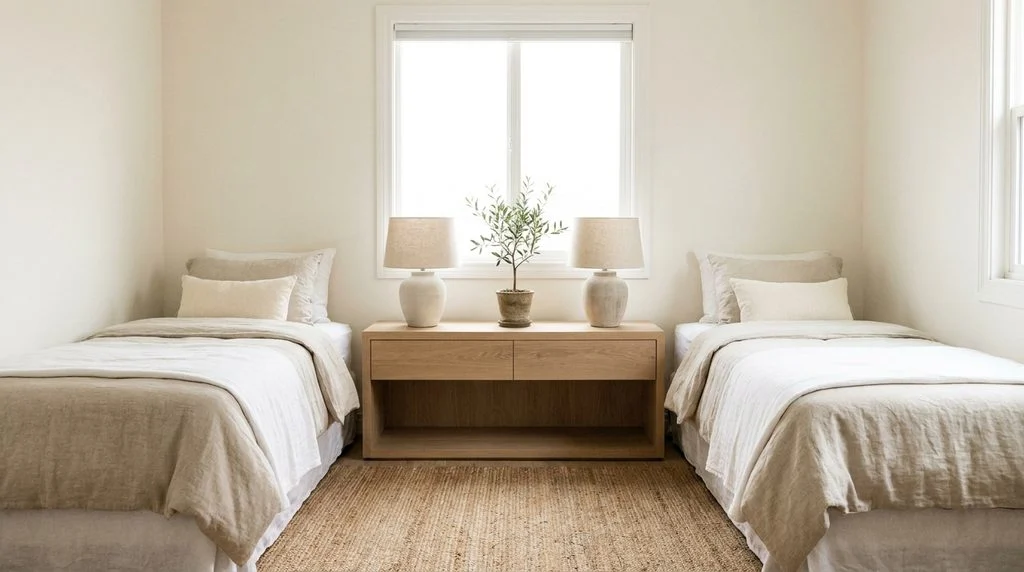
6. Go Head-to-Head (or Toe-to-Toe)
Looking for a space-smart way to fit two twin beds into a small room? Arrange them in an “L” shape in a corner, headboards meeting at the join. This frees up nearly the entire rest of the room for other activities — you might even squeeze in two separate reading nooks or play zones along the remaining walls.
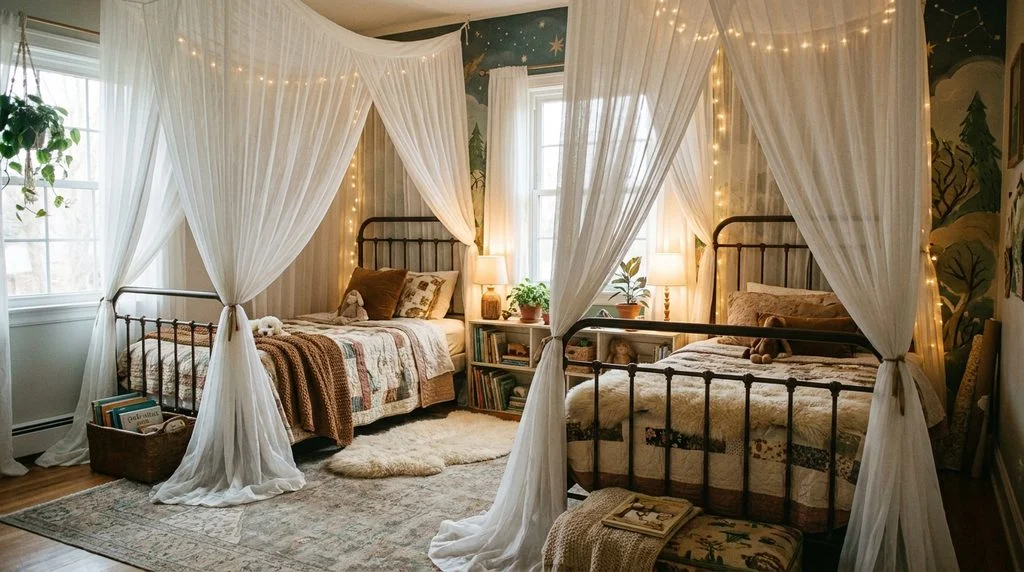
7. Set Off Each Bed With Curtains or Canopies
Fabric is a fast, affordable divider. Hang a line of curtains to split the room into two halves, or drape a canopy around each bed so every child gets an enclosed, tent-like space of their own within the shared room.
8. Include Shareable Storage
Good organization is essential in a shared room. Large, generous storage pieces give both kids room to stash their clothes and toys — and a tall unit placed between the beds can pull double duty as a partition that splits the space in two.
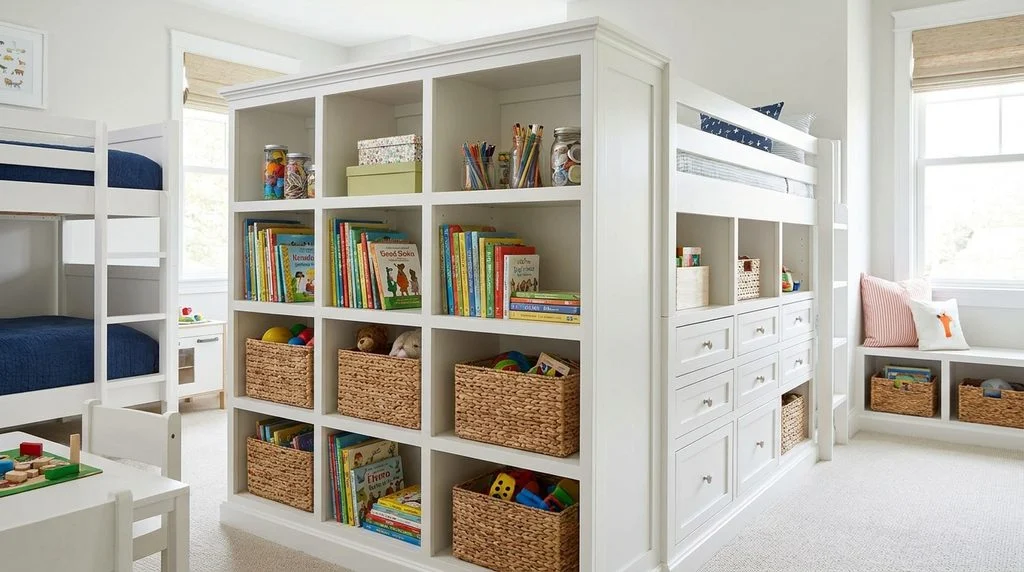
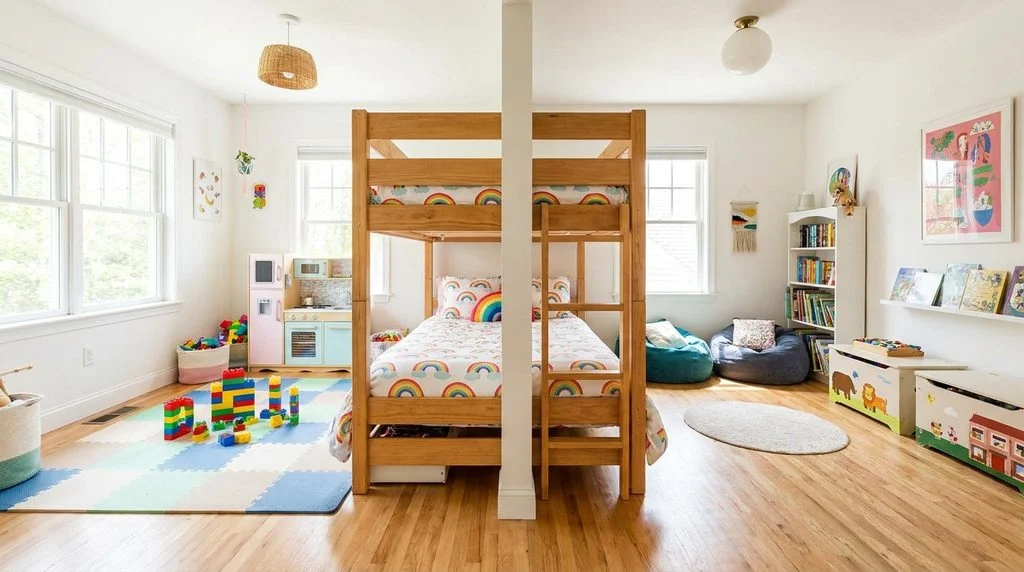
9. Bunk Up With a Bunk Bed Room Divider
When floor space is tight, look up. A bunk bed stacks two sleepers into the footprint of one, freeing up floor for storage, seating, or an activity zone. Position the bunk in the middle of the room and it can act as a divider that gives each child their own side.
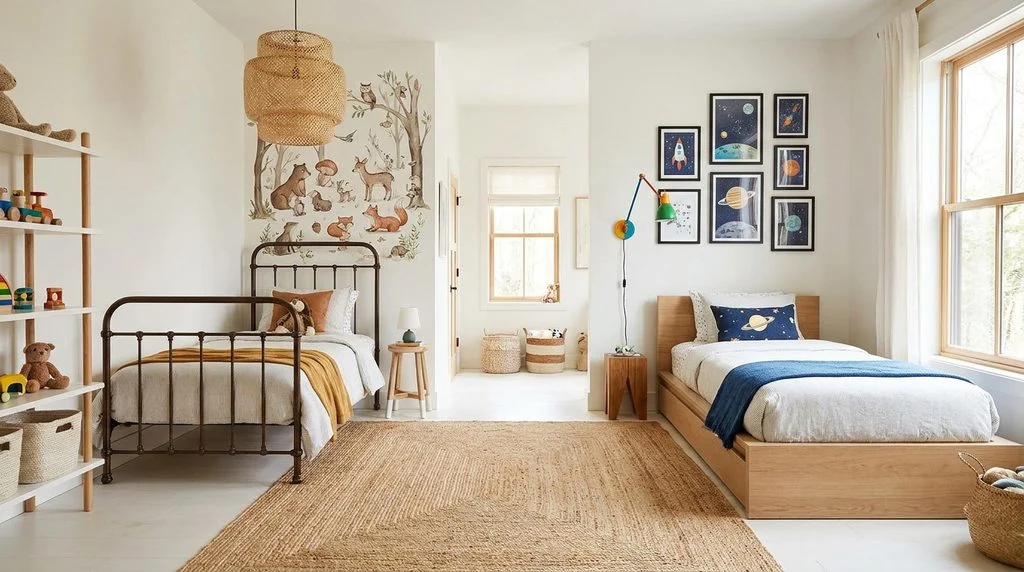
10. Dedicate Individual Decor & Lighting
You don’t always need walls, panels, or curtains to divide a room. Assigning each side its own decor and its own lighting creates a visual sense of separation while keeping the space open and airy — and makes each bed feel independent from the other.
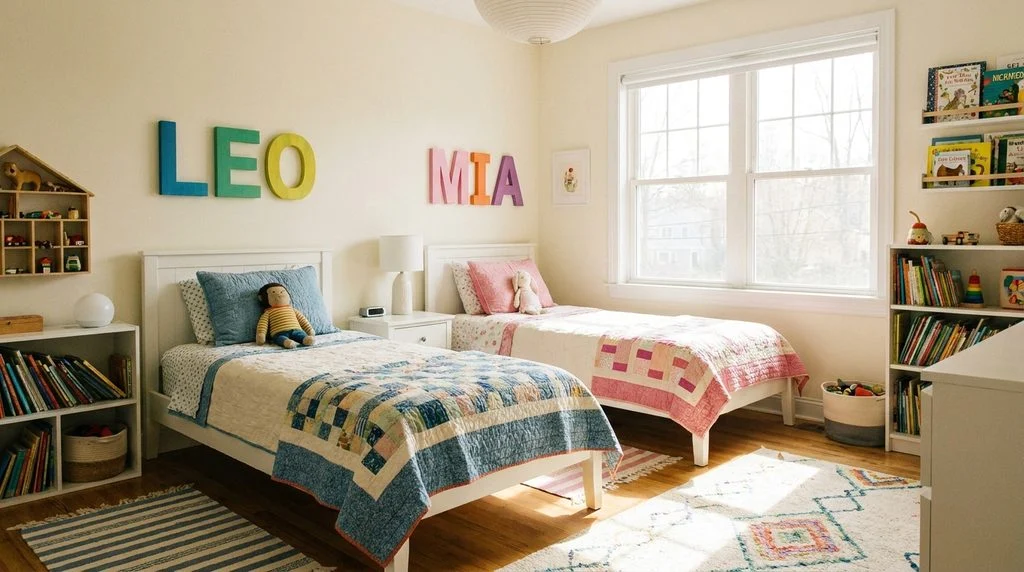
11. Give Each Space a Name
In a split bedroom, it matters that each child feels the space is truly theirs. Hanging personalized touches — like custom wall letters or a name sign above each bed — is a simple way to make sure every roommate feels seen and represented.
12. Keep the Design Minimal
With shared rooms, less is often more. A pared-back scheme in a calm, toned-down palette gives each child room to personalize their side without the whole space feeling busy or clashing. A quiet backdrop lets individual touches shine.
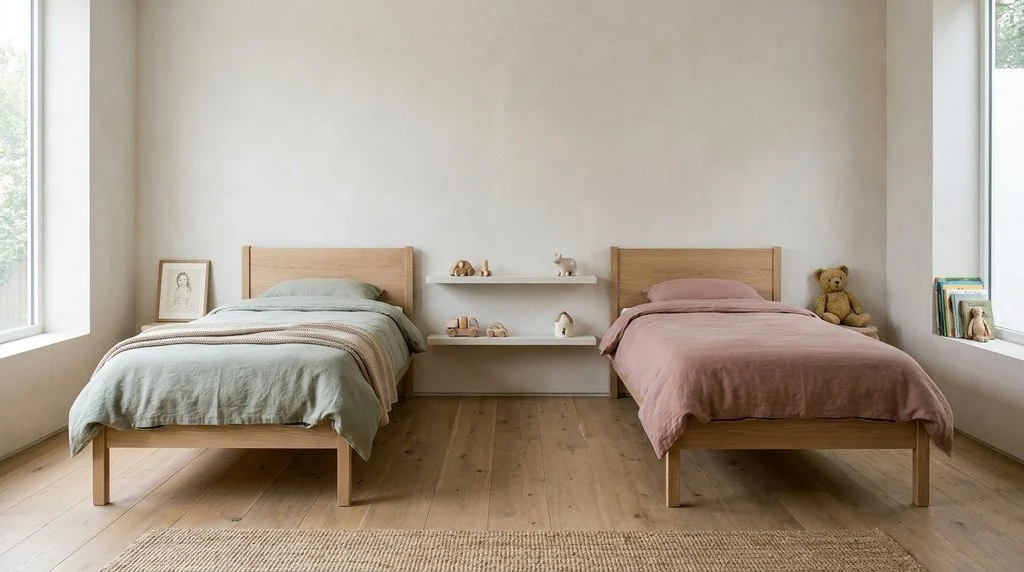
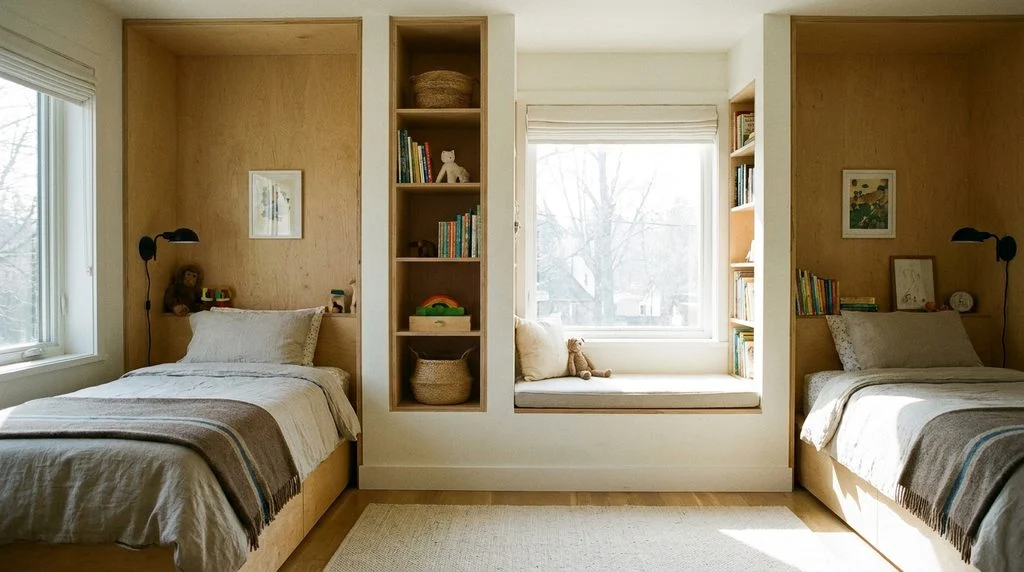
13. Work Around a Window
To divide a room without adding a physical wall, place a bed on each side of a central window. Both children get an equal share of natural light, and the window itself acts as a gentle visual break between the two sleeping spaces.
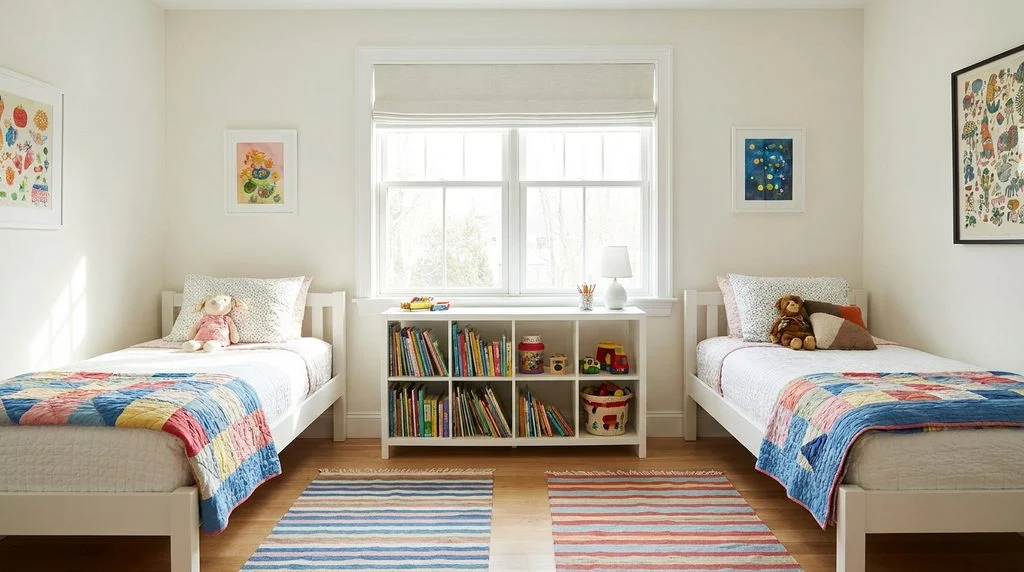
14. Set Off With a Rug
A rug laid between the beds is a simple but surprisingly effective divider. It’s especially useful when there isn’t much room between two twin beds — the rug visually marks where one child’s zone ends and the other’s begins.
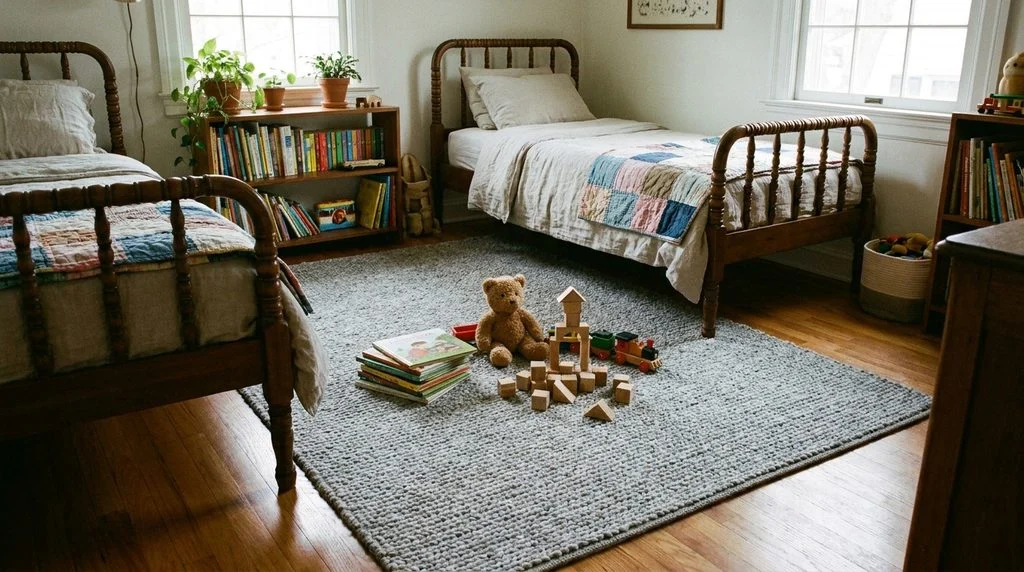
15. Face Opposite Walls
In a larger room, try positioning the beds with their headboards flush against opposite walls, facing each other. The generous space on either side of each bed leaves plenty of room for dressers, desks, or storage tailored to each child.
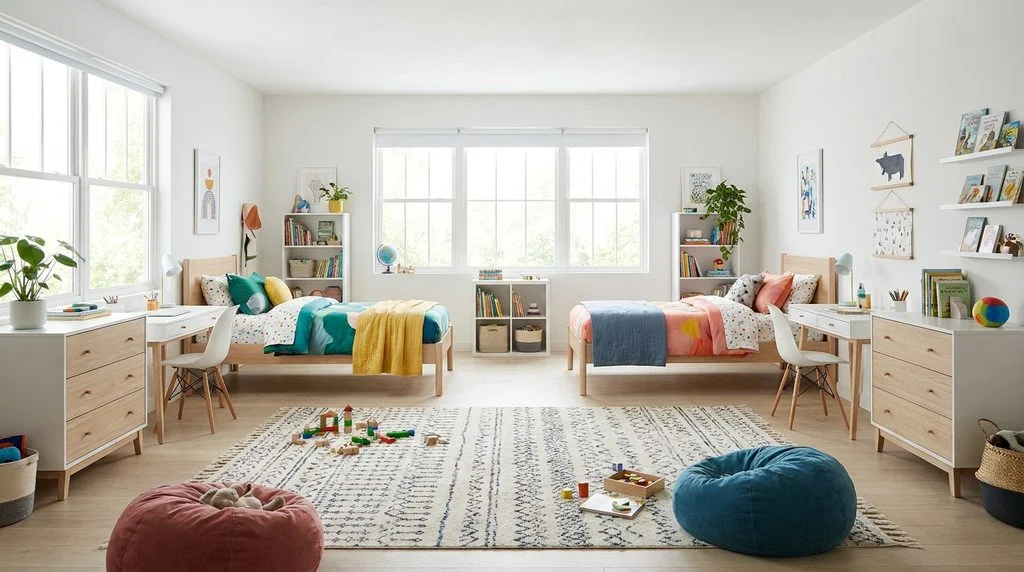
16. Nestle Into Nooks
If the room has a recessed area or alcove, you’ve got a ready-made spot to tuck in a bed. Even a small nook goes a long way toward giving one — or both — children a defined, semi-private sleeping space of their own.
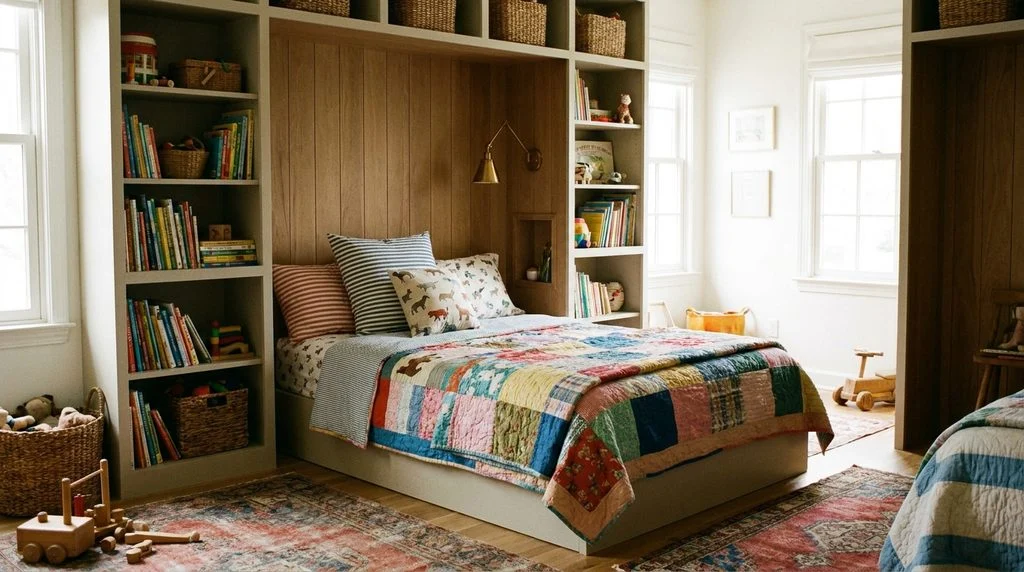
17. Tailor Each Sleeping Space
Kids love feeling that their corner is made just for them. Lean into each child’s favorite colors in the bedding and add distinctive wall hangings or art that speak to their personality, so each side feels genuinely personal.
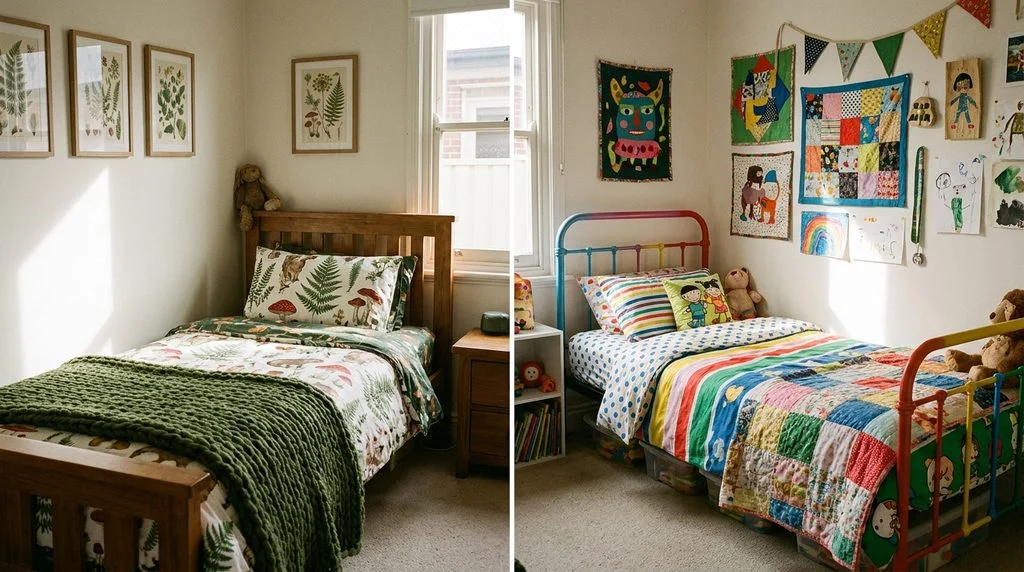
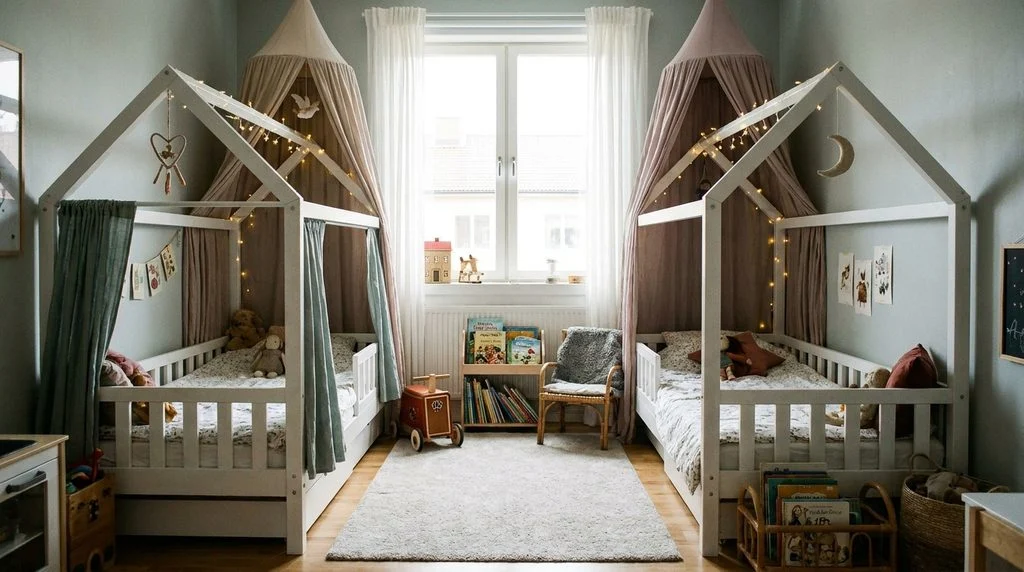
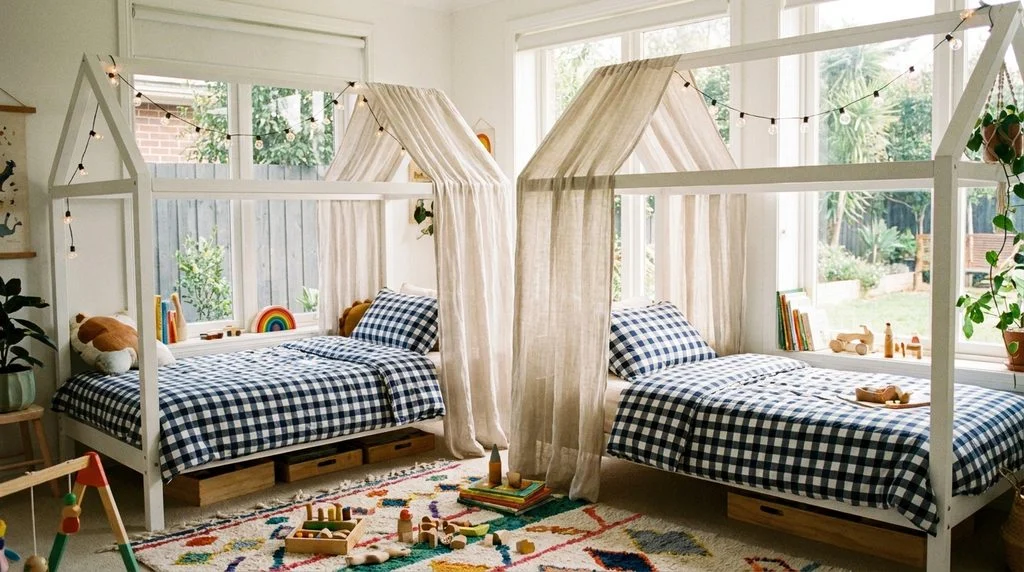
18. Give Them Their Own Space With House Beds
Prefer not to build a barrier between the beds? A house bed — with its open frame shaped like a little house — turns each sleeping spot into its own private space. Drape a curtain over the opening and you’ve effectively created two mini bedrooms.
19. Bump It Out
A wall bump-out can look like a design challenge, but in a shared room it’s a gift. Build each side around the bump so it acts as a natural separator between the two zones. And if one side ends up a little larger, you can grant “seniority” to the older child.
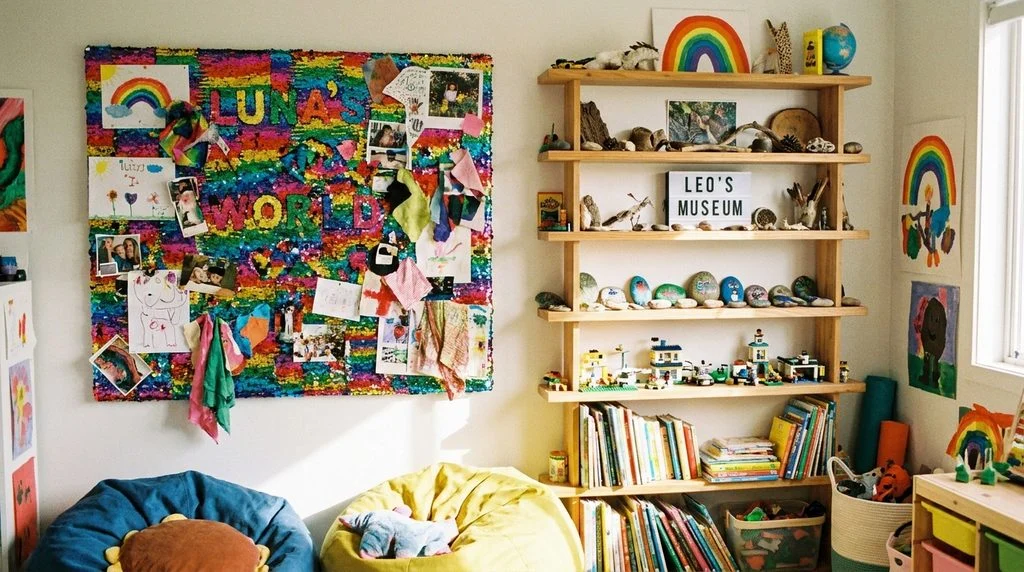
20. Set Up Personalization Opportunities
Self-expression keeps a shared room happy. Make sure each child has plenty of ways to make their side their own — display shelves for treasures and pinboards for artwork, photos, and keepsakes let them shape the space themselves.
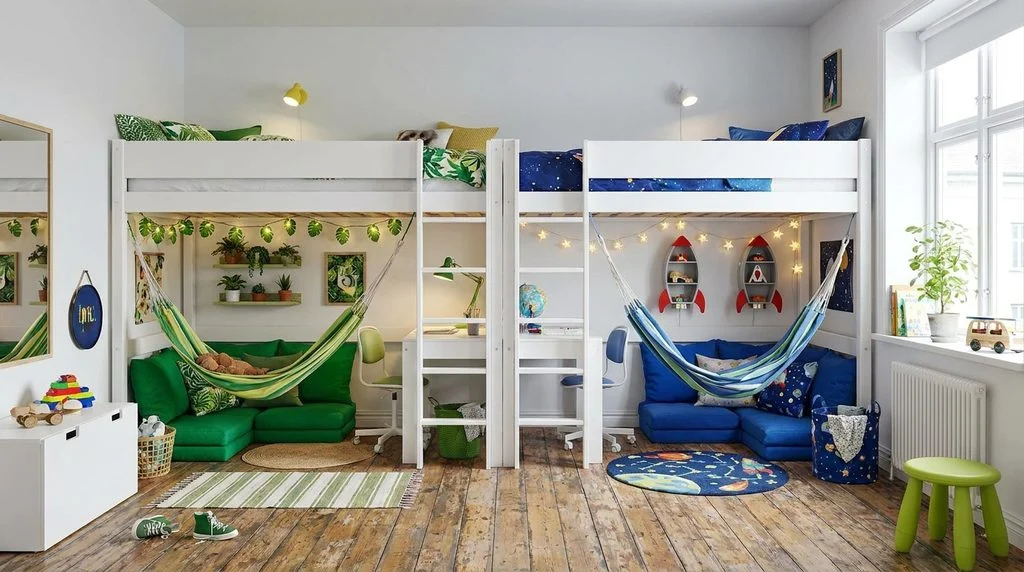
21. Double Down on Loft Beds
To squeeze the most out of a shared room, consider two loft beds. Lifting both sleepers up high opens the floor beneath each for extra storage or a customized hangout zone — a private little retreat each child can escape to when they want space of their own.
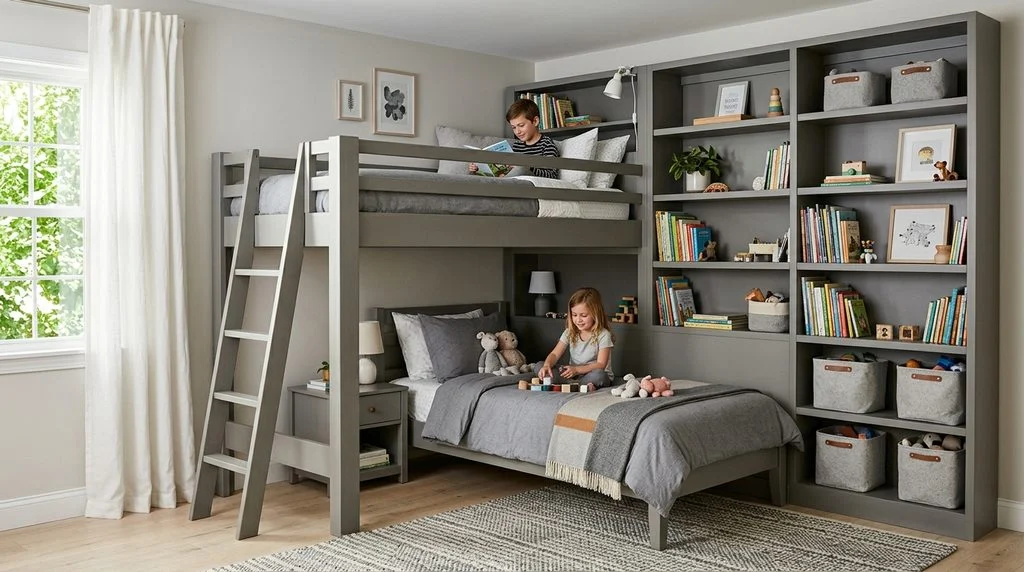
22. Or Combine a Loft Bed With a Traditional One
You can also pair one loft bed with a standard bed on the floor beside it — think of it as a deconstructed bunk arranged in an “L” shape in the corner. It maximizes sleeping space while opening up the rest of the room for storage and furniture.
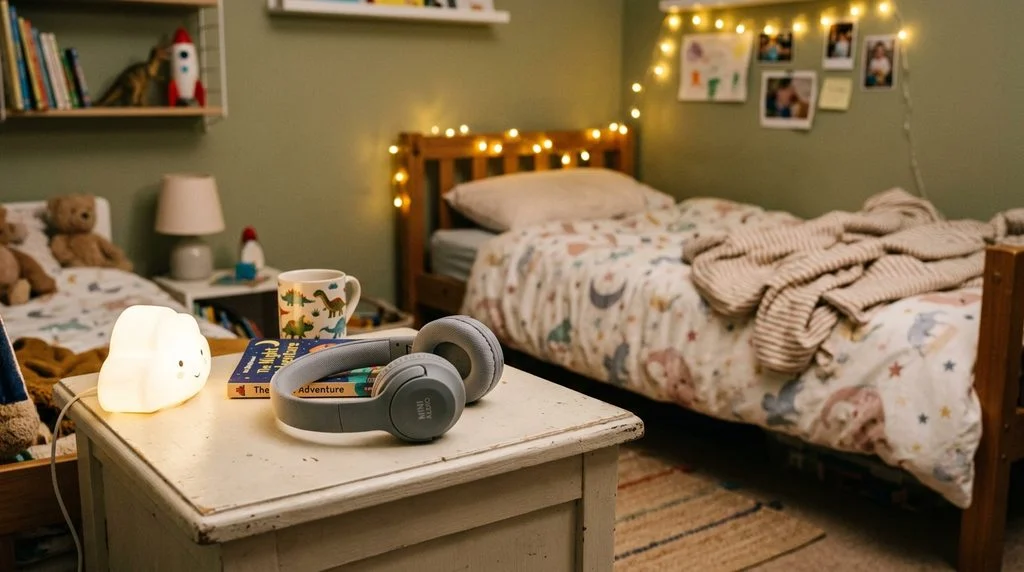
23. Hear Us Out: Get Extra Headphones
Sharing a bedroom means sharing the soundwaves too. You can’t split sound down the middle, but a set of kid-friendly headphones for each child means everyone can enjoy their own music or sleep sounds without disturbing their roommate.
24. Add a Little Trunk Space
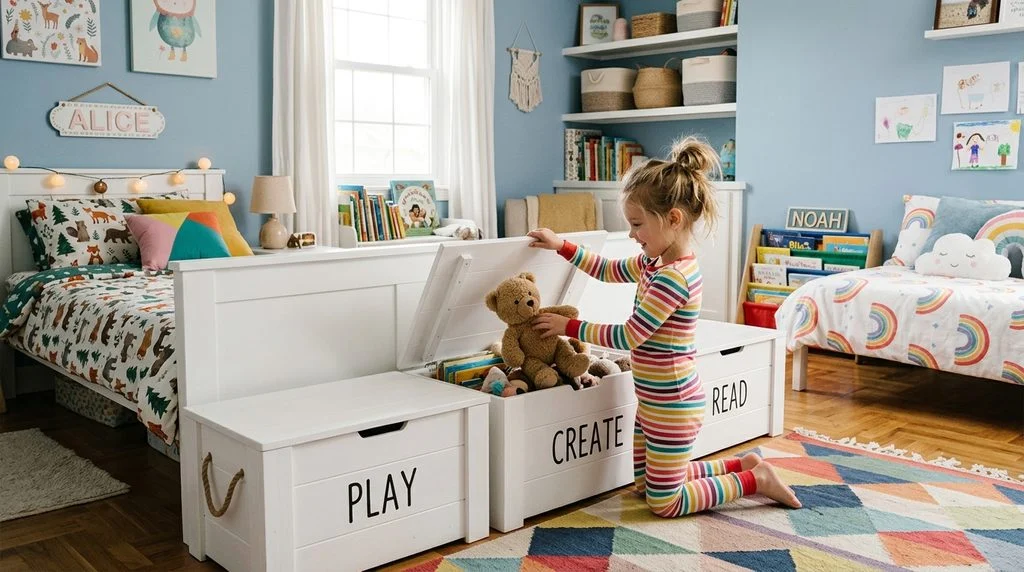
Trunks and toy chests are shared-room heroes thanks to their storage and versatility. Place one at the foot of each bed, or line a few up between the beds to form a simple, do-it-all room divider that also swallows toys in a snap.
25. Fit In Fun Furniture
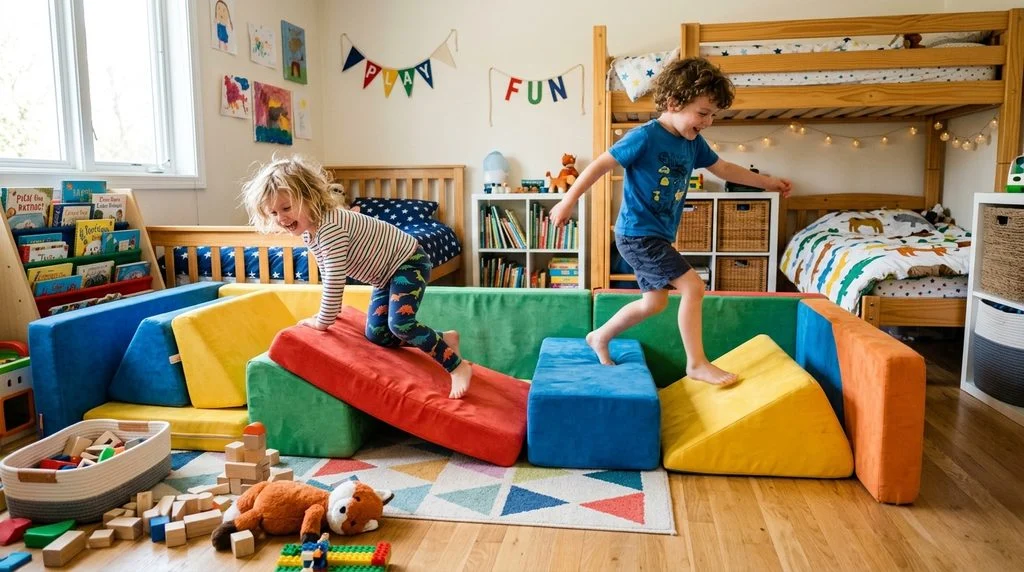
There’s always room for movable, kid-friendly furniture. Soft modular seating and play pieces can serve as room dividers, get shuffled around for lounging, and then be tidied away when playtime’s over — flexible function with a big dose of fun.
Whether you divide the room physically, visually, or vertically, you’ve got no shortage of options. With these 25 shared bedroom ideas, you should be able to fit both beds and everything each child needs — with room to spare.