20 Design Ideas for Shared Kids’ Rooms That Actually Work
Shared kids’ rooms don’t get as much design attention as they used to, but plenty of families still make one bedroom work for two (or more) children — often by choice, and sometimes because space simply doesn’t allow for anything else. The families who do it well tend to land on a few of the same core moves: smart storage, a layout that gives each kid a sense of their own space, and just enough personality to keep the room from feeling purely functional.
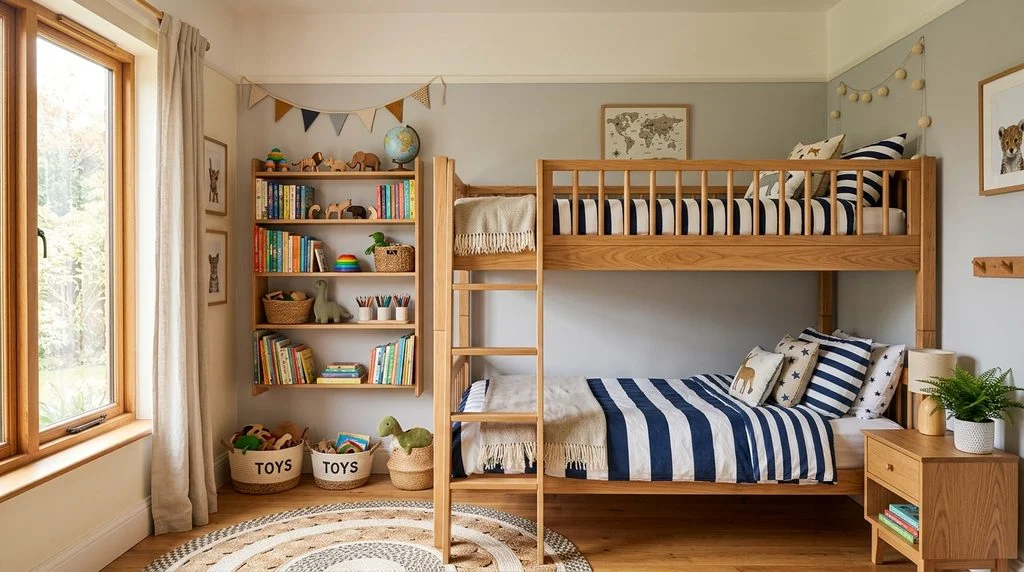
Below are 20 design ideas for shared kids’ rooms, drawn from how real families have made sharing work in spaces ranging from tiny apartment bedrooms to larger suburban rooms.
Rethinking the Layout
1. Give the Shared Room the Best Space in the House
If one bedroom in the home is noticeably bigger, brighter or better located, it’s worth considering giving that room to the kids rather than defaulting to whichever room is smallest. Some parents even choose to take the smaller room themselves so their kids can have more space to share.
2. Fold-Away or Murphy-Style Bunks for Small Rooms
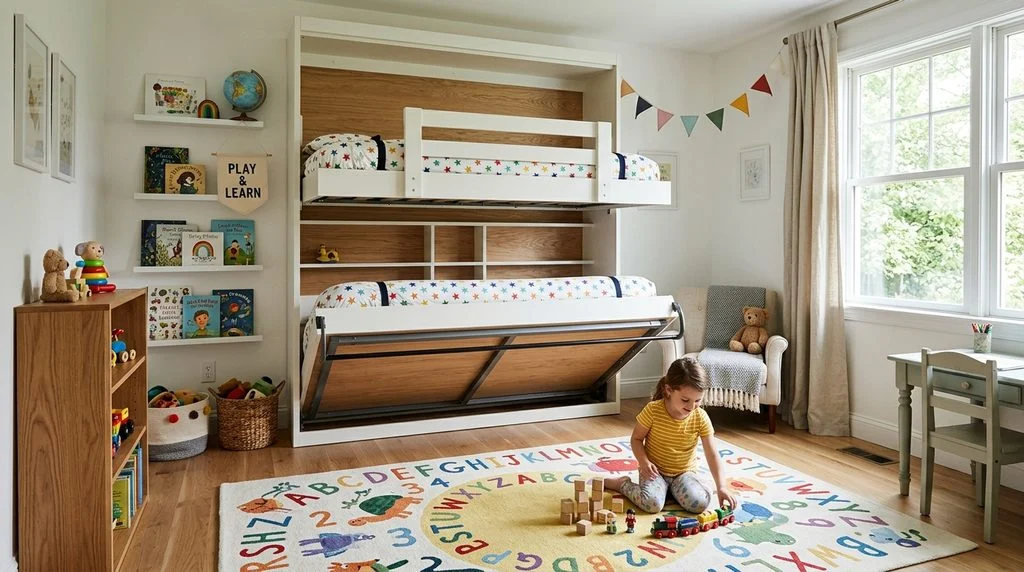
In very tight bedrooms, fold-away bunk beds that tuck flat against the wall when not in use can free up most of the floor for play during the day, then unfold for two kids to sleep at night.
3. Keep Toys in a Separate Room If You Can
If there’s a spare room, playroom or even a corner of a living area available, moving the bulk of toy storage out of the bedroom and into that space can make it much easier to fit multiple kids into one room, since the bedroom only needs to handle sleeping and getting dressed.
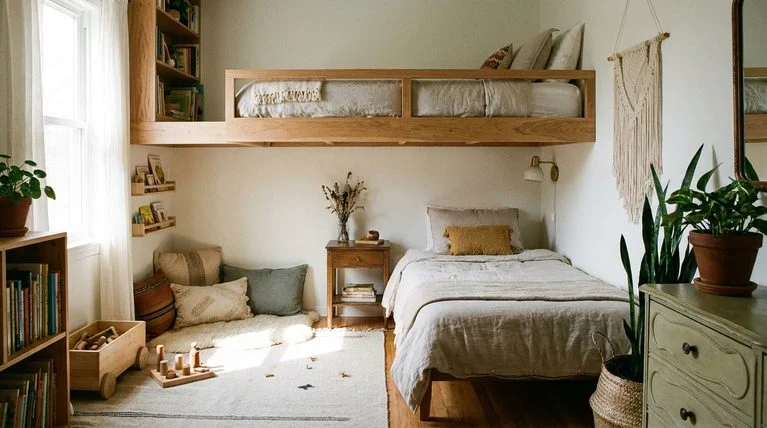
4. Combine a Storage Bed With a Loft Bed
Pairing a bed with built-in under-bed drawers on the bottom with a loft-style bed on top is a space-efficient way to fit more than two kids into one room without needing bunk beds stacked directly on top of each other.
5. Put the Youngest Child Closest to the Door
When siblings of very different ages share a room — especially a baby or toddler paired with an older child — placing the youngest child’s crib or bed nearest the door makes it faster and quieter to respond at night without disturbing the other child.
Solving the Storage Problem
6. Use an Armoire When There’s No Closet
In older homes or smaller apartments without a built-in closet, a freestanding armoire or wardrobe can stand in for one, giving each child their own hanging and drawer space without any construction.
7. Build or Buy Custom Storage for Odd-Shaped Rooms
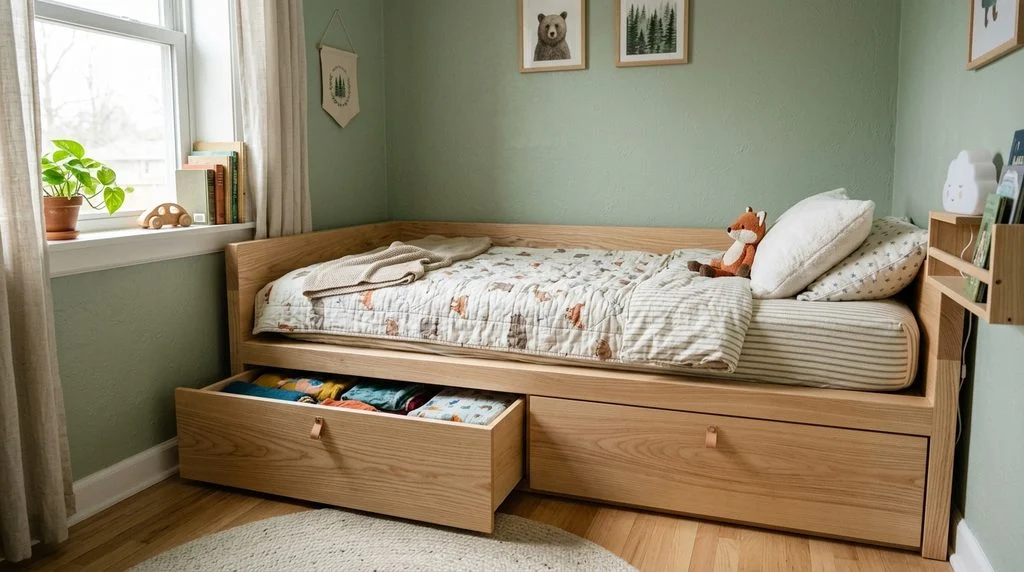
In a small or awkwardly shaped room, a custom-built bed with integrated under-bed storage can make use of every inch that a standard off-the-shelf frame would waste — especially useful for very young kids who don’t yet need a full-size mattress.
8. Mount Shelving on the Wall to Save Floor Space
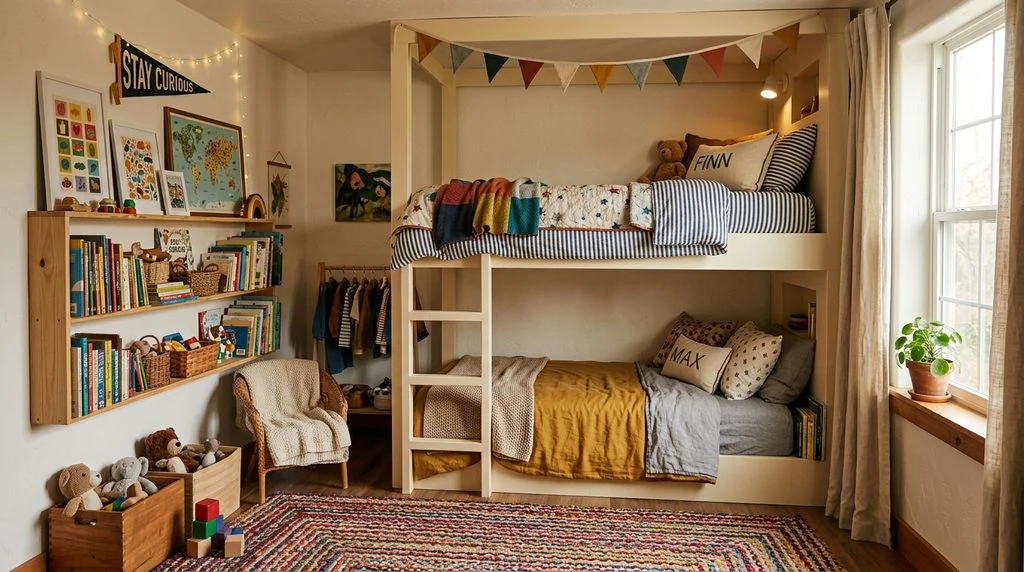
Wall-mounted bookshelves make use of vertical space that floor furniture can’t, which matters most in very small shared rooms where every square foot of floor counts.
9. Let Toy Storage Double as Decor
A tall, sturdy bookcase or open shelving unit can hold toys, books and games in a way that looks intentional rather than cluttered — grouping similar items together and keeping everyday favourites at kid height, with less-used items up top.
10. Sneak Storage Underneath Custom Beds
Beds built with drawers underneath can remove the need for separate dressers entirely, which is often the single biggest space-saver in a small shared room.
Giving Each Kid Their Own Identity
11. Use a Bookshelf as a Divider
An open-backed bookshelf placed between two beds creates a soft boundary between each child’s space while still functioning as shared or split storage.
12. Add a Partition Curtain for Privacy
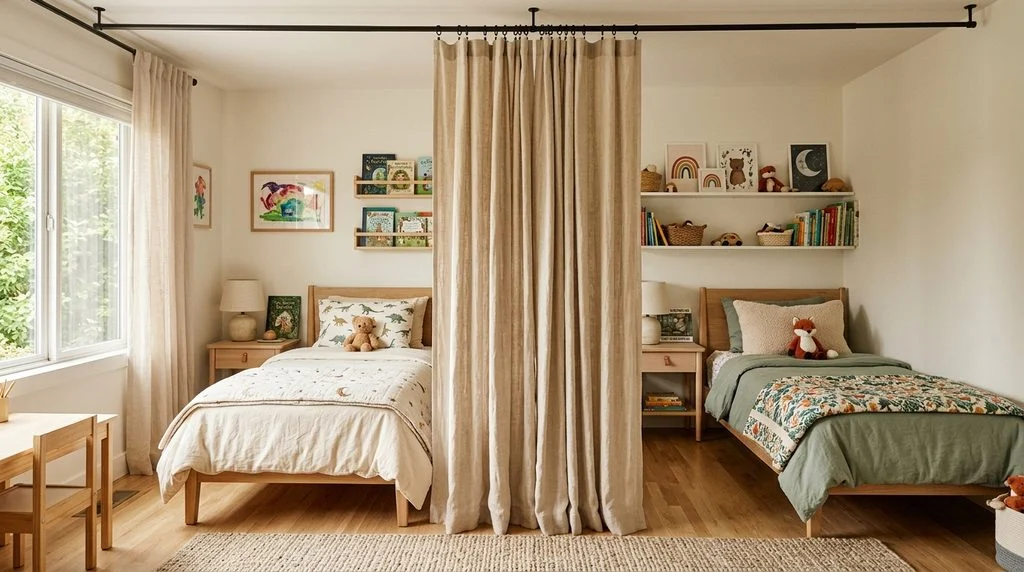
Hanging a curtain between two sleep areas — even a simple one on a tension rod — gives each child a way to create privacy at bedtime without any permanent construction.
13. Keep the Base Design Simple, Then Add Personality in Layers
In a tight room, keeping walls, window treatments and bedding simple prevents the space from feeling overwhelming — colourful toys, art and small accessories can then become the visual focal point instead of competing with a busy backdrop.
14. Lean Into a Shared Theme Both Kids Enjoy
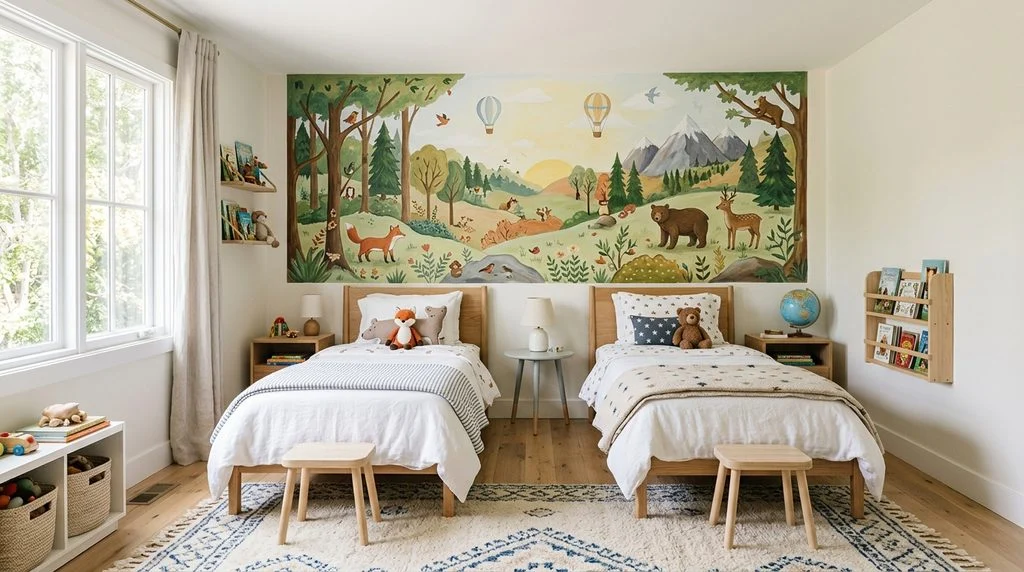
When siblings share strong common interests, building the room around a single theme — a mural, a specific colour story, a shared hobby — can unify the space in a way that feels intentional rather than like two rooms forced together.
15. Try a Statement Wall Feature
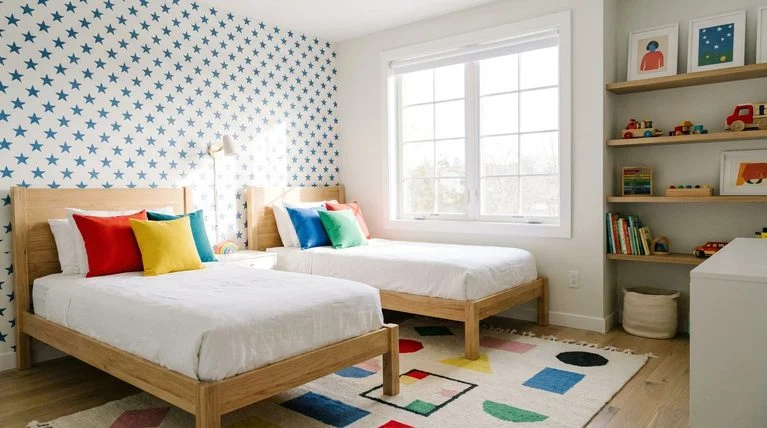
A large mural, a map, or an eye-catching wallpaper on one wall gives a shared room a clear design anchor and something both kids can enjoy together, rather than splitting decor decisions down the middle.
Beds, Ceilings & Finishing Touches
16. Personalize a Basic Bunk Bed
A simple, budget-friendly bunk frame can be painted a custom colour and dressed up with add-ons like wall-mounted reading lights or small book ledges attached near each bunk — small upgrades that make a basic frame feel considered.
17. Mix In a Few Vintage or One-of-a-Kind Pieces
Adding one or two vintage or unique furniture finds — a stool, an old bookcase, a handmade textile — brings warmth and character to a room that might otherwise feel purely functional, without requiring a full custom-furniture budget.
18. Don’t Be Afraid of “Grown-Up” Furniture
Furniture that isn’t specifically marketed as “kids’ furniture” — a mid-century storage piece, a standard adult bookcase — can often hold up better over time and gives a shared room a more timeless, less babyish look.
19. Paint the Ceiling for an Easy Mood Shift
Painting the ceiling a bold or unexpected colour is a low-effort way to change the whole feeling of a shared room without touching the walls, furniture or layout at all.
20. Choose Furniture That Can Flex for a Blended or Growing Family
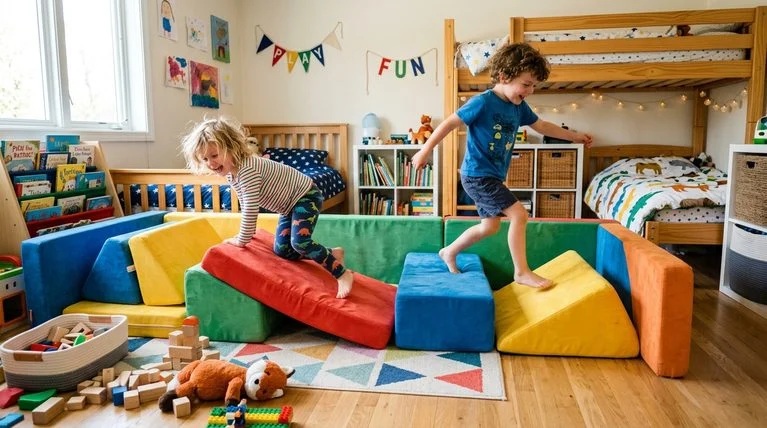
Bunk beds and modular furniture built to reconfigure make it easier to absorb a new sibling, a part-time housemate, or a change in who’s sharing the room — without needing to redesign the space from scratch each time.
Making Sharing Work Long-Term
There’s no single formula for a great shared kids’ room — the families who make it work well tend to focus on the same few things: smart storage that removes clutter, a layout that gives each child a sense of their own space, and enough personality that the room still feels like theirs, not just a place they happen to sleep. Start with the layout and storage basics, then let the personal touches follow.