20 Kids’ Bedroom Ideas That Are Playful, Practical, and Built to Grow
A great kids’ bedroom does more than look good in photos — it needs to survive daily play, adapt as your child grows, and still feel like a space they’re excited to spend time in. From clever storage solutions to bold color choices, these ideas cover everything from nurseries to teen retreats, pulling in the kind of design thinking real interior designers use to make small rooms feel bigger and busy rooms feel calmer.
Whether you’re decorating from scratch or refreshing a tired room, here are 20 ideas to steal.
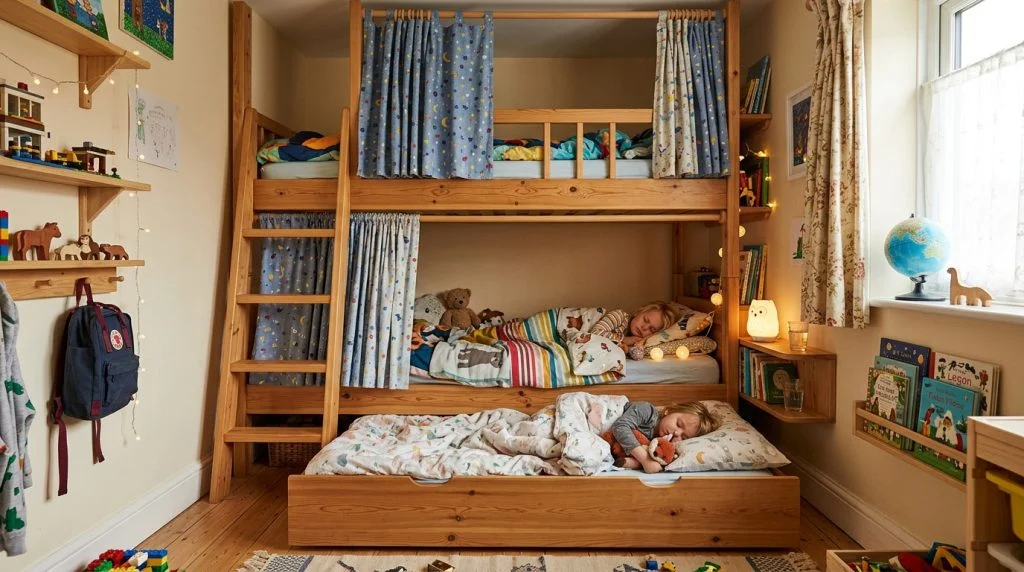
1. Built-In Bunk Beds for Small Spaces
Built-in bunks make the most of a tight footprint, freeing up floor space for play. Add a trundle underneath for sleepovers, and finish with coordinating curtains for a cozy, cabin-like feel.
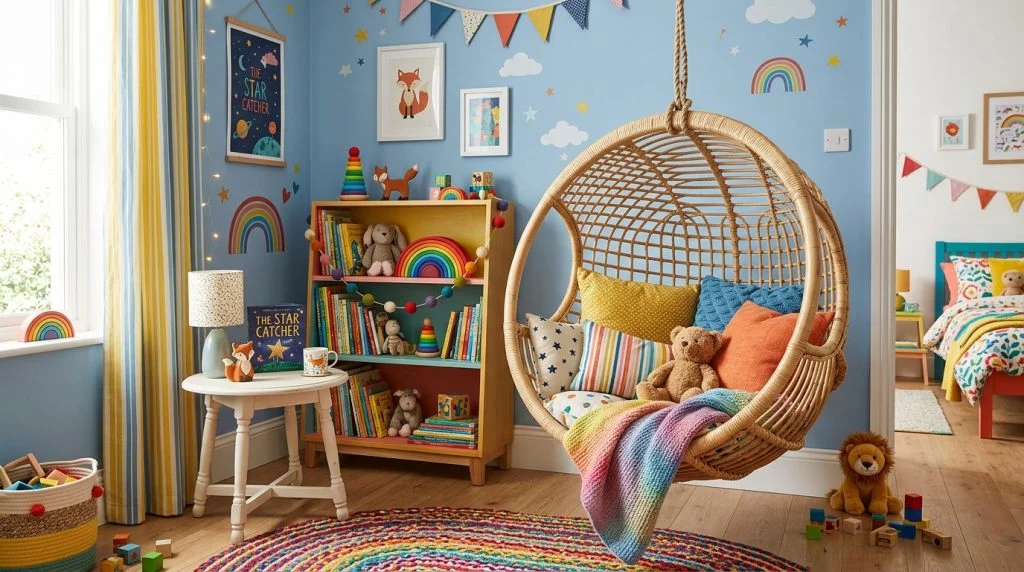
2. A Hanging Chair for Reading and Lounging
A hanging or swing chair adds a playful focal point and a dedicated spot for reading, daydreaming, or quiet time — without taking up much floor space.
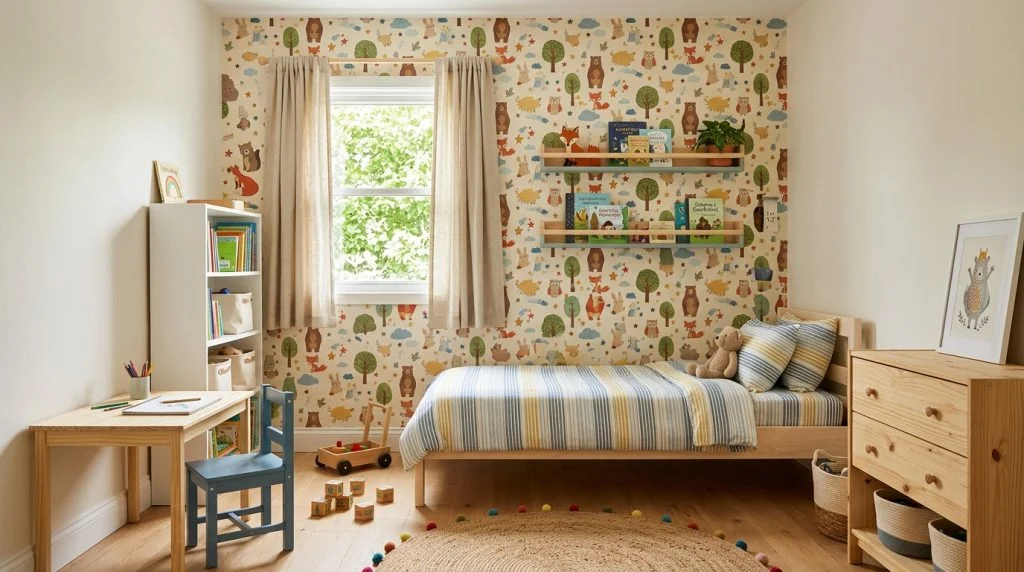
3. Wallpaper as a Statement Wall
A single wallpapered wall adds color, pattern, and personality without overwhelming the room — and it’s easy to update later as tastes change. Playful prints work well for younger kids, while abstract or botanical patterns suit teens.
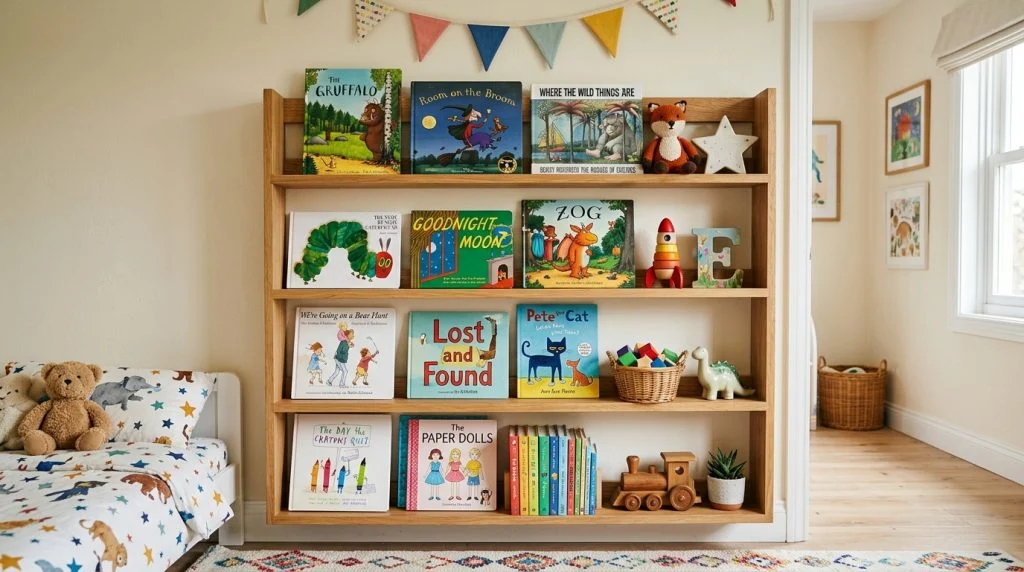
4. Open Shelving to Display Books and Toys
Shallow, open shelving turns favorite books and toys into rotating décor. Facing books forward rather than spine-out shows off their covers and encourages kids to pick up a new one.
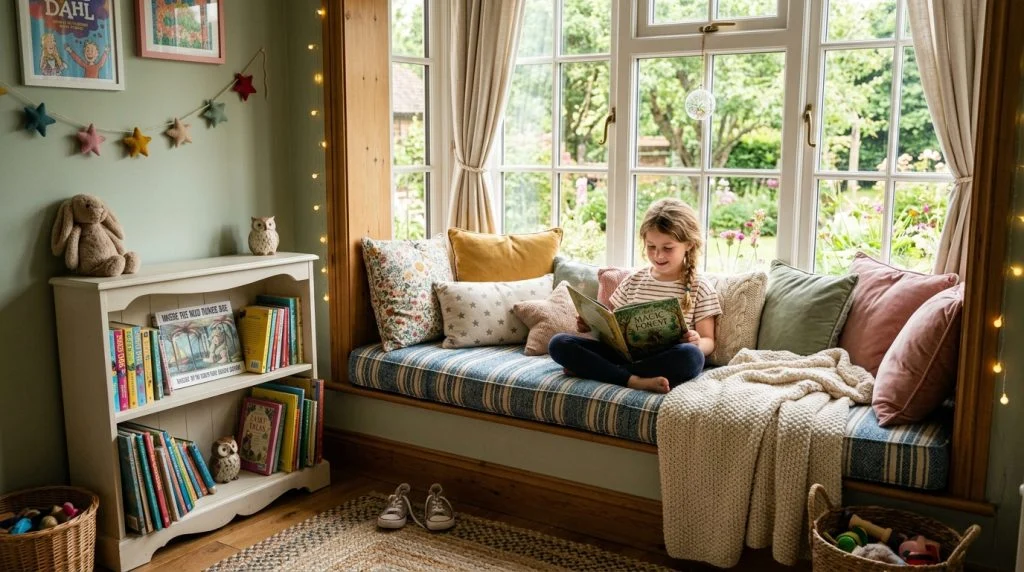
5. A Reading Nook Under the Window
A window seat or small nook with cushions and a soft throw creates an inviting reading spot and makes good use of otherwise wasted space.
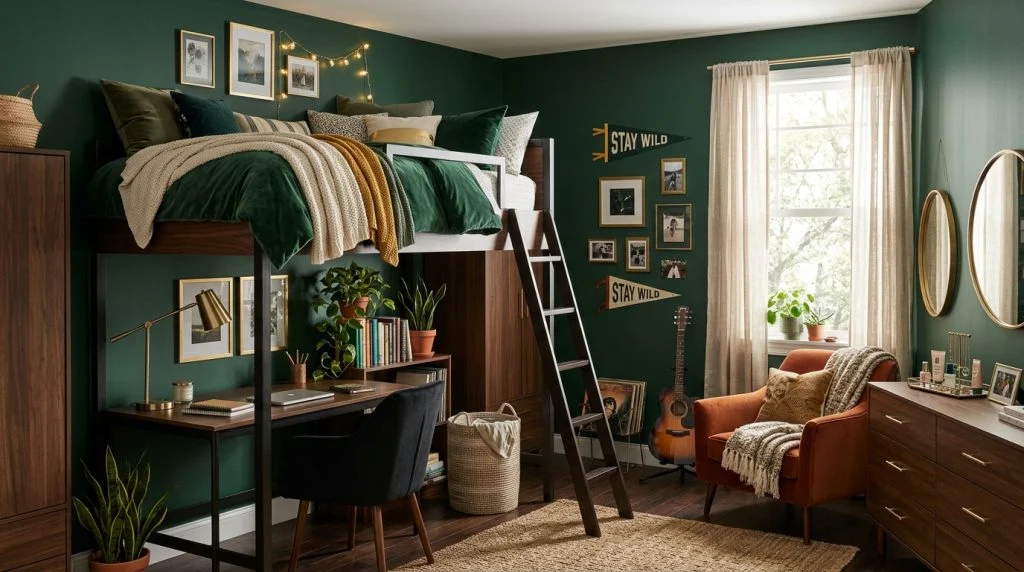
6. Bold Color for Teen Rooms
Rich, saturated colors like deep green or navy work surprisingly well in teen bedrooms, giving the space a more grown-up, considered feel compared to typical pastel palettes.
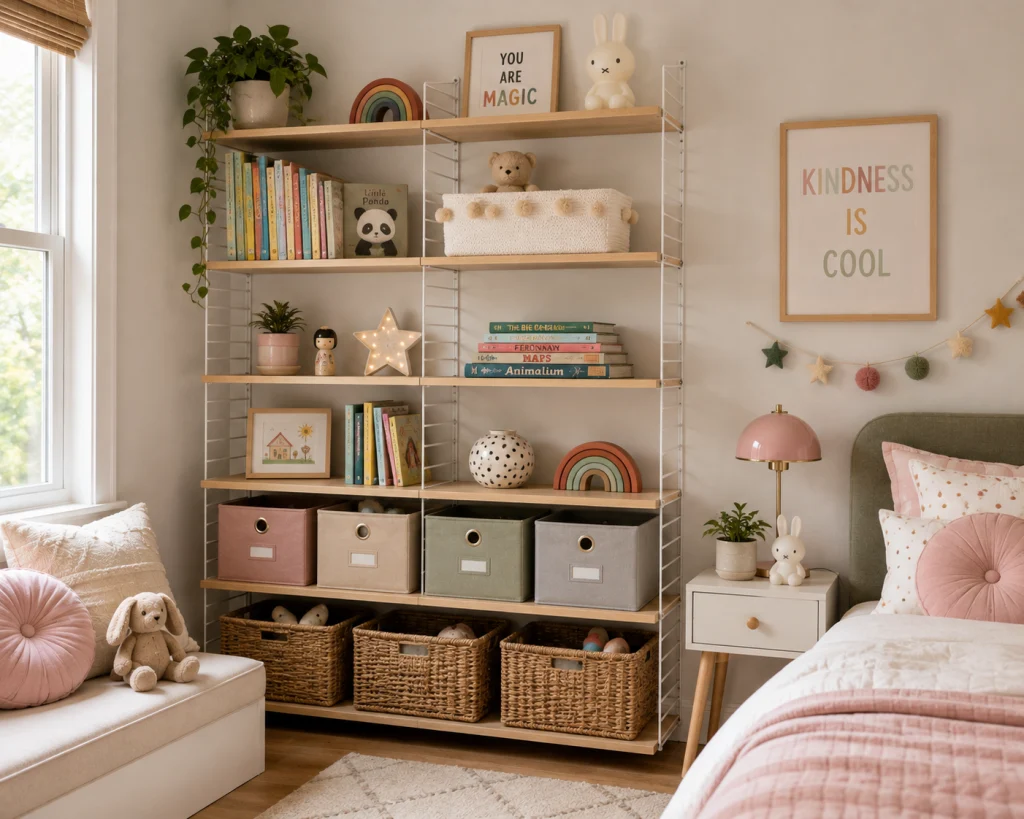
7. Multipurpose String Shelving
String or modular shelving systems adapt as storage needs change, holding everything from books to study supplies to display items, all while keeping the room visually light.
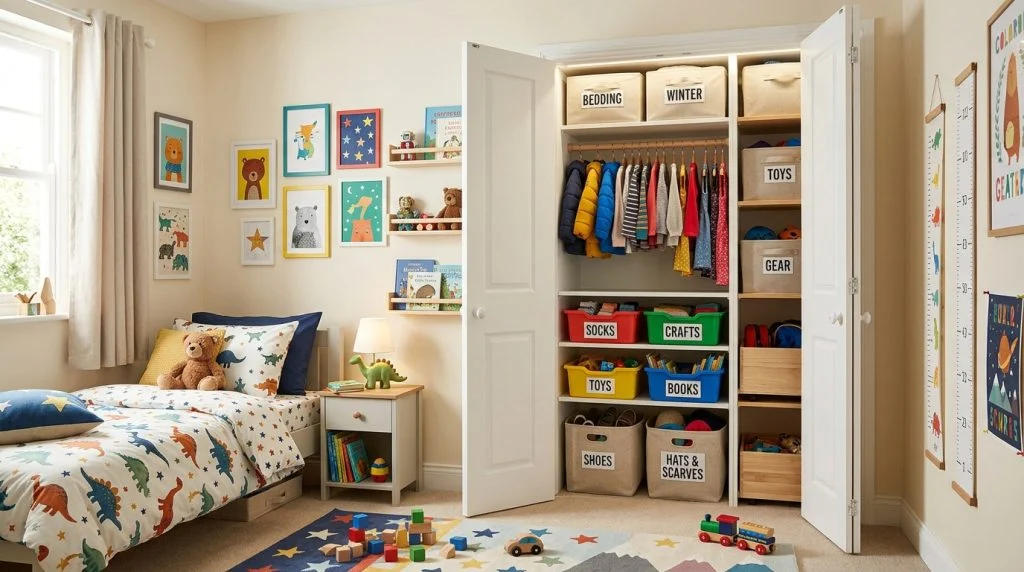
8. Built-In Closets to Maximize Space
Custom built-in closets make the most of awkward corners and low ceilings, offering more storage than a freestanding wardrobe while keeping the floor plan open for play.
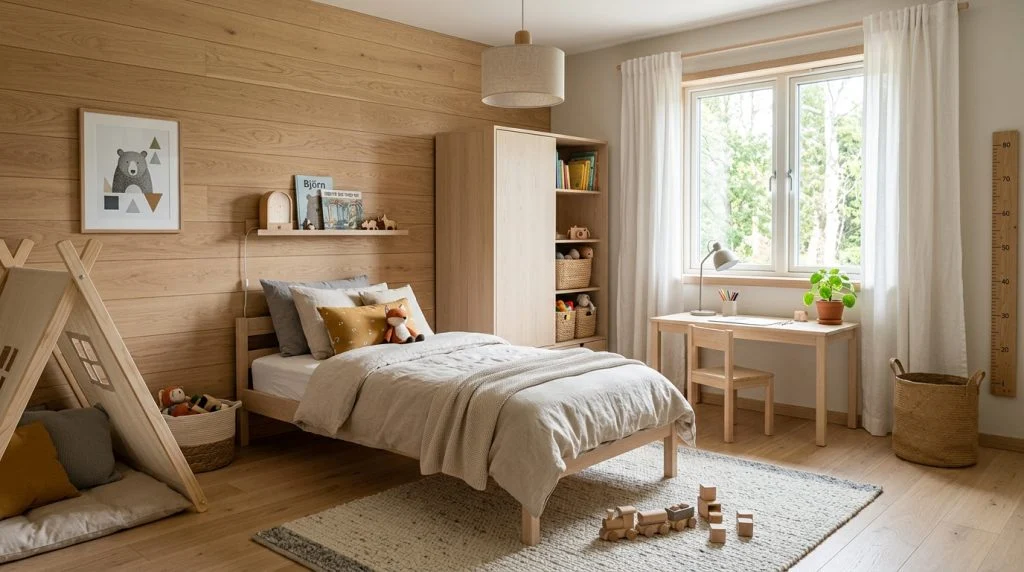
9. A Scandinavian-Inspired Neutral Base
Wood paneling, soft neutrals, and simple furniture create a calm foundation that can flex with a child’s changing interests — just swap out artwork, bedding, or accessories as tastes evolve.
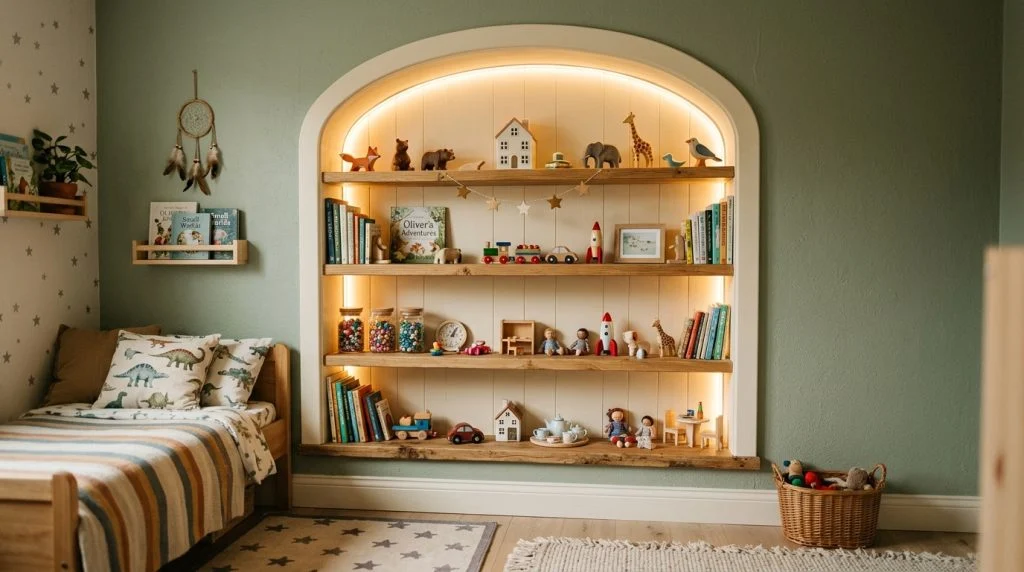
10. Display Nooks for Little Treasures
Small carved-out nooks or shallow shelves give kids a place to show off their favorite collectibles, models, or keepsakes — turning clutter into curated display.
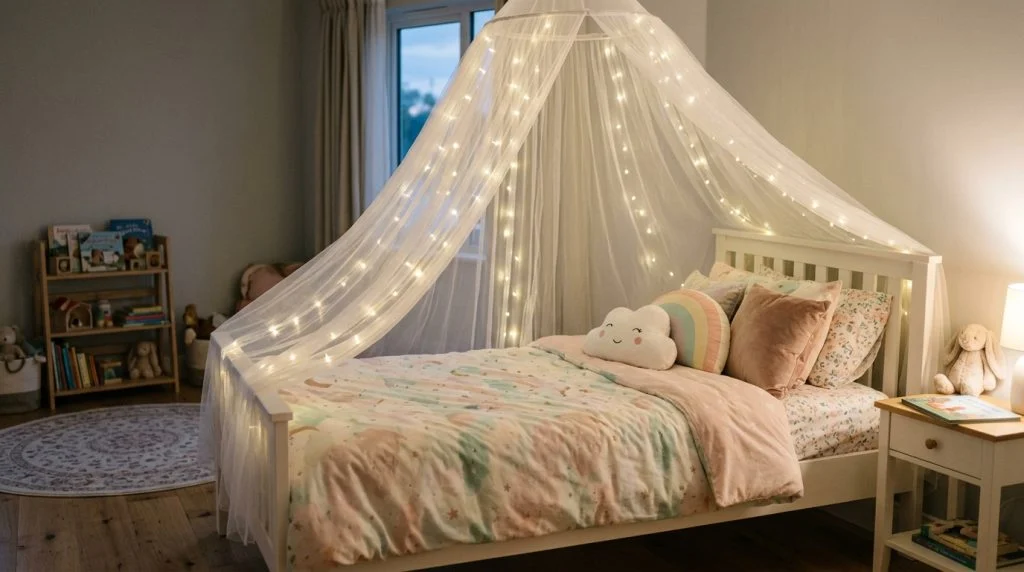
11. A Canopy Bed for a Touch of Magic
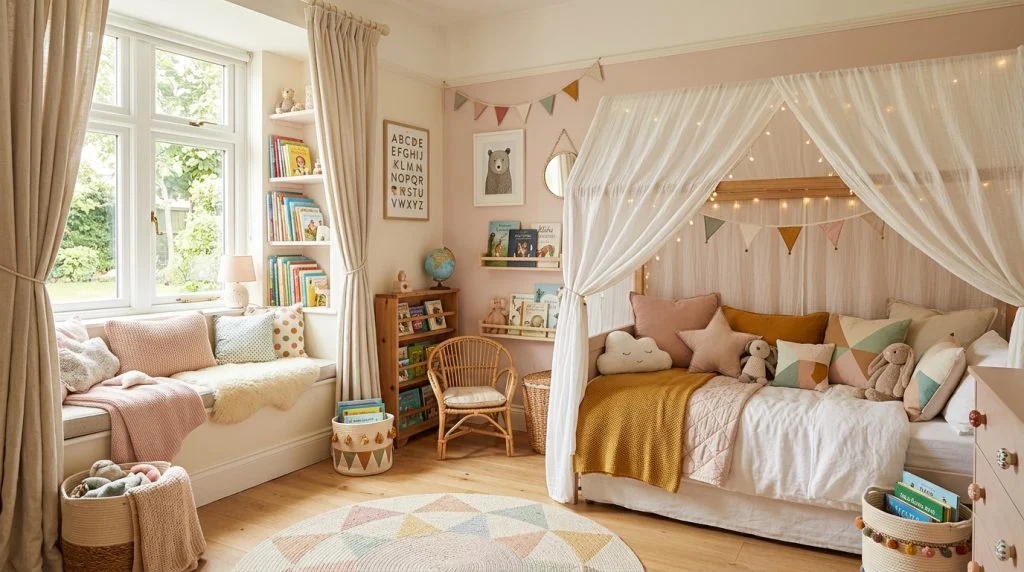
A canopy or draped bed frame instantly makes a room feel special, whether it’s a sheer fabric canopy over a toddler bed or a structured four-poster for an older child.
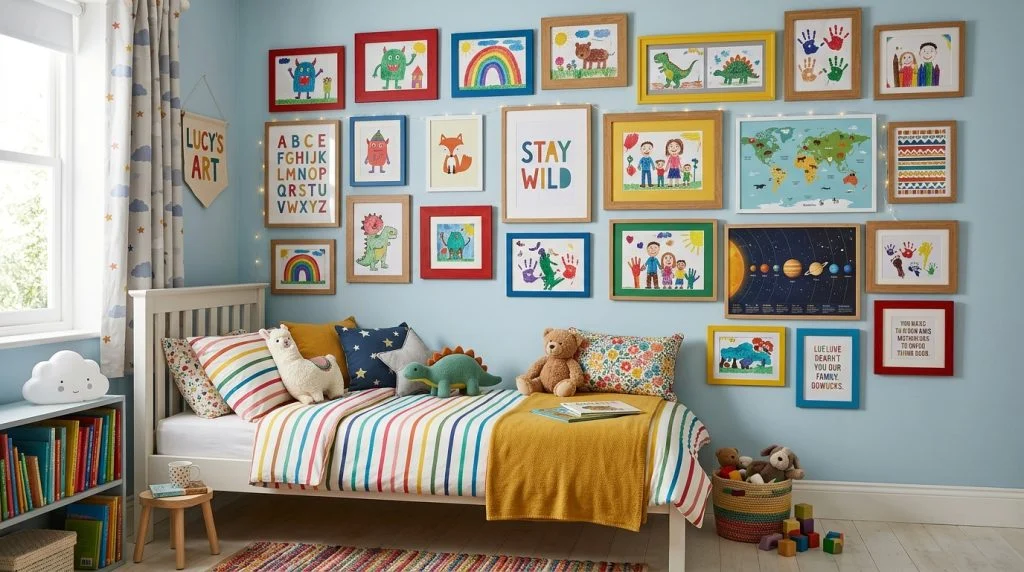
12. A Gallery Wall of Kids’ Art
Frame and hang your child’s own artwork alongside a few prints for a gallery wall that’s personal, ever-changing, and completely free to update.
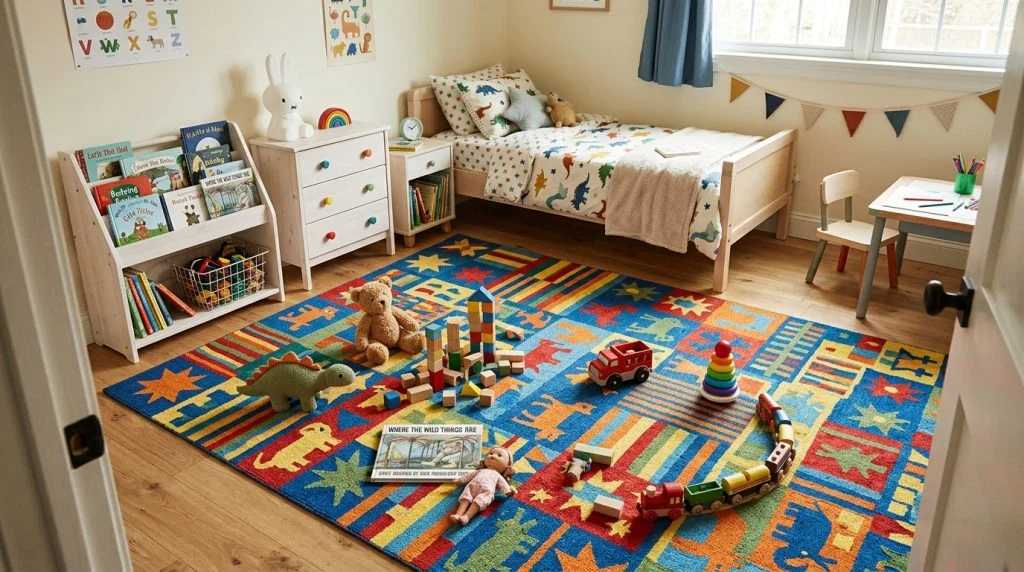
13. A Cozy Rug to Ground the Room
A soft, patterned rug anchors the furniture, adds warmth underfoot, and gives kids a comfortable spot to sit and play on the floor.
14. A Study Corner That Grows With Them
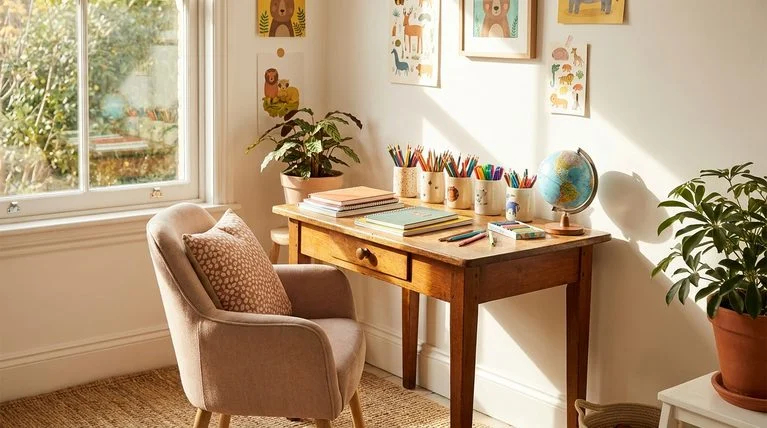
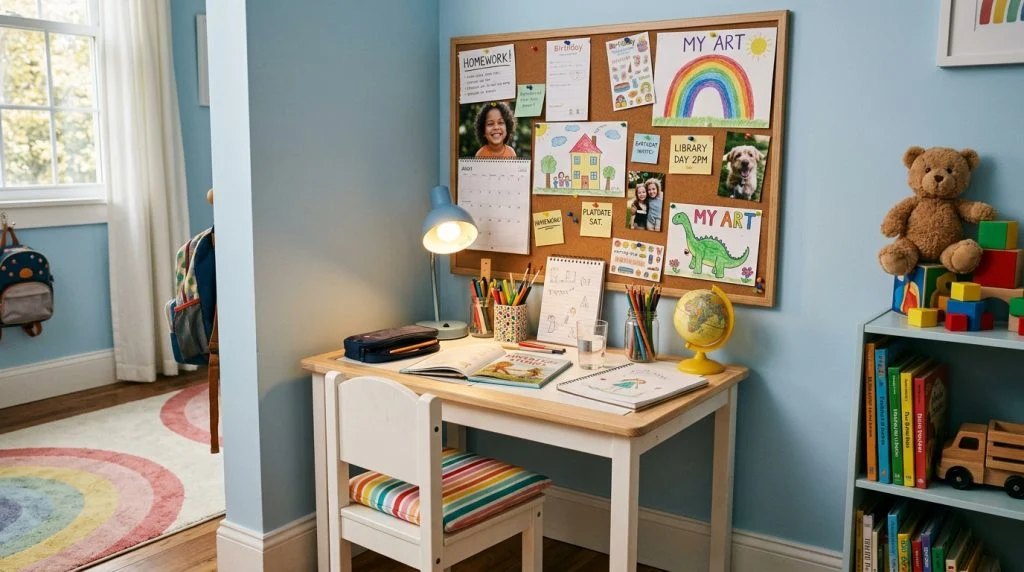
A simple desk and chair tucked into a corner, paired with good lighting and a pinboard, gives kids a dedicated homework spot that can be upgraded as they get older.
15. Bunk Beds with a Slide
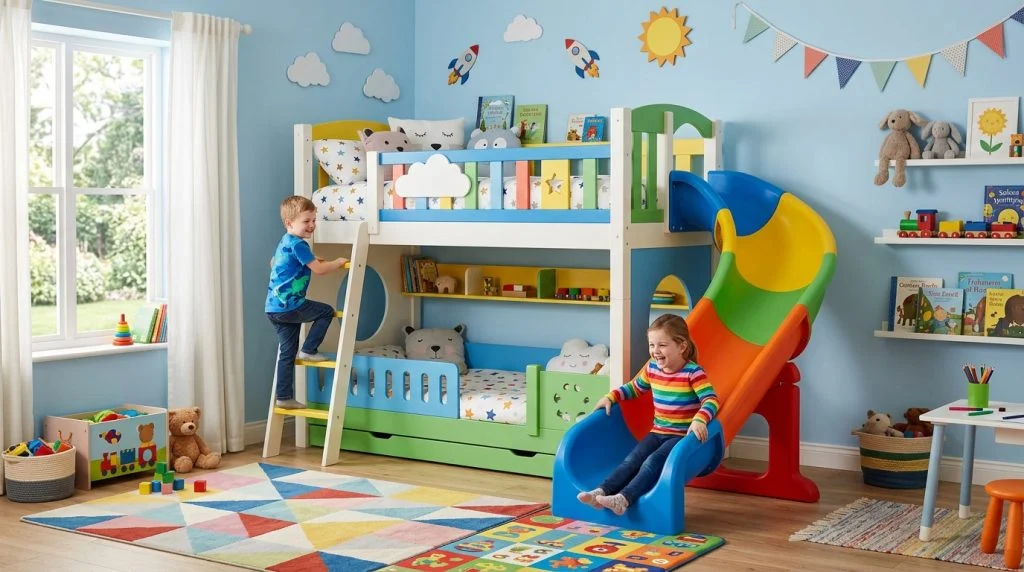
For younger kids, a bunk bed with a built-in slide turns bedtime into an adventure and adds a genuinely fun architectural feature to the room.
16. Layered Textiles for Warmth
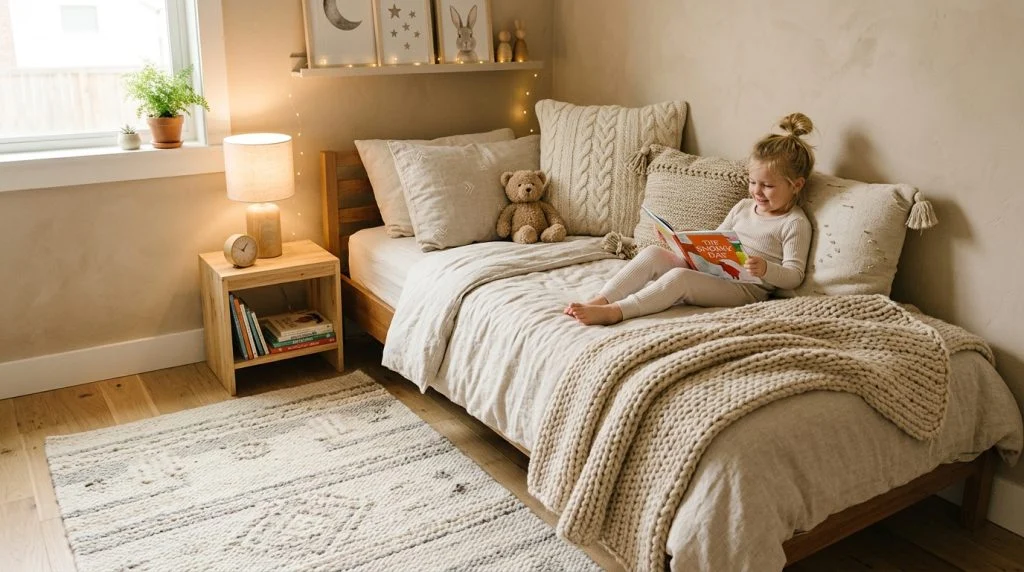
Mixing textures — a woven throw, a knit cushion, a soft rug — makes a room feel finished and inviting without needing bold color or pattern.
17. A Mural for a Statement Feature
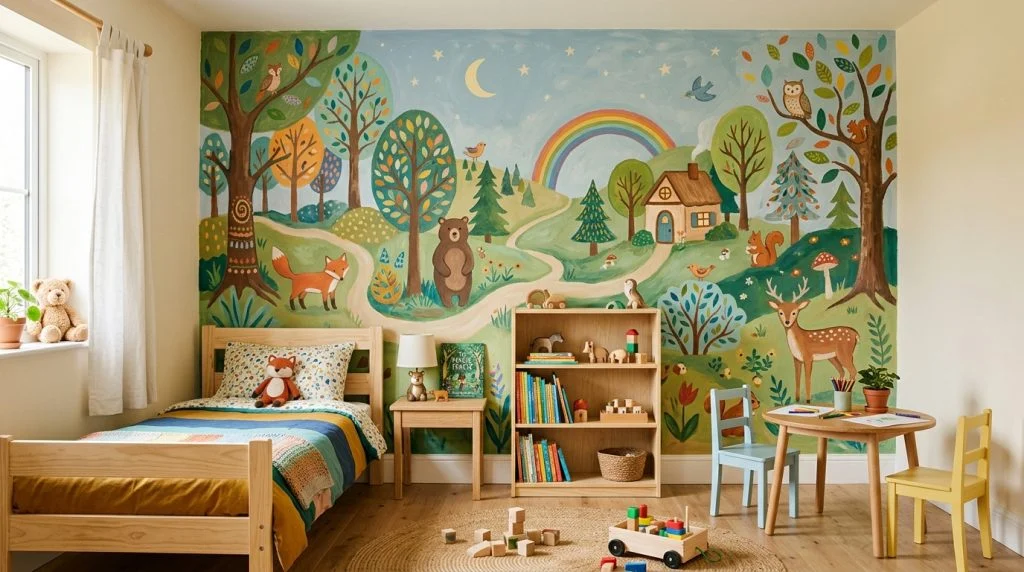
A hand-painted or wallpapered mural — think a forest scene, a night sky, or an abstract landscape — turns one wall into the star of the room.
18. Vintage Furniture With Character
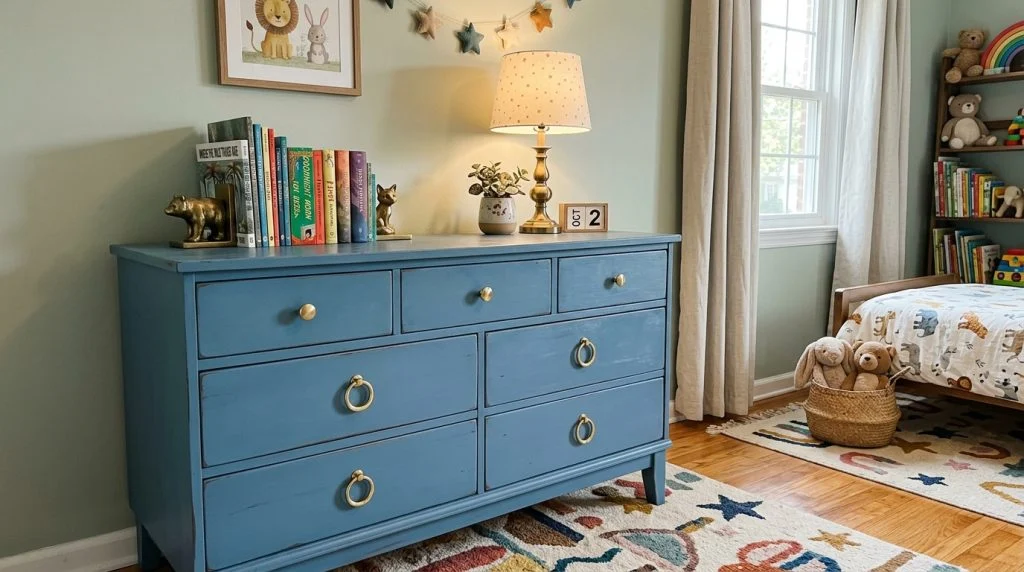
A secondhand dresser or nightstand, given a fresh coat of paint or new hardware, adds character and avoids the generic feel of matching flat-pack sets.
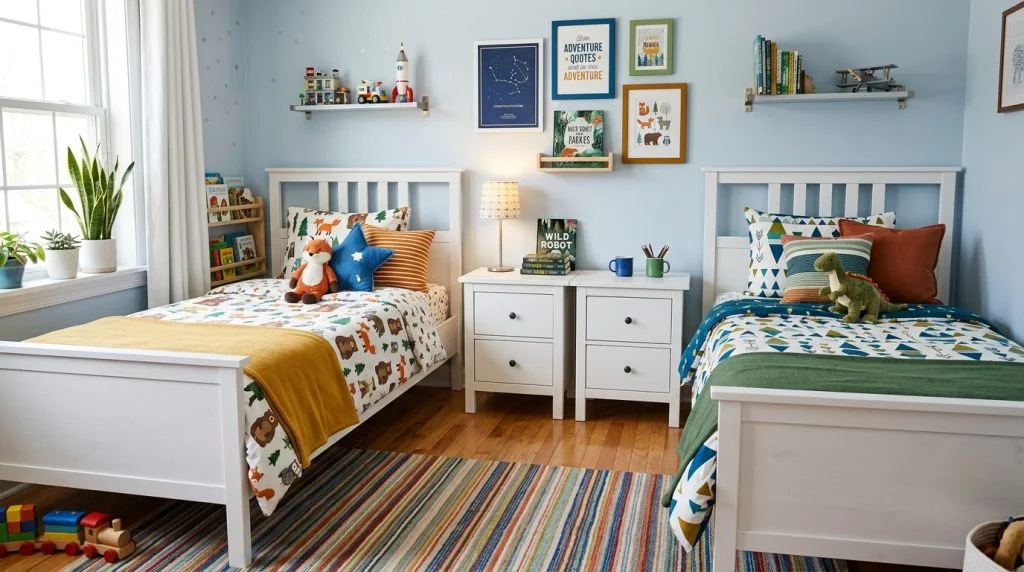
19. Twin Beds With Coordinated (Not Matching) Bedding
For shared rooms, twin beds dressed in coordinating but distinct bedding patterns give each child a sense of individual space within a shared room.
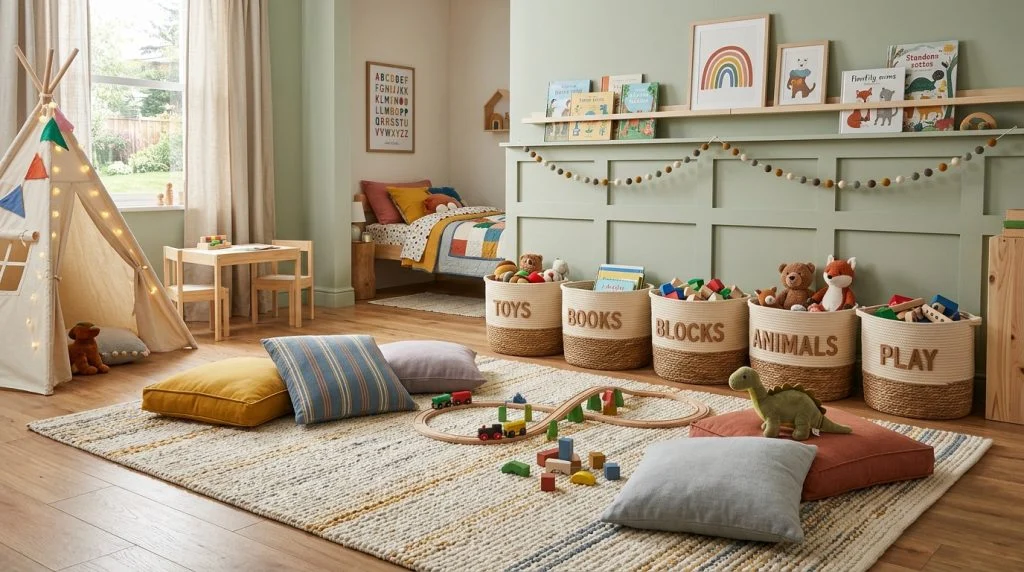
20. A Flexible Play Zone
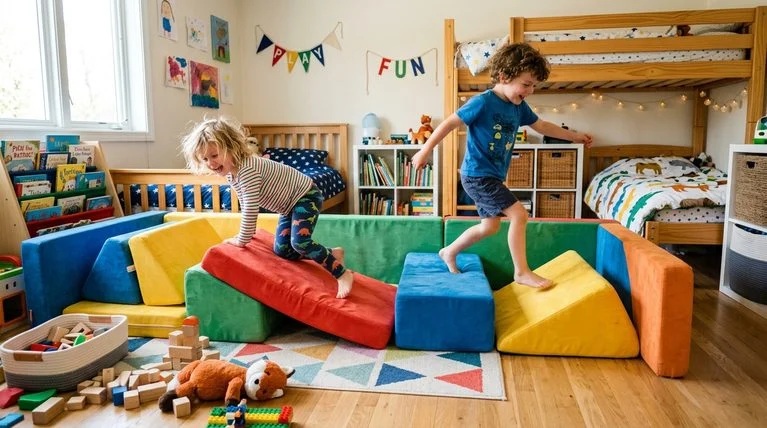
Reserve one open area of the room, free from furniture, as a dedicated play zone — a rug, some floor cushions, and open floor space go a long way toward keeping toys contained and play organized.
Final Thoughts
The best kids’ bedrooms strike a balance between personality and practicality — spaces that feel playful today but can adapt as your child’s tastes and needs change. Start with a flexible base (neutral walls, solid furniture), then layer in the fun stuff — color, pattern, and personal touches — that can be swapped out over time.